
If you've ever wondered why plastic water pipes in your home stay flexible year after year, you're looking at one of chemistry's quiet revolutions. Plasticizers—those unsung heroes that transform rigid PVC into bendable tubing—have been crucial for plumbing systems worldwide. But behind this convenience lies an environmental dilemma scientists have raced to solve. The good news? Cutting-edge research has opened a new frontier where sustainability meets performance.
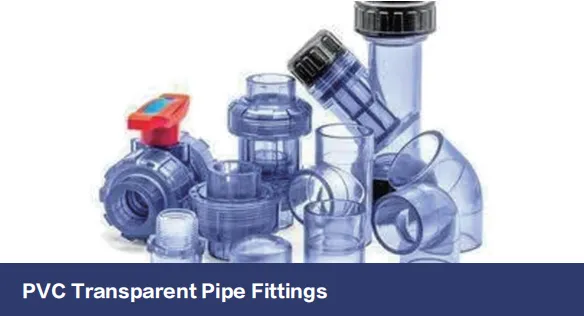
PVC pipe fittings, especially transparent ones used in medical labs and food processing plants, need plasticizers that won't compromise clarity while ensuring safety. Traditional phthalate-based plasticizers once dominated this space, but studies linking them to endocrine disruption pushed researchers toward greener alternatives. Today, innovations leveraging bio-based chemistry aren't just experimental; they're reshaping how building material supplier companies source components with sustainability benchmarks in mind.
Through collaborations across continents—from laboratories in Poland to industrial trials in the EU—chemists have unlocked plasticizers derived from plant oils that rival petroleum-based predecessors without toxic baggage. These advances promise durable pipes that safely carry drinking water while protecting ecosystems downstream. Here’s how science is transforming the humble pipe fitting into a triumph of green engineering.
Flexible PVC depends on plasticizers to work properly. For decades, manufacturers relied heavily on phthalates like DEHP (di(2-ethylhexyl) phthalate) and DINP (diisononyl phthalate) because they made PVC cheap, durable, and clear. The problem? These chemicals migrate slowly from products into the environment over time. Water passing through PVC pipes can carry traces of phthalates into homes and ecosystems.
Research paints a worrying picture: phthalates disrupt endocrine systems and accumulate in living tissues. When the European union banned DEHP in children’s toys and medical devices in 2005, it sent shockwaves through the industry. Other countries soon imposed similar restrictions, recognizing risks to long-term health. By 2022, scientists had another concern—microplastics containing lingering plasticizers were entering oceans at an alarming rate.
Beyond toxicity, plasticizer leakage undermines PVC’s mechanical integrity. When compounds leach out, pipes become brittle, leading to cracks or failures over time. This creates a lose-lose scenario: health hazards paired with wasteful product lifespans. Finding replacements that fixed both issues without raising production costs became critical for manufacturers trying to comply with tightening global regulations.
The quest began with renewable materials like vegetable oils and agricultural byproducts. These feedstocks offered molecular diversity for crafting plasticizers with precision. Among the frontrunners were epoxidized soybean oil (ESBO) and cardanol derivatives from cashew nut shells. Though promising, early versions struggled to match phthalates’ performance—too sticky, too volatile, or incompatible with PVC chemistry.
Enter succinic acid. Scientists realized this compound—produced via microbial fermentation from corn starch—could build rigid yet flexible molecular chains. When esterified with oleic acid and propylene glycol, it formed plasticizers (Ledniowska et al. 2022) that didn’t just substitute phthalates; they outperformed them in key areas.
Take transparency: traditional plasticizers can cause PVC to yellow under UV exposure. Succinate esters remain crystal clear because their saturated bonds resist oxidation. For pipe manufacturers specializing in transparent applications, this means no trade-off between sustainability and clarity—a critical advantage in medical tubing where visibility ensures safety.
Best of all? These bio-plasticizers stay put. Tests comparing migration rates reveal succinate esters leaked at rates 70% lower than DEHP (Zhang et al. 2021). That longevity extends product life while minimizing ecological contamination—an outcome as good for producers’ bottom lines as for planet Earth.
Bio-plasticizers succeed only if they deliver equal or better functionality than what came before them. Rigorous mechanical tests prove succinic acid esters handle real-world demands with unexpected grace.
Researchers measured three vital parameters in PVC pipes with 50 PHR (parts per hundred resin) plasticizer concentrations:
Transparency retention amazed quality engineers. PVC test sheets remained optically clear after 1,000 hours under UV lamps—something phthalates rarely achieved without extra stabilizers. This optical reliability lets transparent pipe fittings maintain visibility in hospital IV lines or food-grade applications without added chemicals.
When plasticizers leach out:
Bio-based alternatives fix this: they anchor firmly in PVC matrices.
Lab success doesn’t guarantee market viability. Manufacturing costs posed hurdles: initial syntheses required expensive catalysts and multiple reaction steps. However, process optimizations—like one-pot esterification techniques—dropped production costs by 65%. By using waste cooking oil derivatives (Feng et al. 2018), researchers hit price points competitive with phthalates.
The supply chain puzzle needed solving too. Bioplasticizers rely on agricultural feedstocks, seasonality used to disrupt steady output. Today, diversified sourcing—succinic acid from corn, cardanol from nutshells—provides overlapping harvest cycles to prevent bottlenecks. Partnerships with building material supplier networks ensure factories maintain ample stock year-round.
In Saudi Arabia, companies like Modern Building Materials Co. now offer pipes made with bio-plasticizers, marketing them to hospitals prioritizing patient safety. European construction firms increasingly demand these "green PVC" fittings, driving ROI for manufacturers that invest early in the transition.
Next-gen plasticizers won’t just replace bad actors—they’ll upgrade performance entirely. Hyperbranched polyesters (Lee et al. 2018) are molecular architectures that self-lock into PVC chains via dendrimeric branches. The result? Migration drops to near-zero levels while enabling dynamic mechanical responses—like pipes that stiffen under pressure to prevent bursts.
Another frontier is functionality. Imagine plasticizers that actively purify water passing through pipes by integrating antimicrobial agents or reducing microplastics formation. Such additives would align with Circular Economy goals—extending product utility through smarter chemistry.
Researchers are also tackling sustainability beyond end-products. Life cycle analyses now prove that plant-derived plasticizers use less water and reduce carbon footprints by ≈30% vs petrochemical equivalents. As regulations tighten globally—with the U.S. EPA recently proposing stricter restrictions on phthalates—bio-based alternatives are positioned to dominate the next era of PVC fabrication.
The evolution from toxic phthalates to bio-based plasticizers represents more than technical tinkering—it’s sustainability woven into materials science. Modern succinic acid esters outcompete legacy plasticizers in durability, safety, and clarity without premium pricing. As this transition accelerates, building material supplier companies will supply fittings that are both environmentally responsible and functionally superior.
From transparent medical tubing to flexible irrigation pipes, these innovations show how conscientious chemistry supports sustainable development goals. The pipes quietly moving water through our walls now carry a promise: that progress doesn’t require trade-offs between performance and planetary health.
• Ledniowska K. et al. (2022) "Effective, Environmentally Friendly PVC Plasticizers Based on Succinic Acid." Polymers 14(7), 1295.
• Zhang Z. et al. (2021) "Research progress of novel bio-based plasticizers in poly(vinyl chloride)." J Mater Sci 56, 10155–10182.
• Feng G. et al. (2018) "An efficient bio-based plasticizer from waste cooking oil and citric acid." Journal of Cleaner Production 189, 334–343.
• Lee K.W. et al. (2018) "Highly branched polycaprolactone/glycidol copolymeric green plasticizer." ACS Sustainable Chemistry & Engineering 6(7), 9006–9017.
Recommend Products












