
In a world where every decision feels weighted by its impact on the planet, sustainable construction has shifted from a "nice-to-have" to a fundamental responsibility. Builders, architects, and homeowners alike are asking tougher questions: What goes into the materials we use? How long will they last? And when their time comes, can they be recycled or repurposed? It's not just about building structures anymore—it's about building a future where our homes and commercial spaces work with the environment, not against it.
Amidst this shift, one area often overlooked is the network of pipes that keep our buildings running. From carrying drinking water to heating and cooling systems, piping is the circulatory system of any structure. But traditional materials like copper, galvanized steel, or even some plastics have left much to be desired in terms of sustainability. They're energy-heavy to produce, prone to corrosion, and often end up in landfills after relatively short lifespans. That's where modern solutions like PEX pipe and fitting systems come into play—offering a greener alternative that doesn't compromise on performance.
Let's start with the basics: why does piping matter for sustainability? Think about it—every pipe in a building is a product of raw materials, manufacturing processes, transportation, installation, and eventual disposal. If that lifecycle is inefficient, the environmental toll adds up fast.
Take copper, for example. Mining copper ore is energy-intensive, releasing significant carbon emissions and often disrupting local ecosystems. Once mined, the ore requires smelting—a process that further contributes to greenhouse gases. Then there's installation: copper pipes are rigid, meaning they need more fittings (elbows, tees, couplings) to navigate corners, increasing the amount of material used. Over time, copper can corrode, especially in areas with hard water, leading to leaks, water waste, and the need for premature replacement. And when those pipes are replaced? Most end up in scrap yards, but recycling copper still requires energy, and not all of it is recoverable.
Galvanized steel has similar issues. It's heavy, making transportation more carbon-intensive, and prone to rust. Even PVC, once hailed as a cheaper alternative, has drawbacks. While some upvc pipe suppliers emphasize its durability, traditional PVC production relies on chlorine, a toxic chemical, and the manufacturing process can release dioxins—harmful to both workers and the environment. Plus, PVC is rigid, so installation often requires solvent cement, which contains volatile organic compounds (VOCs) that affect indoor air quality.
The bottom line? For decades, the piping industry has prioritized cost and availability over sustainability. But as green building standards like LEED, BREEAM, and WELL gain traction, that's no longer acceptable. We need materials that reduce waste, lower energy use, and stand the test of time—and that's where PEX enters the picture.
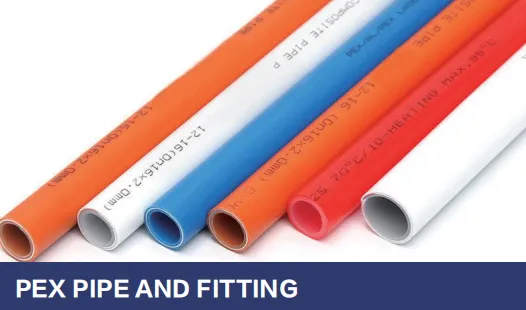
If you're not familiar with PEX, let's fix that. PEX, short for cross-linked polyethylene, is a type of plastic pipe that's been around since the 1960s but has surged in popularity in recent years—especially in green building projects. What makes it different? The "cross-linked" part: during manufacturing, the polyethylene molecules are bonded together in a three-dimensional network, making the material stronger, more flexible, and resistant to temperature extremes.
But PEX isn't just a better pipe—it's a more sustainable one, from production to disposal.
PEX starts with polyethylene, a plastic derived from petroleum (though research into bio-based polyethylene is underway). While petroleum isn't renewable, the manufacturing process for PEX is far less energy-intensive than for copper or steel. Producing a meter of PEX pipe generates significantly fewer carbon emissions compared to the same length of copper. Why? Because polyethylene is easier to mold and shape, and cross-linking can be done using methods like electron beam irradiation or chemical processes that require less heat than smelting metals.
Plus, PEX pipes are lighter than metal alternatives, which reduces transportation emissions. A truck can carry more PEX pipes per load than copper or steel, cutting down on the number of trips needed to deliver materials to a job site. For a large commercial project, that difference in transportation alone can shave off tons of CO2 from the building's carbon footprint.
One of PEX's most celebrated features is its flexibility. Unlike rigid copper or UPVC pipes, PEX can bend up to 90 degrees without kinking, which means fewer fittings are needed during installation. Think about a typical residential plumbing system: with copper, you might need a dozen fittings to route pipes from the water main to the kitchen sink, bathroom, and laundry. With PEX, that number could drop by half. Fewer fittings mean less raw material used, lower production emissions, and less waste if a fitting is damaged or unused.
This flexibility also makes installation faster and easier. Plumbers don't need to cut and thread pipes as much, reducing labor time and the energy used on-site (like running power tools). For a busy construction crew, faster installation means lower labor costs and the ability to move on to the next phase sooner—both wins for project efficiency and sustainability.
A pipe that lasts longer is a pipe that doesn't end up in a landfill prematurely. PEX pipes are resistant to corrosion, scaling, and freezing—common issues that shorten the lifespan of metal and some plastic pipes. In fact, most PEX manufacturers warranty their products for 25–50 years, and real-world studies suggest they can last even longer with proper installation.
Consider this: a typical copper pipe system might need replacement after 20–30 years due to corrosion. Each replacement requires new materials, transportation, and labor—all of which add to the building's environmental impact. PEX, with its 50+ year lifespan, eliminates that cycle of waste. For a homeowner, that means peace of mind; for a commercial developer, it means lower long-term maintenance costs and a smaller carbon footprint over the building's lifetime.
Of course, PEX isn't the only player in the sustainable piping game. You've probably heard of UPVC (unplasticized polyvinyl chloride) and PPR (polypropylene random copolymer) pipes, too. Both are popular in residential and commercial projects, and some upvc pipe suppliers or ppr pipe and fitting suppliers market their products as eco-friendly. But how do they really compare to PEX when it comes to sustainability? Let's break it down.
| Sustainability Metric | PEX | UPVC | PPR |
|---|---|---|---|
| Manufacturing Energy Use | Low: 30-40% less than copper; lower than UPVC/PPR | Moderate: Higher than PEX due to chlorine processing | Moderate: Similar to UPVC; higher than PEX |
| Installation Material Waste | Low: Fewer fittings needed (50% less than rigid pipes) | High: Rigid, requires many fittings; prone to cracking during cutting | Moderate: Less rigid than UPVC but more than PEX; more fittings than PEX |
| Lifespan | 50+ years (resistant to corrosion, freezing, and scaling) | 25-40 years (prone to brittleness over time, especially in sunlight) | 40-50 years (good chemical resistance but less flexible than PEX) |
| Recyclability | Recyclable: Can be melted down and repurposed into other plastic products | Recyclable but challenging: Contamination with additives limits recycling rates | Recyclable: Better than UPVC but less established recycling infrastructure than PEX |
| Energy Efficiency (Water Flow) | High: Smooth interior reduces friction; lower pump energy use | Moderate: Smooth interior but rigid design may cause flow restrictions at fittings | High: Smooth interior similar to PEX |
| Carbon Footprint (Lifecycle) | Lowest among the three | Higher than PEX | Higher than PEX |
As the table shows, PEX consistently outperforms UPVC and PPR in key sustainability metrics. Its lower manufacturing energy use, reduced installation waste, longer lifespan, and better recyclability make it a clear choice for green projects. Even compared to PPR, which is often lauded for its chemical resistance, PEX's flexibility and lower carbon footprint give it the edge.
Numbers and tables tell part of the story, but real projects show how PEX pipe and fitting solutions translate to tangible sustainability wins. Let's look at two examples—one residential, one commercial—that highlight PEX's role in green construction.
In 2023, a developer in Portland, Oregon, set out to build a 50-unit apartment complex targeting LEED Platinum certification—the highest level of the U.S. Green Building Council's rating system. A key goal was to reduce the project's carbon footprint by 40% compared to a standard building. To achieve this, the team turned to PEX pipe and fitting solutions for both potable water and radiant heating systems.
The results were striking. By using PEX instead of copper, the project reduced transportation emissions by 35% (thanks to lighter pipes). Installation time for plumbing was cut by 25%, lowering on-site energy use from power tools and worker commutes. The flexibility of PEX also allowed the team to route pipes through tighter spaces, reducing the need for structural modifications (like cutting into floor joists), which saved lumber and reduced construction waste.
Post-occupancy, residents reported lower utility bills: the radiant heating system, which uses PEX pipes embedded in the floors, proved more efficient than traditional forced-air systems, with heat loss reduced by 15%. And because PEX is resistant to corrosion, the developer expects the plumbing system to last 60+ years with minimal maintenance—eliminating the need for costly replacements that would generate waste.
A public school district in Austin, Texas, faced a challenge: replace aging copper plumbing in a 1970s-era elementary school while staying within a tight budget and meeting net-zero energy goals. The district chose PEX pipe and fitting solutions for the renovation, citing sustainability and cost-effectiveness as top priorities.
The old copper system had frequent leaks, wasting thousands of gallons of water annually and requiring constant repairs. By switching to PEX, the school eliminated leaks entirely—saving an estimated 100,000 gallons of water per year. The smooth interior of PEX pipes also reduced water pressure loss, meaning the school's water pumps didn't have to work as hard, cutting electricity use by 8% for the plumbing system alone.
Perhaps most importantly, the PEX installation used lead-free fittings and required no soldering (unlike copper, which often uses lead-based solder). This improved indoor air quality during construction and eliminated the risk of lead leaching into drinking water—a critical factor for a school environment. Today, the renovated school is on track to achieve net-zero energy status, with PEX playing a key role in its water and energy efficiency.
Not all PEX is created equal, and the sustainability of your piping system depends heavily on the supplier you choose. A reputable pex pipe and fitting supplier should prioritize environmental responsibility throughout their supply chain—from raw material sourcing to manufacturing to packaging.
So what should you look for? Start with certifications. Look for suppliers whose products meet NSF/ANSI 61 standards, which ensure the pipes are safe for drinking water and free from harmful additives. For sustainability, check if the supplier has ISO 14001 certification, which indicates a commitment to environmental management systems. Some suppliers also participate in third-party green programs, like the EPA's WaterSense or the Green Building Initiative's Green Globes.
Transparency is another key factor. A trustworthy supplier will share details about their manufacturing process: Do they use recycled materials in their pipes? What energy sources power their factories? How do they reduce waste in production? For example, one leading pex pipe and fitting supplier in Europe uses 100% renewable energy in its manufacturing plants and recycles 95% of its production scrap.
Don't forget about packaging. Sustainable suppliers minimize plastic packaging, use recyclable materials, or offer bulk packaging options to reduce waste. Some even take back old PEX pipes for recycling—a closed-loop system that aligns with circular economy principles.
Compare this to some upvc pipe suppliers or ppr pipe and fitting suppliers who may not prioritize these practices. While UPVC and PPR can be sustainable choices in certain applications, their environmental impact is only as good as the supplier's commitment to responsible manufacturing. Always ask for lifecycle assessments (LCAs) of the products—these reports break down the environmental impact from cradle to grave, helping you make an informed decision.
As sustainable construction evolves, so too will PEX pipe and fitting solutions. Researchers and manufacturers are already exploring ways to make PEX even greener, from bio-based materials to smart technology integration.
One promising area is bio-based polyethylene. Companies are developing PEX pipes using polyethylene derived from renewable resources like sugarcane or corn starch. While still in the early stages, these bio-based PEX products could reduce reliance on fossil fuels and lower the material's carbon footprint even further.
Another trend is improved recycling. Currently, PEX can be recycled into other plastic products, but advances in chemical recycling may soon allow old PEX pipes to be broken down into their base monomers and reused to make new PEX pipes—a true closed loop. Some suppliers are investing in this technology, aiming to have fully recyclable PEX systems by 2030.
Smart PEX systems are also on the horizon. Imagine PEX pipes embedded with sensors that detect leaks in real time, sending alerts to building managers before water waste becomes a problem. Or pipes that adjust flow rates based on occupancy, reducing water use in empty offices or classrooms. These innovations could make PEX an even more powerful tool for sustainable building operations.
Sustainable construction isn't about one "miracle material"—it's about making thoughtful choices across every aspect of a building's lifecycle. Piping systems may not be the most glamorous part of a project, but they're a critical piece of the sustainability puzzle. PEX pipe and fitting solutions offer a way to reduce environmental impact without sacrificing performance, durability, or cost-effectiveness.
From lower manufacturing emissions and reduced installation waste to longer lifespans and better recyclability, PEX stands out as a leader in green piping. Whether you're building a LEED-certified home, a net-zero school, or a commercial complex aiming for BREEAM excellence, choosing the right piping system can make a measurable difference in your project's sustainability goals.
So the next time you're planning a construction project, don't overlook the pipes behind the walls. Ask your supplier tough questions about sustainability. Compare materials like PEX, UPVC, and PPR using lifecycle assessments. And remember: every choice you make—from the foundation to the fittings—shapes the future we build. With PEX pipe and fitting solutions, that future looks a little greener.
Recommend Products












