
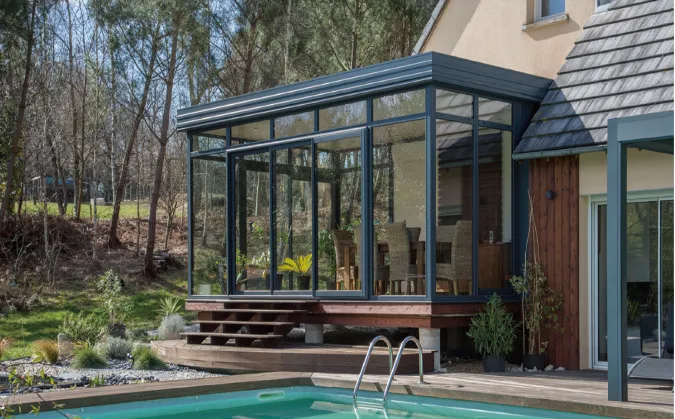
Picture this: You're sitting in your sun-drenched living room, warm light streaming through floor-to-ceiling windows. What if I told you those very windows could be powering your home while letting every ray of sunshine through? That's no longer sci-fi fantasy – researchers just smashed efficiency records with see-through solar glass that's changing how we think about renewable energy.
The real game-changer here is a brilliant combo of next-gen materials. Teams from across Europe have perfected a "sandwich" tech: ultra-thin organic solar cells layered with perovskite crystals – that miracle material that's been turning heads in solar circles. But here's the kicker – they've added an optical ninja called a Bragg reflector. Think of it like a light bouncer at an exclusive club, deciding which light wavelengths get turned into electricity and which pass through like regular sunlight.
"We've cracked the code on large-scale semi-transparency," beams Dr. Jessica Barichello from Rome's solar research hub. "Previous attempts either blocked too much light or barely generated power. Our panels work like sophisticated light managers – harvesting energy from invisible UV and infrared while your eyes enjoy clear views."
Let's talk real-world impact. Modern city skylines are basically forests of glass – and that's where this tech shines brightest. Professor Morten Madsen from Southern Denmark University paints the picture: "Those massive glass facades aren't just architectural statements anymore. Suddenly, every skyscraper window becomes a silent power generator. We're talking huge market potential without altering building designs."
Consider the numbers: Buildings swallow up 40% of Europe's energy. Now imagine slicing that number while turning structures into self-powered giants. The EU's already betting €4 million on this future through the CITYSOLAR initiative.
Here's where it gets really clever. Old-school solar panels work by gobbling up all sunlight – great for energy, terrible for visibility. The research team's breakthrough came from reimagining transparency itself. Their modules use what's essentially light engineering: directing specific light bands to tiny solar strips spaced just right to maintain that crystal-clear view.
"Think of stained glass, but for the science age," explains Barichello. "We're not blocking light, we're curating it. Our lab tests show we can fine-tune transparency based on whether it's going in an executive boardroom or a hospital greenhouse."
While city towers are the obvious beneficiaries, this tech's rippling out in fascinating directions:
"It's not just about office blocks," Barichello adds excitedly. "Our transparent modules could revolutionize agrivoltaic systems . Farmers get clean energy without sacrificing crop growth – that's dual-use land at its smartest."
Let's temper excitement with realism. These panels are currently at Technology Readiness Level 5-6. Translation? Proven in the lab, but not yet marching off production lines. Stress tests are ongoing – baking panels in desert-like heat, blasting them with accelerated sunlight years, checking how they fare as actual windows.
The durability question looms large. Current commercial windows last 15-30 years – can solar glass match that while maintaining efficiency? Early lifecycle analyses hint these panels might out-environmental traditional silicon cells, but rigorous comparisons are pending.
Think beyond megacities. Rural communities could turn entire home south walls into gentle power generators. Developing regions leapfrog power lines through self-sufficient buildings. Architects are already doodling designs where every sun-facing surface contributes to energy independence.
"This changes the aesthetic calculus," muses Madsen. "Suddenly sustainable buildings won't need clunky add-ons. Beautiful design and clean energy become inseparable."
Here's the unexpected part – the affordability factor. Both perovskite and organic solar materials are surprisingly budget-friendly to produce. Unlike some green tech that relies on rare earth metals, these panels lean on clever chemistry rather than scarce resources.
"It's not a premium product," Madsen insists. "When scaled, these could match or beat conventional window costs before you even factor in electricity savings." Imagine your window paying for itself in power rebates.
Let's address the elephants in the room:
The researchers acknowledge these hurdles but remain bullish. "Do we see the challenges? Absolutely," says Barichello. "But we know precisely which knobs to turn to address them. That's why we're collaborating with building material giants now – not later."
Close your eyes. Visualize urban canyons where every glass surface subtly harvests sunlight. High-rises transform from energy hogs into neighborhood power stations. Your car charges under solar glass parking shelters. Schools run daylight-filled corridors that lower bills.
"We're not just upgrading a material," Madsen reflects. "We're redesigning urban metabolism. When buildings stop consuming power and start producing it, we rewrite climate math."
This isn't marginal progress – it's a paradigm shift. The 18% efficiency milestone marks that magical moment where practical meets possible. As teams push toward commercial prototypes, we're glimpsing a future where sustainable design isn't about compromise, but synergy.
Your windows will stop being passive portals and become quiet energy partners. Buildings will silently fight climate change while bathing you in light. And somewhere in that brilliant equation, we'll find our sunlit path to cleaner cities and more beautiful sustainability. That's a breakthrough worth looking through.
Recommend Products












