
Riyadh, the beating heart of Saudi Arabia, is a city in constant motion. Cranes dot its skyline like modern-day giants, and new neighborhoods, commercial hubs, and public spaces emerge with the kind of speed that mirrors the kingdom's ambitious Vision 2030. But behind every gleaming tower, every bustling mall, and every cozy home lies a silent hero: the infrastructure that keeps buildings functional, safe, and sustainable. For over a decade, Coloria has stood as a trusted partner in this journey, not just as a residential building materials supplier or commercial building materials supplier , but as a one-stop architectural solution provider that understands the unique demands of Riyadh's construction landscape. Today, we shine a light on one of their most impactful offerings: PVC DWV pipe solutions—and the stories of how they've transformed projects across the city.
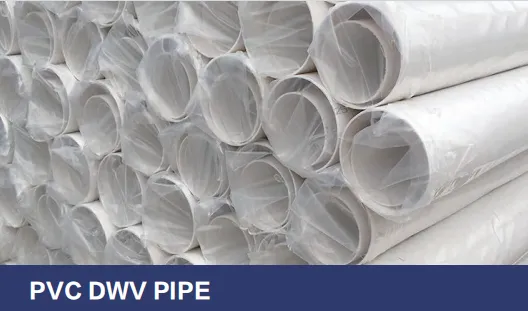
Before diving into the success stories, let's talk about the unsung workhorse of any building: the drainage, waste, and vent (DWV) system. These pipes carry away wastewater, prevent harmful gases from seeping into living spaces, and ensure that sinks, showers, and toilets function seamlessly. In a city like Riyadh, where temperatures soar above 45°C in summer and construction projects range from high-rise residential towers to sprawling hospitals, the stakes for DWV systems are sky-high. Old-fashioned materials like cast iron or galvanized steel often fall short—they corrode, are heavy to install, and struggle with the region's hard water and sand-laden air. Enter PVC DWV pipes: lightweight, corrosion-resistant, and designed to handle the unique challenges of Saudi construction. And as a leading PVC DWV pipe supplier , Coloria has redefined what these pipes can deliver.
"In Riyadh, a failed DWV system isn't just an inconvenience—it can delay projects by months, inflate costs, and even compromise building safety," says Omar Al-Mansoori, Coloria's Regional Sales Director for Saudi Arabia. "Contractors here don't just need pipes; they need reliability. They need a partner who can anticipate issues before they arise. That's where we come in."
To truly understand the impact of Coloria's PVC DWV solutions, let's step into three distinct construction sites across Riyadh. Each project faced unique hurdles, and each found its solution in Coloria's pipes.
In 2023, Riyadh's Al Murooj district broke ground on a 15-tower residential complex, designed to house over 5,000 families. The developer, Al Rajhi Real Estate, had a tight deadline: complete the project in 24 months to meet growing demand for affordable housing. But there was a problem: the complex's design included narrow wall cavities and multi-story vertical shafts—spaces where traditional heavy pipes would be impossible to maneuver without delaying construction.
"We initially considered cast iron pipes, but the weight alone was a dealbreaker," recalls Fahad Al-Zahrani, Project Manager at Al Rajhi. "Our workers would have needed extra equipment to lift them, and threading them through those tight shafts? It would have added at least three months to our timeline. We were stuck."
That's when Coloria stepped in. After conducting a site visit, their technical team recommended their PVC DWV pipe range, specifically engineered with thinner walls (without compromising strength) and lightweight materials. "Coloria's pipes weighed 70% less than cast iron, which meant our workers could carry them up stairwells and through shafts by hand," Al-Zahrani says. "Installation time dropped by 40%—we finished the entire DWV system for Tower 3 in just 10 days, compared to the 17 days we'd budgeted for cast iron."
But speed wasn't the only win. Al Murooj's location, near Riyadh's industrial zone, meant pipes would be exposed to occasional sandstorms and high humidity. Coloria's PVC DWV pipes, treated with a UV-resistant coating, have now withstood two summer seasons without signs of degradation. "We did a follow-up inspection last month," Al-Zahrani adds. "The pipes look as good as the day they were installed. For a residential project, that means fewer maintenance calls and happier tenants."
Hospitals are no ordinary construction projects. They demand materials that meet stringent health and safety standards—especially when it comes to systems that handle waste and sewage. In 2022, the King Saud University Medical Complex embarked on a $200 million expansion, adding a 12-story pediatric wing and a state-of-the-art laboratory building. Among the non-negotiable requirements: DWV pipes that could resist chemical corrosion (from hospital cleaners and medical waste) and prevent bacterial growth.
"Hospitals can't afford leaks or contamination," says Dr. Lina Hassan, Facilities Director at the medical complex. "We needed pipes that could stand up to harsh disinfectants, high temperatures, and the constant flow of waste. When we reached out to Coloria, they didn't just sell us pipes—they brought in their lab team to test samples against our specific cleaning agents."
Coloria's solution? A custom formulation of their PVC DWV pipes, reinforced with a smooth inner lining to minimize bacterial buildup and treated with an antimicrobial additive. "The lab tests were eye-opening," Dr. Hassan notes. "Coloria's pipes showed zero signs of corrosion after 1,000 hours of exposure to our strongest disinfectants—something even the competitor's stainless-steel pipes couldn't match. And the smooth lining means we can run camera inspections less frequently, saving on maintenance costs."
Today, the pediatric wing serves over 500 young patients daily, and the laboratory building handles sensitive medical waste. "We haven't had a single DWV-related issue in two years," Dr. Hassan says. "For a hospital, that's peace of mind you can't put a price on."
The Riyadh Metro, set to be one of the largest public transit projects in the world, isn't just about trains—it's about the commercial hubs sprouting up around its stations. Take the Olaya Metro Station Hub, a mixed-use development featuring a shopping mall, office spaces, and a food court, all built atop the metro line. The challenge? The hub's architects prioritized an open, airy design with exposed ceilings and minimal structural clutter. Traditional DWV pipes, with their bulky joints and unsightly connections, would have clashed with the aesthetic.
"We wanted the hub to feel modern and spacious," explains architect Nada Al-Faisal of Omrania, the firm behind the design. "Exposed pipes can work in industrial-style spaces, but here, we needed something sleek. Coloria's team suggested their slim-profile PVC DWV pipes with color-matched fittings. They even offered to custom-paint the pipes to blend with our ceiling panels."
The result? A DWV system that's both functional and visually unobtrusive. "The pipes are so thin and lightweight that we could mount them flush against the ceiling beams without adding bulk," Al-Faisal says. "Shoppers and office workers walk through the hub every day and never notice them—which is exactly the point. And when we had to reroute a section of pipe during the final design tweak, Coloria delivered custom-cut lengths within 48 hours. That kind of flexibility is rare in this industry."
| Project Type | Key Challenge | Coloria Solution | Outcome |
|---|---|---|---|
| Residential Towers (Al Murooj) | Heavy pipes slowing installation in tight spaces | Lightweight, thin-walled PVC DWV pipes | 40% faster installation; on-time project completion |
| Hospital (King Saud University Medical Complex) | Resistance to chemicals and bacterial growth | Antimicrobial, corrosion-resistant PVC DWV pipes | Zero leaks or contamination in 2+ years |
| Commercial Hub (Olaya Metro Station) | Design conflict with bulky traditional pipes | Slim-profile, color-matched PVC DWV pipes | Aesthetically seamless integration; quick design adjustments |
What makes Coloria's PVC DWV solutions more than just a product? It's the end-to-end support that turns a transaction into a partnership. Here's how they go the extra mile:
Coloria's Saudi-based team includes engineers and project managers who've worked on Riyadh's toughest sites. They understand local regulations (like compliance with SASO standards) and regional challenges (sand, heat, hard water) better than any international supplier. "We don't just import pipes—we adapt them to Riyadh," says Omar Al-Mansoori. "Our PVC DWV pipes are tested in our Jeddah lab to ensure they perform in 50°C heat and sand-laden air. That's the difference between a generic product and a solution built for this city."
Whether a project needs 10-foot pipes for a residential bathroom or 50-foot custom lengths for a commercial skyscraper, Coloria delivers. Their Riyadh manufacturing facility can produce pipes in diameters ranging from 1.5 inches to 12 inches, with custom colors, linings, and fittings. "We once created a purple PVC DWV pipe for a themed hotel project," laughs Al-Mansoori. "No request is too specific—because we know every project in Riyadh is unique."
In a city aiming for carbon neutrality by 2060, sustainability matters. Coloria's PVC DWV pipes are made from 30% recycled materials, and their lightweight design reduces transportation emissions by 50% compared to cast iron. "We also offer a take-back program for old pipes," Al-Mansoori adds. "It's our way of ensuring we're not just building for today, but for Riyadh's future."
From the Al Murooj towers where families now live comfortably to the King Saud University Medical Complex where children receive life-saving care, Coloria's PVC DWV pipes have become an invisible yet essential part of Riyadh's growth story. They're a testament to what happens when a supplier doesn't just sell materials, but partners with builders to solve problems.
"At the end of the day, construction is about people," says Al-Mansoori. "It's about the family that moves into their new home on time, the doctor who can focus on patients instead of plumbing issues, the shopper who enjoys a beautiful space without worrying about what's behind the walls. That's the impact we're proud of."
As Riyadh continues to reach for the sky, Coloria will be right there with them—proving that even the smallest components (like a PVC DWV pipe) can make the biggest difference in building a city that works, lasts, and thrives.
Recommend Products












