
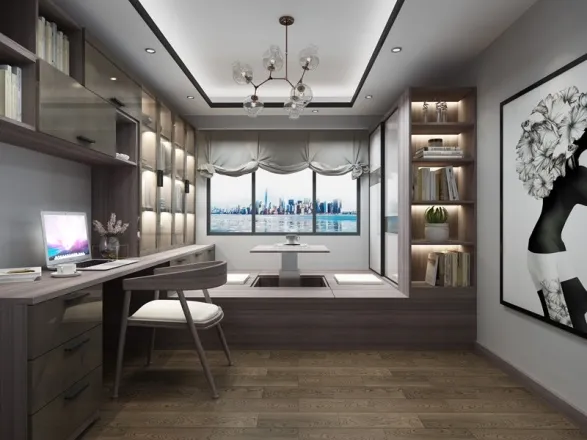
Creating sanctuaries where mind, body and words harmoniously meet
There's a gentle revolution happening in homes worldwide – a subtle shift from cluttered desks to intentional sanctuaries. We've all felt it: that restlessness when sitting at a conventional desk, the distraction of screens, the discomfort in our backs after hours of study. What if your reading corner could hug your senses instead of fighting them?
The magic of tatami lies not just in its texture underfoot, but how it reshapes our relationship with space. Unlike hard chairs that demand perfect posture, these bamboo-scented platforms invite you to curl up, stretch out, and find the position where your thoughts flow like water.
Let me share Sarah's story. For years, she dreaded tax season, hunched over her dining table amid household chaos. Then she transformed an awkward alcove near her bedroom window into a tatami reading corner. Suddenly, spreadsheets felt less like enemies. "It's not just comfortable," she told me, "it feels like my mind breathes differently there."
Creating a true sanctuary requires more than just throwing down a mat. It's a conversation between materials, light, and emptiness:
The Tatami Heartbeat : Opt for authentic rush-grass tatami where you can still smell summer fields. That slight give under your knees matters more than you think when you're lost in a novel for hours.
The supporting floor system needs consideration too – professional wood plastic flooring provides stability while complementing the natural aesthetic. And let's talk about bamboo screens: not as barriers, but as gentle reminders that this space exists apart from laundry piles and overflowing inboxes.
Lighting becomes prayer here. Forget harsh overheads – paper lanterns cast honeyed glows that settle the mind like deep breaths. And that awkward corner you've never known what to do with? Suddenly its limitations become strengths, creating a cocoon-like atmosphere perfect for custom closets storing meditation cushions and journals.
What fascinates me most about these spaces isn't what we add, but what we remove. The Zen principle of ma – purposeful emptiness – transforms a reading corner into a spiritual dojo:
You'll notice how different materials sing together: the cool touch of porcelain accessories balanced by warm wood paneling on walls. Or how integrated ceiling systems disappear upward rather than demanding attention downward.
When clients ask about soundproofing walls, I remind them: we're not creating silence tombs, but designing spaces where street sounds become background music and rustling pages turn into percussion.
The alchemy of these corners transforms them into life rafts on stormy days. Mark, a nurse who faced daily trauma during pandemic years, described his tatami corner as "an emotional airlock" where he could decompress between shifts.
There's neuroscience at play: The slight elevation change signals your brain you're entering sacred space. The smell of natural materials lowers cortisol. Even the act of removing shoes becomes a ritual shedding of worldly concerns.
Surprising magic : Many discover their corner becomes a creativity incubator. Ideas flow differently when seated cross-legged with a view of treetops through rice-paper screens.
For children, these sanctuaries instill life-long reading habits. Ten-year-old Leo told me his "book nest" is where Harry Potter truly came alive, simply because he could lay on his stomach kicking his feet like a contented grasshopper.
Ready to build your soul's harbor? The beauty lies in adaptability:
For studio apartments : A single reclaimed shipping pallet elevated just 4 inches with integrated storage beneath creates instant territory. Add a foldable bamboo screen that vanishes by day.
Under-stair voids : That awkward trapezoid space becomes a magical hobbit reading hole with waterproof paneling for shower walls repurposed as moisture-resistant backing.
Don't forget mobile solutions: A rollable tatami mat paired with canvas room dividers creates temporary sanctuaries in chaotic homes. Or go vertical – lofts with Japanese floor beds make stars your reading companions.
The most profound corners often blend modern solutions with ancient wisdom: hidden LED strips under floating shelves casting upward light like digital fireflies, surrounded by century-old meditation techniques.
Last week, I visited Eleanor in her tiny Brooklyn apartment. Between her two tatami mats barely larger than yoga mats stands a miraculous thing: an inherited cherrywood writing desk from Tokyo, where generations have composed letters now held in museums.
She laughed as she showed me: "The legs are slightly uneven, see? My grandfather placed matchbooks under one foot. I kept them there." The wobble survived bombing raids, ocean crossings, and now Manhattan earthquakes.
This is what we're really building: not perfect spaces, but living heirlooms. Where cushions mold to the shape of beloved behinds, where sunlight etches stories into tatami fibers, where every book absorbed becomes part of the corner's DNA.
So unroll your mat tonight. Not because Instagram demands aesthetics, but because your weary attention deserves sanctuary. Because that novel you've been meaning to read? It tastes richer when consumed kneeling on summer grass made permanent. Because in these humble corners, we rebuild our relationship with stillness – one mindful page turn at a time.
Recommend Products












