
Picture this: You're a project manager standing on a bustling construction site, clipboard in hand, and the clock ticking. The framing crew is ahead of schedule, the electricians are (wiring) like pros, but the plumbing team? They're stuck. The drain pipes they ordered are bulkier than expected, making them a nightmare to hoist up to the third floor. To top it off, the supplier forgot to include the necessary fittings, and now you're staring down a potential two-week delay. Sound familiar? For anyone in construction—whether you're building a cozy family home or a sprawling commercial complex—plumbing snags can feel like a never-ending battle. But what if there was a solution that lightens the load, cuts costs, and keeps projects on track? Enter PVC DWV pipes: the unsung workhorses of modern construction that are quietly transforming how we build, one drain line at a time.
In this article, we'll dive into why PVC DWV (Drain-Waste-Vent) pipes have become the go-to choice for contractors, builders, and architects alike. We'll explore their benefits, break down how they outperform traditional materials, and explain why partnering with the right pvc dwv pipe supplier —preferably a one-stop architectural solution provider —can turn plumbing from a headache into a highlight of your project. Let's get started.
Before we sing their praises, let's make sure we're all on the same page. DWV stands for Drain-Waste-Vent, and as the name suggests, these pipes are the backbone of a building's plumbing system. They're responsible for three critical jobs: carrying wastewater away from sinks, showers, and toilets (drain), removing solid waste (waste), and venting sewer gases to prevent odors and maintain proper pressure (vent). Without a reliable DWV system, you're looking at clogs, backups, and even health hazards—not exactly what you want in a new build.
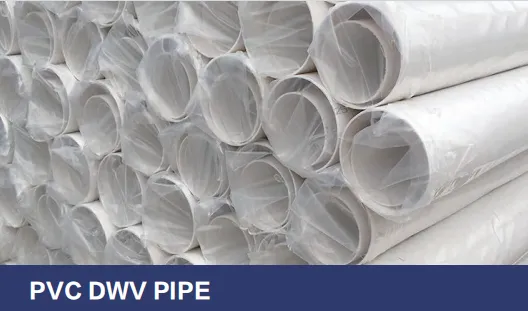
PVC, or polyvinyl chloride, is the material that makes these pipes shine. You've probably seen PVC pipes before—they're the white or gray tubes you might spot under sinks or behind walls. But not all PVC pipes are created equal. DWV pipes are specifically designed for non-pressurized applications, meaning they're built to handle the flow of water and waste without the high pressure of, say, a main water line. They're lightweight, durable, and surprisingly flexible, making them a favorite among installers.
What sets a quality pvc dwv pipe solution apart? It starts with the material itself. High-grade PVC DWV pipes are made from virgin resin, which ensures consistency in strength and performance. They're also engineered to resist corrosion, chemical damage, and the buildup of scale—common issues that plague older pipe materials like cast iron or galvanized steel. Add in smooth inner walls that minimize clogs, and you've got a pipe that's built to last, even in the busiest buildings.
If you've ever worked with cast iron pipes, you know the struggle. Those heavy, brittle tubes require multiple people to carry, special tools to cut, and hours of labor to install. Copper pipes, while reliable, are expensive and prone to corrosion in certain soils. So why have PVC DWV pipes become the new standard? Let's break down the benefits that have contractors and builders making the switch.
We'll start with the obvious: PVC DWV pipes are light. A 10-foot section of 4-inch PVC DWV pipe weighs around 10 pounds, compared to 70 pounds for the same size cast iron pipe. That might not sound like a big deal until you're carrying it up a flight of stairs or maneuvering it through a tight crawl space. "Back in the day, installing a DWV system on a second floor meant four guys grunting to get a single pipe up the ladder," says Mike, a master plumber with 30 years of experience. "Now, I can send two apprentices up with a bundle of PVC, and they're done in half the time. Less strain, fewer injuries, and the job moves faster—everyone wins."
Wastewater is harsh stuff. It's full of chemicals, detergents, and even acidic substances that can eat away at metal pipes over time. Cast iron, for example, is prone to rust and corrosion, leading to leaks and the need for costly replacements every 20-30 years. PVC DWV pipes, on the other hand, are inert to most chemicals found in household and commercial wastewater. They won't rust, rot, or degrade, even when exposed to harsh cleaning agents or soil conditions. That means a lifespan of 50+ years with minimal maintenance—a huge selling point for homeowners and building owners alike.
Ever wondered why some drains clog more than others? A lot of it comes down to the pipe's interior. Cast iron pipes have rough, porous walls that catch hair, grease, and debris, leading to frequent blockages. PVC DWV pipes, by contrast, have ultra-smooth inner surfaces that allow waste to flow freely. "I used to get called back to the same apartment complex every few months to snake drains,"s (recalls) Lisa, a plumbing contractor in Texas. "After they retrofitted the DWV system with PVC, those calls dropped by 75%. The smooth walls mean less buildup, and when there is a clog, it's usually near the fixture, not deep in the line. It's made my job so much easier."
Let's talk numbers. PVC DWV pipes are significantly cheaper than cast iron or copper. On average, PVC DWV costs about $1-$3 per linear foot, compared to $10-$15 for cast iron and $8-$12 for copper. But the savings don't stop at the material. Because PVC is lightweight and easy to install, labor costs are lower too. A study by the Plumbing-Heating-Cooling Contractors Association (PHCC) found that installing a PVC DWV system costs 40% less in labor than a cast iron system for the same building. When you factor in long-term maintenance—no repainting, no rust repairs, no early replacements—the total cost of ownership for PVC DWV is a fraction of traditional materials.
Whether you're building a single-family home, a high-rise apartment, or a commercial warehouse, PVC DWV pipes can handle the job. They come in a range of sizes, from 1.5 inches for small drains to 12 inches for main sewer lines, and can be easily cut and fitted to match any layout. Need to navigate around beams or joists? PVC's flexibility allows for gentle bends without the need for expensive elbows. Working in a cold climate? PVC DWV pipes are rated for temperatures down to -10°F, making them suitable for most regions. And for areas with strict building codes, top-tier pvc dwv pipe solutions meet or exceed industry standards, including ASTM D2665 (the standard for PVC DWV pipes in the U.S.) and ISO 1452-2.
Still on the fence? Let's put PVC DWV head-to-head with the two most common traditional materials: cast iron and copper. The table below breaks down key factors like cost, weight, installation time, and lifespan to help you see why PVC is quickly becoming the preferred choice.
| Factor | PVC DWV Pipe | Cast Iron Pipe | Copper Pipe |
|---|---|---|---|
| Weight (10ft, 4-inch pipe) | ~10 lbs | ~70 lbs | ~25 lbs |
| Material Cost (per linear foot) | $1-$3 | $10-$15 | $8-$12 |
| Installation Time (per 10ft section) | 15-20 minutes | 60-90 minutes | 30-45 minutes |
| Maintenance Needs | Minimal (no rust, no painting) | High (rust prevention, repainting) | Moderate (corrosion checks) |
| Expected Lifespan | 50+ years | 20-30 years | 40-50 years |
| Resistance to Clogs | High (smooth inner walls) | Low (rough inner walls) | Moderate (smooth but narrow diameter) |
As the table shows, PVC DWV pipes outperform traditional materials in nearly every category. They're lighter, cheaper, faster to install, and longer-lasting—all while requiring less maintenance. It's no wonder that 80% of new residential construction and 65% of commercial projects now use PVC DWV systems, according to the Plastics Pipe Institute.
So you've decided to go with PVC DWV pipes—great choice. But where do you start? Not all suppliers are created equal, and choosing the right partner can make or break your project. That's where a one-stop architectural solution provider comes in. These suppliers don't just sell pipes; they offer end-to-end support, from design to delivery to installation guidance. Let's explore why partnering with a one-stop provider is a game-changer for your construction project.
A DWV system is more than just pipes. You need elbows, tees, couplings, cleanouts, and vents to make it work. Ordering these parts from multiple suppliers can lead to delays, mismatched products, and unnecessary stress. A one-stop provider stocks everything you need under one roof, including specialized fittings for unique layouts. "Last year, we were working on a historic renovation where the DWV lines had to snake around original brick walls," says Sarah, a project manager for a commercial construction firm. "Our one-stop supplier not only had the standard pipes but also custom-made offset elbows that saved us from tearing out walls. They even 3D-printed a mockup to make sure it would fit. That kind of service is priceless."
Even experienced contractors can run into questions: What size pipe do I need for a restaurant kitchen? How much slope is required for a basement drain? A reputable pvc dwv pipe supplier employs technical experts who can answer these questions and more. They'll review your plans, suggest optimizations, and ensure your system meets local building codes. "I once had a new contractor order 2-inch pipes for a hotel laundry room, which was way too small," recalls Raj, a technical advisor at a leading one-stop provider. "We caught it during the quote process, recommended 4-inch pipes instead, and saved them from a major clog issue down the line. That's the value of having someone who knows the product inside out."
There's nothing worse than having your crew standing idle because the pipes didn't arrive. One-stop providers understand the importance of timely delivery and have logistics systems in place to ensure materials show up when you need them. Many offer same-day or next-day delivery for urgent orders and can coordinate with your construction schedule to avoid storage issues. "We once had a project where the framing was ahead of schedule, and we needed DWV pipes ASAP," says Tom, a residential builder. "Our supplier dropped them off within 24 hours, no extra charge. That flexibility kept us on track and avoided a $10,000 delay penalty."
Not all PVC DWV pipes are made to the same standards. Some suppliers cut corners with recycled materials or shoddy manufacturing, leading to weak spots or inconsistent sizing. One-stop providers, however, partner with trusted manufacturers and conduct rigorous quality checks to ensure every product meets industry standards. They'll provide test reports, certifications, and warranties, so you know you're getting a pipe that will perform as promised. "We had a bad experience with a cheap supplier once—pipes that cracked during installation," Mike, the master plumber, admits. "Now, we only work with one-stop providers who stand behind their products. If there's an issue, they replace it immediately, no questions asked."
Even the best pipes won't perform well if installed incorrectly. PVC DWV systems are relatively easy to install, but there are still best practices to follow to ensure longevity and efficiency. Let's walk through the key steps to a successful installation, from preparation to testing.
PVC pipes are easy to cut, but accuracy is key. Use a fine-toothed saw (hacksaw or miter saw) to ensure clean, square cuts—ragged edges can lead to leaks when glued. After cutting, deburr the inside and outside of the pipe with a file or deburring tool to remove any sharp edges. "A rough cut might seem okay at first, but over time, that burr can catch debris and cause clogs," warns Lisa, the plumbing contractor. "Take an extra 30 seconds to deburr, and you'll save hours of snaking drains later."
PVC DWV pipes are joined using solvent cement (often called "glue"), which chemically melts the plastic, creating a permanent bond. To do it right: Clean the pipe and fitting with a primer (which removes dirt and prepares the surface), apply a thin layer of cement to both, and push them together with a quarter-turn twist. Hold for 30 seconds to ensure a tight seal, then let it cure for at least 24 hours before testing. "Rushing the cementing process is the biggest mistake I see," Mike says. "People skimp on primer or don't hold the joint long enough, and then wonder why it leaks. Take your time—this step is critical."
DWV pipes rely on gravity to move waste, so slope is essential. The general rule is 1/4 inch of slope per foot for pipes 3 inches or smaller, and 1/8 inch per foot for pipes 4 inches or larger. Too little slope, and water will pool, leading to clogs and odors. Too much slope, and water will rush past solids, leaving them behind. "I use a level app on my phone to check slope as I go," says Sarah, the project manager. "It's simple, but it ensures every section is just right. No more guessing."
Once the system is installed, test it thoroughly before covering it with drywall or concrete. A water test is the most common method: Fill the pipes with water and let them sit for 24 hours to check for leaks. For larger systems, an air test (pressurizing the pipes with air and monitoring for pressure drops) can also work. "We had a subcontractor skip the water test once, and we didn't find the leak until the walls were up," Tom recalls. "Tearing out drywall to fix it cost us $5,000 and a week of delays. Don't skip the test—your budget will thank you."
In today's construction industry, sustainability isn't just a buzzword—it's a requirement. Builders and developers are under pressure to reduce carbon footprints, minimize waste, and create healthier buildings. So how do PVC DWV pipes fit into this green agenda? Contrary to some myths, PVC is a surprisingly sustainable choice when compared to traditional materials.
Producing PVC DWV pipes requires significantly less energy than manufacturing cast iron or copper. According to the Plastics Pipe Institute, PVC pipe production uses 50% less energy than cast iron and 75% less than copper. This lower energy use translates to fewer greenhouse gas emissions, making PVC a more eco-friendly option from the start.
A PVC DWV pipe can last 50+ years with minimal maintenance, meaning fewer replacements over the life of a building. Cast iron pipes, by contrast, often need to be replaced after 20-30 years, leading to more waste in landfills and more energy spent on manufacturing new pipes. "Sustainability isn't just about the material—it's about how long it lasts," says Raj, the technical advisor. "A pipe that doesn't need to be replaced for decades is one of the greenest choices you can make."
While PVC isn't as widely recycled as some materials, it is recyclable. Many one-stop providers offer take-back programs for old PVC pipes, which are then melted down and reused in non-plumbing applications like drainage pipes or landscaping edging. "We're seeing more demand for recycled PVC options," Sarah notes. "Our supplier now offers a line of DWV pipes made with 30% recycled content, which helps us earn LEED credits on our projects."
To put it all into perspective, let's look at a real-world example (with names changed for privacy). In 2023, a construction firm in Riyadh, Saudi Arabia, was tasked with building a 15-story mixed-use complex—retail on the first two floors, offices above, and a rooftop restaurant. The project had a tight 18-month deadline, and the plumbing team was struggling with delays due to cast iron pipe deliveries and installation challenges. That's when they turned to a local one-stop architectural solution provider specializing in pvc dwv pipe solutions .
The provider started by reviewing the project plans and suggesting a full switch to PVC DWV pipes. They highlighted the weight savings (reducing crane usage by 40%), faster installation time (cutting plumbing labor by 35%), and lower material costs (saving $120,000 on the plumbing budget). The construction firm was hesitant at first—cast iron had been the standard in Saudi Arabia for decades—but agreed to a pilot on the first three floors.
The results were staggering. The pilot took two weeks instead of the projected four, and the crew reported significantly less fatigue. Encouraged, the firm switched the entire project to PVC DWV. The one-stop provider delivered materials on a just-in-time schedule, avoiding storage issues on the crowded site. They also provided on-site training for the crew, ensuring proper installation. When the project was completed six weeks ahead of schedule, the construction manager called the switch "the best decision we made."
"We initially thought PVC was 'cheap,' but the quality and performance blew us away," he said. "The drains have been clog-free for a year, and the savings allowed us to invest in higher-end finishes for the restaurant. We'll never use cast iron again."
Construction is full of challenges—tight deadlines, budget constraints, and unexpected hurdles. But when it comes to plumbing, PVC DWV pipes offer a solution that's efficient, cost-effective, and reliable. From their lightweight design and easy installation to their long lifespan and low maintenance, these pipes are changing the game for contractors and builders around the world.
But the real secret to success? Partnering with the right supplier. A one-stop architectural solution provider doesn't just sell you pipes—they become an extension of your team, offering expertise, support, and peace of mind. Whether you're building a home, a hospital, or a high-rise, choosing a provider that offers top-tier pvc dwv pipe solutions ensures your project runs smoothly, on time, and on budget.
So the next time you're standing on a construction site, surrounded by the chaos of building, remember: The right materials and the right partner can turn even the most daunting project into a success story. And when it comes to DWV systems, PVC is more than just a pipe—it's a smarter way to build.
Recommend Products












