
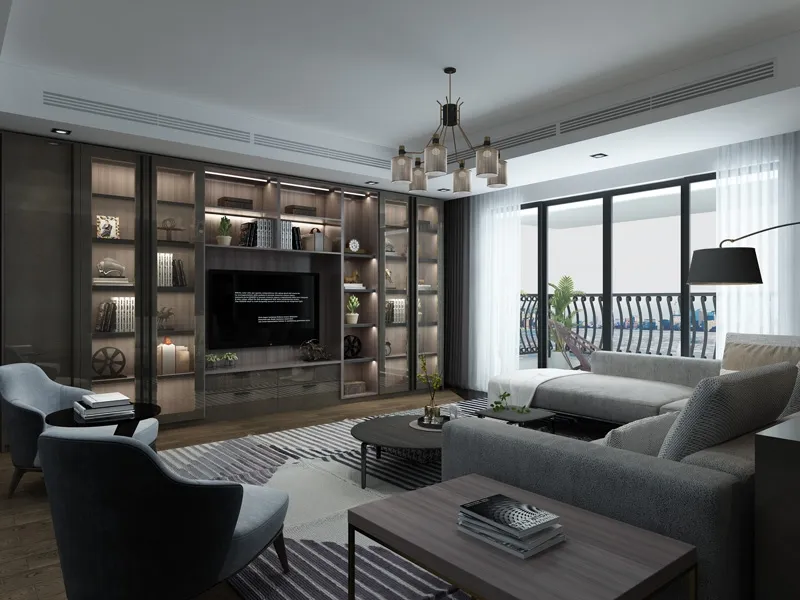
The complete guide to choosing the perfect cabinet for your television
Choosing the right TV cabinet isn't just about style - it's about creating harmony between your screen and your space. Most folks don't realize that a mismatched cabinet can actually make their entertainment system feel off-balance. We'll walk through all you need to know to make sure your TV looks like it was meant to live on that stand.
When I first set up my own entertainment center, I picked a cabinet that was too small. My 65-inch TV overwhelmed it, looking like a giant hat on a tiny head. After replacing it, the whole room just felt right in a way I hadn't even noticed was missing.
Designers often talk about the rule of thirds - your cabinet should extend slightly beyond both sides of the screen. It creates stability in your viewing area. Think of it like shoulders supporting a head. If your TV is too wide for the stand, it creates a constant visual tension that you'll feel every time you sit down to watch something.
Modern TVs are surprisingly light, but manufacturers still specify weight limits. A cabinet that's too narrow or poorly designed won't distribute weight safely. I've seen too many accidents where someone bumped against an unstable stand. Safety isn't something to compromise on.
Beyond the TV, we now have game consoles, streaming boxes, sound systems, and a pile of remotes. That small cabinet you love might leave your cords showing and your controllers scattered across the living room. A well-sized stand solves the clutter without shouting "look at all my electronics!"
Different TV sizes call for different cabinet dimensions. Here's a straightforward guide that balances visual harmony with function:
Optimal width: 44-50"
Depth: 16-18"
Height: 20-24"
Optimal width: 54-62"
Depth: 18-20"
Height: 22-26"
Optimal width: 66-74"
Depth: 20-22"
Height: 24-28"
Optimal width: 76-92"
Depth: 22-26"
Height: 26-30"
Custom solutions
Focus on storage
Integrated design
These aren't arbitrary numbers - they come from years of helping people find the perfect fit. When your cabinet's width extends about 6-10 inches beyond your TV on each side, it doesn't just look good, it feels right. And that extra breathing room makes mounting speakers much easier too.
Numbers only tell half the story. Real-life factors can completely change what works in your specific situation.
In smaller spaces, your cabinet becomes a room divider. Measure your walking paths - you want at least 30 inches clearance on all sides. When my neighbor Sarah tried squeezing a 74-inch cabinet into her narrow living room, people kept bumping their shins on the corners. A wall-mounted solution solved that beautifully.
Wall mounting changes the game. If you float your TV above the cabinet, you need different proportions. Aim for 3-8 inches of clearance below the TV. This creates a visual connection while preventing a "stuck on the wall" look. The solid wood TV cabinet I helped design last month solved this with floating shelves.
That soundbar adds height. Speakers need breathing room around them. Measure everything together before choosing. I once forgot this and ended up with my center channel speaker blocking the bottom inch of the screen - a fixable but annoying oversight.
The material you choose affects not just appearance but also practicality. Each has its own personality and requirements:
Solid wood options add warmth but are heavier. You need stronger wall anchors. My oak TV stand has lasted 15 years and still looks stunning. With bamboo charcoal wallboard becoming popular, we're seeing more eco-friendly options that resist wear while keeping cords neatly organized.
Sleek legs and open designs create an airy feel but show every dust bunny. Cable management becomes crucial. My brother's metal stand works perfectly in his minimalist loft but would overwhelm a cozy cottage.
They're gorgeous in magazines but fingerprints are constant battle. A friend of mine has to clean hers twice a week. On the plus side, they make smaller spaces feel larger by reflecting light.
The ugliest part of any entertainment system doesn't have to ruin your aesthetic:
Quality cabinets offer internal pathways for cords. I retrofitted my parents' antique cabinet with stick-on channels. That small change took them from frustrated to functional in an afternoon.
Woven fabric sleeves changed how I manage cables. Combined with strategic placement of decor items, you can turn cord chaos into calm. Even something as simple as coordinating binder clips can work wonders.
Some cabinets now include discreet side ports. My current setup has these and I can't imagine going back. That easy access makes changing connections a breeze instead of furniture gymnastics.
Standard advice doesn't always fit unique spaces. Here are common challenges with practical fixes:
For spaces where every inch counts, corner cabinets are lifesavers. I helped a client fit a 55-inch TV in just 100 square feet with a diagonal placement. Adding slim profile wall panels saved even more space without sacrificing style.
Sunken living rooms or dramatic architecture need custom solutions. Modular cabinets with floating components create flexible arrangements. Rotating mounts can also turn design obstacles into advantages.
When your entertainment center needs to look good from every angle, back panels matter. Low-profile designs keep focus on the screen without becoming barriers. I recently installed one with a beautiful two-sided finish that works as a natural room divider.
Your entertainment system evolves. A good cabinet grows with you through these common changes:
Anticipate your next TV size. Many stands accommodate a size up if you remove side components. Mine transitioned from 50 to 65 inches by simply relocating the speakers.
Homes aren't static. Removable feet and panel systems make reconfiguring easier. When I switched my living room layout, being able to detach a side extension made everything fit perfectly.
Streaming devices keep evolving. Dedicated spaces for consoles with proper ventilation prevent overheating. My open-shelf section has cycled through three game systems without issue.
Finding that perfect TV cabinet isn't just about numbers - it's about creating an inviting space where technology disappears into comfort. When you get it right, you don't notice the stand at all; you just enjoy your entertainment. It took me years to learn that the secret isn't matching exact dimensions, but creating visual harmony.
Remember to leave some breathing room for the future. Your current tech collection will grow, and your needs will change. The best investment you can make is in a solution that adapts. Whether you choose a solid wood TV cabinet, modular units, or wall-mounted systems, make sure it fits both your screen and your life.
Your entertainment center should invite you in, not announce itself. With thoughtful sizing and design, your TV cabinet becomes the silent partner in creating countless evenings of connection and enjoyment.
Recommend Products












