
When it comes to piping systems in sensitive industries like food processing or pharmaceuticals, "it's not just about moving fluids—it's about guaranteeing purity from point A to point B." That's where specialized standards like 3A Sanitary Standards come into play, layering crucial requirements on top of foundational certifications like ASTM.
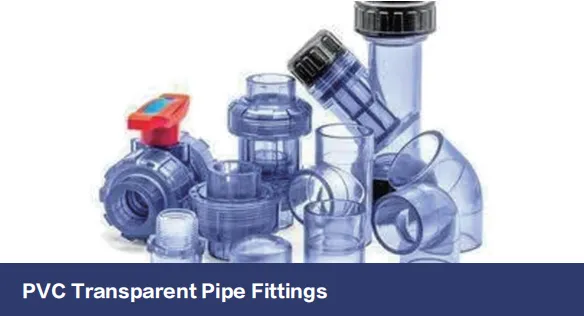
Picture this: You're in a dairy plant observing pasteurization. That milky fluid flowing through those crystal-clear pipes? That's PVC transparent piping at work. But what keeps that milk from picking up contaminants or bacterial hitchhikers during its journey? That's where 3A sanitary standards enter the equation.
While ASTM sets the baseline for material strength and physical properties, 3A standards go the extra mile focusing specifically on hygiene-critical applications. They zero in on aspects mainstream standards might overlook:
3A demands incredibly low surface roughness (typically below 0.8 µm Ra) so milk proteins or bacteria can't find purchase in microscopic crevices. It's like comparing a polished marble floor to textured concrete—both might be structurally sound, but one's far easier to clean.
Those clear pipes aren't just for show. Visual inspection requirements demand unobstructed visibility to spot potential contamination, residues, or flow abnormalities without disassembly.
Interestingly, many plants now integrate lightweight building decorative panels alongside their piping systems for both functional and aesthetic purposes—showing how hygiene and design increasingly coexist in modern facilities.
| Requirement Area | Standard ASTM Requirement | 3A Add-Ons |
|---|---|---|
| Material Composition | Meets PVC compound standards (ASTM D1784) | Zero pigment additives, UV stabilizer restrictions |
| Joint Geometry | Pressure tolerance (ASTM D2467) | Radiused corners, zero dead space design |
| Surface Finish | Visual inspection | Quantified Ra measurements, reflectivity tests |
| Cleanability | General chemical resistance | Validated CIP/SIP protocols with specified agents |
Transparency isn't just about seeing liquid flow—it's a safety protocol. During installation, technicians can verify proper assembly and seating. During operation, inspectors can spot biofilm formation early. And during cleaning cycles, staff can confirm no residues remain in crevices.
"We've caught early-stage contamination twice this quarter just by noticing slight discoloration in elbow joints," shares a quality manager at a yogurt facility. "With opaque piping, we wouldn't have seen it until lab tests came back days later."
Meeting 3A standards while maintaining structural integrity requires careful balancing:
Standard PVC stabilizers that work perfectly in construction-grade pipes might be prohibited for risking chemical migration. Manufacturers must find alternatives that pass extraction tests without compromising durability.
Conventional injection molding leaves subtle witness lines at seams—unnoticeable in most applications but potential contamination sites under 3A scrutiny. The solution? Specialized tooling and polishing protocols adding 30-40% to production time.
Transparency creates unique maintenance considerations:
Light exposure becomes a durability factor. UV stabilizers must comply with FDA 21 CFR 177 materials regulations while preventing yellowing. Facilities often install protective sleeves on outdoor runs.
Scratch resistance takes on new importance. Unlike conventional pipes where surface marks are cosmetic, in transparent systems they become visual obstructions requiring replacement. Facilities train staff specifically on handling procedures.
Unlike conventional ASTM compliance verification which focuses on lab testing, 3A involves three-dimensional validation:
A dairy equipment installer explained: "We actually get audited on how we unpack fittings onsite. Plastic wrap residue in a crevice? That's a violation."
The premium for 3A-compliant transparent fittings ranges from 50-100% over standard sanitary PVC due to:
| Cost Factor | Impact |
|---|---|
| Specialized Materials | Optical-grade resins meeting extractables limits |
| Tooling Requirements | Mirror-finish molds with micro-polishing |
| Inspection Protocols | Per-unit light transmission measurements |
| Certification Costs | Annual renewal audits by accredited bodies |
But breweries find this pays dividends: "Finding contamination points visually during weekly walkthroughs saves us about $200k annually in lab tests alone," reports a brewery maintenance chief.
The future of hygienic standards involves:
Early prototypes embed micro-sensors without compromising cleanability, detecting biofilm formation before it's visible.
Nano-coatings that repel proteins and make visual inspection even more effective while reducing cleaning agent use.
As biotech industries grow, expect to see these standards adapted for higher temperature applications and specialized chemical resistance needs well beyond current dairy requirements.
The move toward integrated ceiling systems in processing facilities creates new design paradigms—overhead utility corridors now require the same hygienic compliance as processing lines.
Implementing these systems successfully requires:
A chocolate manufacturer found creative solutions: "We now run blue dye tests quarterly—pumping colored solution through the system to visibly check for retention in any fittings."
Recommend Products












