
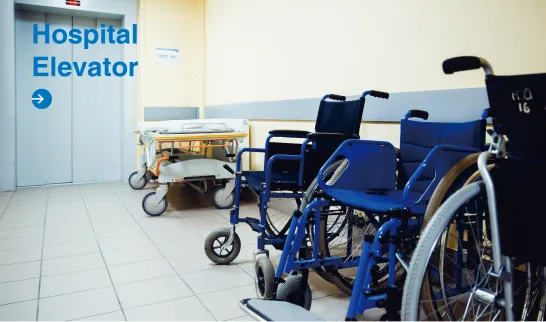
The critical role of elevator access in life-saving environments
Imagine rushing to surgery or transporting critical medication when elevator doors close just inches from your face. This scenario plays out daily in healthcare facilities where standard elevator systems fail to meet specialized medical requirements. Unlike commercial buildings, hospitals present unique challenges that transform elevator installation from routine construction to precision engineering.
These fundamental requirements establish what separates medical elevators from their commercial counterparts. The presence of MRIs alone necessitates non-magnetic materials throughout the cab and machinery.
Renovating operational hospitals parallels performing open-heart surgery on a marathon runner - the patient must keep running throughout the procedure. This demands unprecedented coordination between contractors and medical staff, scheduled around life-critical routines.
During their 2022 East Wing expansion, surgical teams maintained trauma center operations within 30 feet of demolition zones through:
Such implementations reduced project disruptions by 78% compared to standard renovation approaches.
Elevator cabs become accidental disease vectors without proper design considerations. Every touchpoint requires specialized treatment:
These integrated features transform elevators from potential weak points into protective barriers.
When Category 4 hurricane Elena flooded Tampa General's lower levels, their elevator systems continued functioning through:
Such comprehensive hardening preserves hospital operations during disasters when communities need them most.
The rapid evolution of healthcare technology demands adaptable vertical transport systems:
These innovations create infrastructure that evolves alongside medical breakthroughs rather than hindering progress.
Transforming theory into operational reality requires careful orchestration:
Each requirement represents another layer ensuring uninterrupted patient care during disruptive upgrades.
During their five-year master facility upgrade, they maintained 100% operational capacity through:
Behind every technical specification lies human consequence:
Consider premature infants traveling to life-saving treatment - vibration-free transport isn't engineering luxury but neurological necessity. Or elderly patients with compromised immunity - antimicrobial surfaces represent literal life preservation. These aren't construction projects but vital pathways connecting care.
Each metric reveals how thoughtful elevator installation extends beyond mechanics to meaningfully impact care quality.
True medical-grade elevators represent far more than vertical transport - they're circulatory systems sustaining healthcare ecosystems. Through meticulous planning, advanced engineering, and unwavering focus on patient outcomes, we create environments where elevators become nearly invisible - seamlessly performing their vital function without disrupting the sacred work happening around them.
As healthcare advances, so must our approach to the infrastructure supporting it. Only by embracing these specialized requirements can we ensure hospitals remain sanctuaries of healing today while building adaptable foundations for tomorrow's medical breakthroughs.
Recommend Products












