
Picture this: Those sleek solar panels glinting on rooftops today will inevitably reach retirement age. With solar adoption booming, we're facing a tidal wave of panels needing proper retirement plans. The solar industry isn't just about installation anymore – it's about creating cradle-to-grave solutions that make sense for our planet and economy.
What many don't realize is that solar panels contain valuable stuff – silicon, silver, aluminum – all wrapped in glass. Tossing them would be like throwing away buried treasure. With the right recycling approach, we could recover enough silver worldwide each year to make jewelry for every newborn in America, plus enough aluminum to build hundreds of airplanes.
Early recycling efforts were pretty primitive – smash and separate. But today's tech is getting sophisticated:
Special furnaces heat panels just enough to melt bonding materials without damaging precious metals. One Swedish company uses temperatures tuned perfectly to release materials layer-by-layer like peeling an onion.
Think of it as a high-tech spa treatment for panels. Chemical solutions dissolve adhesives and coatings to free up pure silicon wafers that can get a second life in new panels.
Automation is stepping in – robotic arms equipped with AI vision can disassemble panels faster than a team of technicians, carefully extracting each material stream.
The game-changer? Emerging techniques can now recover over 95% of materials without downcycling. That's huge when you consider solar farms contain metals worth millions per installation.

The recycling pipeline has evolved into a sophisticated network with specialized players:
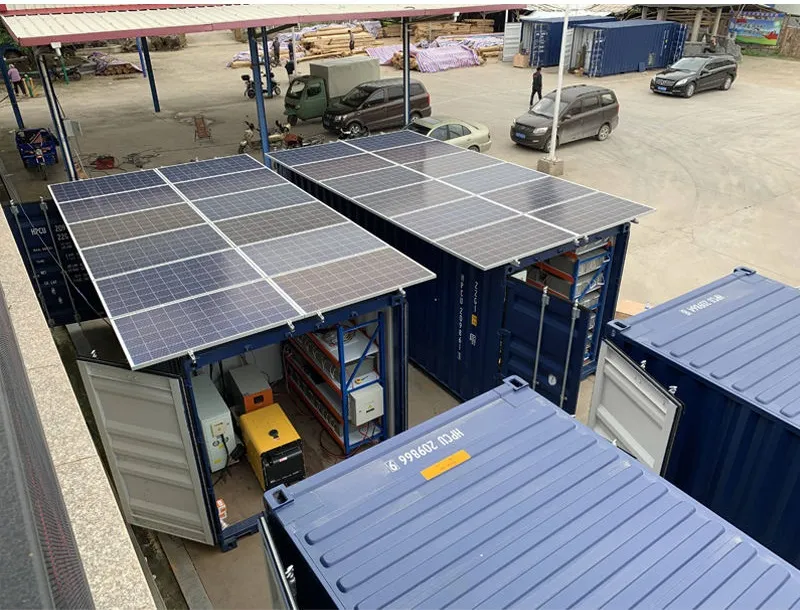
Companies handling transportation logistics with custom solar containers and predictive models anticipating retirement waves.
Dedicated facilities located strategically near major solar farms to minimize transport costs and carbon footprints.
Companies incorporating recycled materials back into new panels, reducing mining needs by up to 30%.
Interestingly, some former solar installation companies have pivoted to offer full lifecycle services. This transition makes perfect sense – who knows the product's journey better than those who installed it decades prior?
The real magic happens when manufacturers design with disassembly in mind. Some new panels come with quick-release fasteners and modular components that take recycling cost from $25/panel down to just $2/panel.
While Europe leads with regulatory frameworks like WEEE (Waste Electrical and Electronic Equipment), U.S. states are catching up:
The numbers tell an exciting story:
The recycling market has ballooned from $50M in 2015 to over $500M today, heading toward $3B+ by 2030
New recycling hubs create 12-15 skilled jobs per thousand tons processed
Meanwhile, innovative financing models are emerging. Some companies offer upfront discounts on installations when you pre-pay the recycling cost – like a retirement fund for your panels.
Silver recovery alone could change the economic calculus – solar panels contain about 20g of silver each, meaning large solar farms contain literal tons of reclaimable precious metals.
Despite progress, hurdles remain:
Older panels differ wildly from new PERC and bifacial models – requiring flexible recycling techniques
Collection logistics from remote solar farms can eat 60% of the recycling budget
We need buyers willing to pay competitive prices for recycled silicon and specialty glass
The volume challenge is real – this decade will see 10 million tons of solar panels reaching end-of-life worldwide. That's the equivalent weight of about 500,000 school buses needing recycling.
Emerging encapsulation technologies could be game-changers. New polymer coatings help separate materials more easily while making panels last longer – extending lives to 50+ years while simplifying eventual recycling.
Looking forward, the recycling landscape shows promise:
Projected to jump from 80% to 98% within this decade as new tech scales
Reusing materials saves 70-90% energy versus mining/virgin production
Imagine this: By 2050, recycled materials could meet over 40% of solar manufacturing needs. That means nearly half of new panels would come from yesterday's solar installations – true technological reincarnation. The recycling industry is poised to become renewable energy's sustainability backbone.
Recommend Products












