
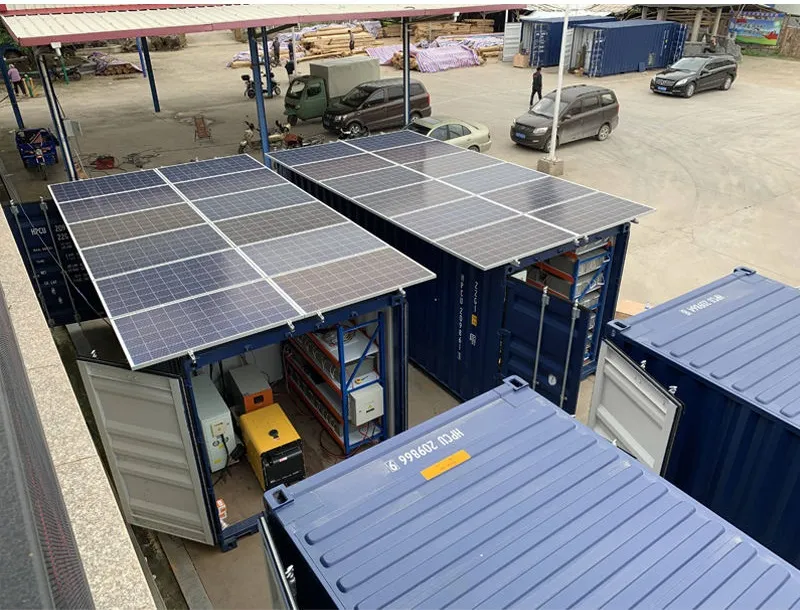
Remember when solar panels barely cracked 600 volts? Those days seem ancient now. We've witnessed an incredible evolution in solar technology - modules that produced 175W just two decades ago now pump out 300W or more. This efficiency revolution has pushed us toward higher-voltage systems that deliver serious advantages but come with equally serious safety considerations.
The jump to 1500V isn't just some arbitrary number. It's born from practical necessity - utility-scale developers are under intense pressure to meet skyrocketing power demands. Compared to older systems, 1500V setups generate more power with fewer strings, less wiring, fewer combiner boxes, and significantly reduced installation labor. And here's a simple electrical truth: higher voltage at the same current means less voltage drop, which translates directly to cost savings and performance gains.
But don't forget the flip side: power equals voltage times current. A 50% voltage boost (from 1000V to 1500V) brings increased power and exponentially greater safety hazards . We're playing in a whole new league of electrical risk.
Designing 1500V systems isn't just about slapping bigger numbers on spec sheets. Every single component must be rated for 1500V or higher - from wiring and modules to fuse holders, circuit breakers, disconnects, and inverters. There are no shortcuts here.
Safety starts with proper component selection. For installations with inverter capacity over 5000kW that aren't exclusively utility-owned, you'll need to comply with NEC Article 691 for Fire Prevention. And if you're incorporating lithium-ion storage batteries? That adds flammable chemical safety considerations and fire suppression requirements to the mix.
Here's where it gets interesting for solar panel suppliers. When selecting modules, most people focus on wattage efficiency, but dielectric strength is equally important. Modules aren't just electricity generators - they're physical barriers against high-voltage transients. I've seen too many projects where teams prioritized production specs while giving insulation coordination short shrift.
Let's crunch some real numbers showing why the industry is shifting to higher voltages. At 1000V, you'd typically connect 22 modules in series to create a string generating about 5.5kW peak power. For a 15MW installation, that meant approximately 2,727 strings.
Bump that to 1500V and suddenly the current entering each combiner drops to 66.6% of the 1000V value. Even better, resistive cable losses plummet to just 44.4% . This gives designers incredible flexibility to enhance energy efficiency while actually cutting installation costs with smaller cables and connectors.
But the magic happens with combiner boxes. Assuming each handles 20 strings, that 15MW installation now requires just 94 boxes compared to 137 at 1000V - a 31% reduction . GTM Research calculated that designing a 10MW plant at 1500V reduces deployment costs by approximately $400,000 compared to a 1000V system. Those aren't theoretical savings - they're transforming project economics.
Higher voltage means dramatically increased safety requirements throughout the system. We're talking about:
These technical requirements create physical consequences. Tools designed for 1500V systems must be physically larger than their 1000V counterparts to accommodate these increased distances. Yet here's an industry blind spot: many teams still use testing equipment designed for lower-voltage systems. That's playing Russian roulette with high-voltage environments.
The solution? Check your tool's International Electrotechnical Commission (IEC) voltage rating. Avoid anything rated only for 1000V - even if it can measure 1500V, it won't provide adequate safety protection. And verification must come from independent third-party testing at 1500V - in-house or 1000V-only testing doesn't cut it.
Here's something most people overlook until they're deep in installation: combiner boxes and inverters need low-voltage power for monitoring and control systems. This creates a challenging technical puzzle - we need small DC-DC converters that operate reliably at 1500V input yet handle voltage dips as low as 200V. That's a massive 7.5:1 input range requirement.
The applicable safety standard is IEC 62109-1 for power converters up to 1500V. This covers protection against electrical shock, mechanical hazards, fire risks, and high temperatures. Partial discharge testing becomes critical - those microvoids in insulation can cause progressive degradation leading to catastrophic failure.
Manufacturers like CUI have responded with specialized solutions such as their AE series DC-DC converters. These handle 200-1500V inputs while delivering outputs from 5-24V, with 4000Vac isolation and altitude ratings up to 5000 meters. Choosing such purpose-built components isn't a luxury - it's fundamental to system safety.
1500V isn't the finish line - industry forecasts point toward 2000V systems becoming commercially viable in the coming years. This will push efficiency boundaries even further while demanding:
The safety conversation needs to evolve alongside the technology. We'll need updated testing protocols, new certification standards, and fundamentally different safety culture practices on installation sites. Remember that early 1000V installs? They'll look primitive compared to what's coming.
1500V systems represent an incredible opportunity - more power, less cost, greater efficiency. But these advantages depend entirely on rigorous safety implementation. The rules are clear:
The future of solar is higher voltage. But that future only becomes reality if we prioritize safety in design specifications today. Get it right, and we unlock unprecedented efficiency gains. Cut corners, and we risk catastrophic consequences. The choice is clear.
Recommend Products












