
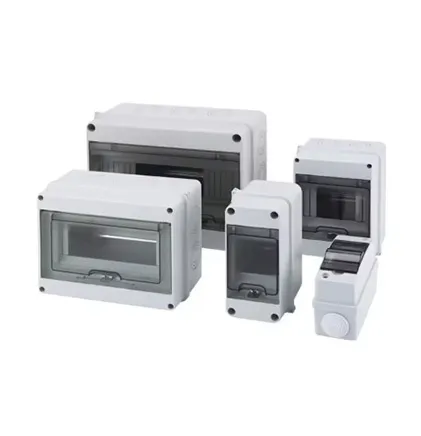
Walk onto any modern construction site these days, and you'll notice a silent revolution happening behind the scenes. Gone are the days of tangled wires, constant power outages, and guesswork when it comes to electrical management. Today's building projects—whether residential high-rises, commercial complexes, or industrial facilities—demand something smarter, more efficient, and infinitely more reliable. Enter smart distribution box systems: the unsung heroes that keep construction sites powered, safe, and aligned with the demands of 21st-century building. But what makes these systems so essential? And how do they fit into the bigger picture of modern construction? Let's dive in.
Think back to a construction site from 20 years ago. Chances are, the electrical setup was a maze of extension cords snaking across the ground, fuse boxes that tripped at the slightest overload, and electricians spending hours troubleshooting why the power went out in the third-floor west wing. It wasn't just inefficient—it was risky. Overloaded circuits led to fires, unmonitored power usage ran up costs, and delays from electrical issues threw entire project timelines off track.
Even today, many sites still rely on basic distribution boxes that do little more than split power from a main source. These "dumb" systems can't communicate, can't adapt to changing needs, and give project managers zero visibility into how electricity is being used. When a problem occurs—like a sudden voltage spike or a short circuit—you only find out when the lights go out or a tool stops working. By then, the damage is done: time lost, work halted, and potentially safety hazards created.
And let's not forget sustainability. With global construction accounting for nearly 40% of energy consumption, traditional electrical systems are major contributors to waste. They can't optimize power usage, can't integrate with renewable energy sources like solar panels, and often run at full capacity even when tools are idle. In an era where every project aims to meet green building standards, this kind of inefficiency is no longer acceptable.
So, what exactly sets a smart distribution box apart from its traditional counterparts? At its core, a smart system is like having an electrical brain on-site. It doesn't just distribute power—it manages it. Let's break down the key features that make these systems game-changers:
Real-Time Monitoring : Imagine being able to check the power usage of every tool, every floor, and every zone on your site from a tablet or laptop. Smart distribution boxes come with sensors that track voltage, current, and energy consumption in real time. This means you can spot a potential overload before it happens, identify which areas are using too much power, and even predict when maintenance might be needed.
Remote Control : Forgot to turn off the power to the second-floor lighting after the crew left? No problem. Smart systems let you switch circuits on or off remotely, adjust power limits, and even lock certain outlets to prevent unauthorized use. This isn't just convenient—it's a lifesaver for night-time security or emergency situations.
Alerts and Notifications : Instead of waiting for a blackout, you'll get instant alerts on your phone if there's a voltage drop, a circuit overload, or a fault in the system. Some advanced models can even diagnose the issue, telling you exactly which tool or circuit is causing the problem. This cuts troubleshooting time from hours to minutes.
Data Analytics : Over time, smart distribution boxes collect data on power usage patterns. This information can help project managers optimize energy consumption, schedule work around peak usage times, and even negotiate better electricity rates with suppliers. It's like having a built-in energy consultant for your site.
Integration with Renewable Energy : As more construction sites adopt solar panels or wind generators, smart systems seamlessly integrate these renewable sources. They can prioritize solar power when the sun is shining, switch to grid power when needed, and store excess energy for later use. This not only reduces carbon footprints but also lowers energy costs significantly.
To really understand the impact of smart distribution boxes, let's compare them side by side with traditional systems. The difference is night and day:
| Feature | Traditional Distribution Boxes | Smart Distribution Box Systems |
|---|---|---|
| Monitoring | No real-time data; issues only detected after failure | 24/7 real-time monitoring of voltage, current, and usage |
| Control | Manual switches; must be on-site to adjust | Remote control via app/software; adjust settings from anywhere |
| Safety | Reliant on fuses; slow response to overloads | Instant alerts and automatic shutdown during hazards |
| Energy Efficiency | No optimization; power usage often wasteful | Data-driven usage optimization; integration with renewables |
| Cost Savings | High energy bills; frequent maintenance costs | Reduced energy waste; lower maintenance; fewer delays |
The numbers speak for themselves. A recent study by the Construction Industry Institute found that sites using smart electrical management systems reduced energy costs by an average of 23% and cut downtime due to electrical issues by 40%. For large-scale projects, that translates to savings in the tens of thousands of dollars—and that's not even counting the added safety benefits.
Today's construction projects aren't just about building structures—they're about building sustainably , safely , and efficiently . Smart distribution boxes align with all three of these goals, making them a must-have for forward-thinking developers and contractors.
Sustainability : With global initiatives like Saudi Arabia's "2030 Vision" pushing for greener construction practices, reducing energy consumption is no longer optional. Smart systems play a key role here by minimizing waste and integrating with renewable energy sources. For example, a site using solar panels can use a smart distribution box to store excess energy during the day and use it to power tools in the evening, reducing reliance on fossil fuels.
Safety : Construction sites are inherently risky, but electrical hazards are among the most preventable. Smart distribution boxes reduce the risk of fires, electrocutions, and equipment damage by monitoring for faults and shutting down circuits automatically. They also provide detailed logs of electrical activity, which can be used to train crews on safe practices and improve future site layouts.
Efficiency : Time is money in construction, and delays can cost projects thousands of dollars per day. Smart systems eliminate the guesswork from electrical management, ensuring that power is always available where and when it's needed. They also reduce the need for on-site electricians to constantly check and adjust systems, freeing up labor for more critical tasks.
Take, for example, a commercial high-rise project in Riyadh. The contractor installed smart distribution boxes across all 20 floors, each connected to a central dashboard. Within the first month, they noticed that the third-floor electrical zone was using 30% more power than expected. A quick check via the system's app revealed a faulty air conditioning unit that was drawing excess current. By replacing it immediately, they avoided a potential fire and saved over $12,000 in energy costs over the project's duration.
Not all smart distribution boxes are created equal. When selecting a system for your project, there are a few key factors to consider:
Scalability : Your system should grow with your project. Look for modular designs that allow you to add more circuits or features as the site expands. A system that works for a small residential build might not be sufficient for a large commercial complex, so choose one that can adapt to changing needs.
User-Friendliness : The best technology is useless if your crew can't figure out how to use it. Opt for systems with intuitive interfaces—think touchscreens, simple apps, and clear dashboards. Training should be minimal, and support should be readily available if questions arise.
Integration Capabilities : Can the system work with other tools you're already using? For example, if you use project management software or BIM (Building Information Modeling) tools, a smart distribution box that syncs data with these platforms can provide even deeper insights into site operations.
Reliability : Construction sites are tough environments—dust, moisture, and temperature fluctuations are par for the course. Your smart distribution box should be built to withstand these conditions, with durable materials and weatherproof casing.
This is where partnering with a trusted distribution box supplier makes all the difference. A company with experience in the construction industry will understand your unique needs and can recommend a system that fits your project's size, budget, and sustainability goals. They can also provide ongoing support, from installation to maintenance, ensuring that your system runs smoothly from groundbreaking to completion.
Smart distribution boxes are just the beginning. As construction becomes more digitized, we're seeing the rise of fully connected "smart sites," where every piece of equipment—from cranes to power tools—is linked to a central network. In this ecosystem, the distribution box acts as the heart, distributing power and data to keep everything running in harmony.
Imagine a site where your smart distribution box communicates with your solar panels to adjust power usage based on weather forecasts, alerts your project management software when a circuit is overloaded, and even orders replacement parts automatically when a component is wearing out. This level of integration isn't science fiction—it's already happening on forward-thinking sites around the world.
And as sustainable building solutions become the norm, smart electrical systems will play an even bigger role. They'll enable sites to run entirely on renewable energy, track carbon footprints in real time, and meet the strictest green building certifications. For developers looking to stay ahead of regulations and consumer demand, investing in these technologies isn't just smart—it's essential.
"The construction industry has always been about building the future, but now we're building it smarter. Smart distribution boxes aren't just tools—they're the foundation of a more efficient, safer, and greener way to build."
When it comes to implementing smart distribution box systems, experience matters. A provider with decades of expertise in the construction materials industry will understand the unique challenges of different project types—whether it's a residential development, a commercial complex, or an industrial facility. They'll know how to design a system that integrates with your existing workflow, meets local safety standards, and delivers the efficiency gains you need.
Look for a partner that offers more than just equipment. The best providers will work with you from the planning stage, conducting site assessments to determine your power needs, recommending the right system, and providing training for your crew. They'll also offer ongoing support, ensuring that your system stays up-to-date with the latest software updates and can adapt as your project evolves.
In regions like the Middle East, where construction is booming and sustainability goals are ambitious, partnering with a provider that understands local markets is especially important. A company with a strong presence in Saudi Arabia, for example, will be familiar with the country's "2030 Vision" and can help you align your project with national sustainability targets. They'll also have the logistical capabilities to deliver equipment quickly and provide on-the-ground support when needed.
Smart distribution box systems are more than just a trend—they're a fundamental shift in how we manage power on construction sites. By combining real-time monitoring, remote control, and data analytics, these systems are making sites safer, more efficient, and more sustainable than ever before. They're reducing costs, minimizing delays, and helping developers meet the green building standards that are becoming increasingly important in today's market.
As construction continues to evolve, the sites that thrive will be those that embrace these technologies. Whether you're building a small residential project or a large commercial complex, investing in a smart distribution box system is an investment in the success of your project. It's about more than just powering tools—it's about powering progress.
So, the next time you walk onto a construction site, take a moment to look beyond the cranes and concrete. Chances are, there's a smart distribution box quietly working behind the scenes, keeping everything running smoothly. And as these systems become more advanced, they'll continue to shape the future of construction—one circuit at a time.
Recommend Products












