
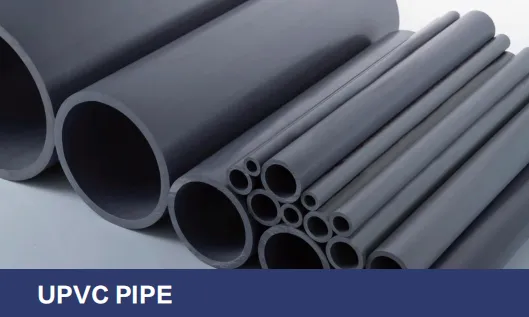
When it comes to building or renovating a space—whether it's a cozy home, a bustling office, or a sprawling commercial complex—the materials you choose lay the foundation for success. Among these, UPVC (Unplasticized Polyvinyl Chloride) pipes have become a staple in modern construction, prized for their durability, resistance to corrosion, and cost-effectiveness. But here's the thing: not all UPVC pipe suppliers are created equal. The choice between a small, local supplier and a large, national distributor can dramatically impact your project's timeline, budget, and overall outcome. In this article, we'll dive into the nuances of both types of suppliers, exploring their strengths, weaknesses, and which scenarios they're best suited for. By the end, you'll have a clear roadmap to pick the right partner for your specific needs—whether you're a homeowner tackling a bathroom remodel or a contractor managing a high-rise development.
Small UPVC pipe suppliers are often the unsung heroes of local construction ecosystems. Think family-owned businesses, neighborhood hardware stores, or regional distributors with a tight-knit team and a focus on personalized service. These suppliers typically operate within a specific geographic area, serving local contractors, small-scale builders, and even DIY homeowners. Their product lines may be narrower than their larger counterparts, but what they lack in breadth, they often make up for in depth of local knowledge and flexibility.
One of the biggest draws of small UPVC pipe suppliers is their ability to offer a human-centric experience. When you call a small supplier, you're likely to speak directly to someone who knows your name, remembers your past orders, and understands the unique needs of your community. For example, if you're a local contractor working on a residential renovation in a historic neighborhood, a small supplier might recall that older homes in the area often require specific pipe sizes or have limited access for deliveries—saving you time and headaches by anticipating those challenges.
Flexibility is another key advantage. Small suppliers are often willing to accommodate smaller order quantities, making them ideal for projects that don't require bulk purchases. Need just 20 meters of UPVC pipe for a bathroom plumbing fix? A small supplier won't force you to meet a sky-high minimum order requirement, unlike many large distributors. They also tend to have faster turnaround times for standard products. Since their warehouses are local, you might even be able to pick up your order the same day or have it delivered within hours—critical for tight project deadlines.
Cost can also work in your favor with small suppliers, especially for small to medium-sized projects. Without the overhead of large corporate structures, some small suppliers offer competitive pricing on standard UPVC pipe solutions. They may also be more open to negotiation, particularly if you're a repeat customer or can bundle your order with related items like basic pipes fittings solutions. For example, a small supplier might throw in a few extra PVC elbows or couplings at no charge if you're buying UPVC pipes for a home addition—a gesture that larger companies, bound by strict pricing policies, rarely make.
Of course, small suppliers aren't without their drawbacks. Their product ranges are often limited to the most in-demand items, which can be a problem if your project requires specialized UPVC pipe solutions. For instance, if you're working on a hospital or school that needs Class A fireproof materials, a small supplier might not stock specialized products like PVC-U Sch40 pressure piping systems or PPR pipe and fitting solutions designed for high-temperature applications. Instead, they'll likely focus on standard UPVC pipes for general plumbing, leaving you to source specialty items from elsewhere.
Scalability is another challenge. Small suppliers typically have lower production or storage capacities, meaning they may struggle to meet the demands of large projects. Imagine you're a contractor building a 50-unit apartment complex that requires thousands of meters of UPVC pipe, pluspipes fittings and plastic valve system solutions. A small supplier might not have enough inventory on hand, leading to delays as they wait for restocks. In contrast, large suppliers maintain massive warehouses and can fulfill bulk orders in a single shipment, keeping your project on track.
Quality control can also be a wildcard with small suppliers. While many small businesses take pride in their products, others may cut corners to keep costs low—especially if they source from lesser-known manufacturers. Without the rigorous testing and certifications that large suppliers often require (like ISO 9001 or national plumbing standards), there's a higher risk of receiving UPVC pipes that are prone to cracking, leaking, or failing prematurely. This can lead to costly rework down the line, erasing any upfront savings.
On the opposite end of the spectrum are large UPVC pipe suppliers—national or international companies with extensive resources, vast product catalogs, and the infrastructure to serve major projects. These suppliers are often part of larger building materials conglomerates, positioning themselves as one-stop architectural solution providers. Think names you might recognize from industry trade shows or construction directories, offering everything from UPVC pipe solutions to PVC DWV pipe supplier services, PEX pipe and fitting solutions, and even related products like flooring or wall panel systems.
The biggest advantage of large UPVC pipe suppliers is their ability to deliver consistency—both in product quality and supply. Large companies invest heavily in quality control, often adhering to strict international standards (like ASTM or DIN) and holding certifications that ensure their UPVC pipes meet safety and performance benchmarks. For example, a large supplier offering PVC well casing and screen pipes solutions will likely have rigorous testing protocols to ensure the pipes can withstand underground pressure and corrosion—critical for water well projects where failure could lead to contamination or costly repairs.
Product variety is another standout feature. Large suppliers cater to a broad range of industries, so their catalogs include not just standard UPVC pipes but also specialized options. Need UPVC pipes for a high-pressure industrial system? They'll have UPVC Sch40 pressure piping system solutions. Working on a residential project that requires flexible, easy-to-install plumbing? They'll stock PEX pipe and fitting solutions alongside traditional UPVC. Some even offer custom fabrication, such as cutting pipes to specific lengths or adding unique fittings for complex commercial layouts. This one-stop-shop model saves you time by eliminating the need to coordinate with multiple vendors.
Bulk pricing is a major draw for large-scale projects. Large suppliers leverage their high production volumes to negotiate lower costs with manufacturers, passing those savings on to customers who order in bulk. For a commercial building materials supplier managing a shopping mall construction, this could translate to significant cost reductions when purchasing thousands of meters of UPVC pipe andplastic valve system solutions. Large suppliers also often offer loyalty programs or long-term contract discounts, making them a cost-effective choice for ongoing partnerships, such as working with a residential building materials supplier on a series of housing developments.
For all their strengths, large UPVC pipe suppliers can feel impersonal. With customer service teams spread across regions or even countries, you might find yourself navigating automated phone systems or talking to a different representative every time you call—making it hard to build the kind of rapport that small suppliers offer. If you have a unique problem, like needing advice on retrofitting UPVC pipes into an older building with non-standard dimensions, you might struggle to find someone with the time or local knowledge to help.
Minimum order quantities (MOQs) are another hurdle. Large suppliers often require customers to order hundreds or thousands of units to qualify for wholesale pricing, which is impractical for small projects. A homeowner looking to replace a few meters of damaged UPVC pipe in their kitchen would likely be stuck paying retail prices—or worse, being turned away altogether. Even small contractors might find this restrictive; if you're building a single-family home, you don't need 500 meters of UPVC pipe, but a large supplier might force you to buy more than you need to meet their MOQ.
Lead times for custom or specialized orders can also be lengthy. While large suppliers excel at delivering standard products quickly, custom solutions—like PVC DWV pipe with unique threading or PPR pipe and fitting solutions for a specific temperature range—often require production runs that take weeks or even months. For projects with tight deadlines, this delay can be a dealbreaker, forcing you to compromise on materials or pay premium fees for expedited production.
| Factor | Small UPVC Pipe Suppliers | Large UPVC Pipe Suppliers |
|---|---|---|
| Product Range | Limited to standard UPVC pipes and basic pipes fittings solutions; rarely offers specialized products like PVC well casing or PPR pipe systems. | Extensive range, including UPVC, PVC DWV, PPR, PEX, and specialized solutions like plastic valve systems or PVC-U Sch40 pressure piping. |
| Minimum Order Quantity | Low or no MOQ; ideal for small orders (e.g., 10–50 meters of pipe). | High MOQ; requires bulk purchases (often 1000+ meters) to qualify for wholesale pricing. |
| Customer Service | Personalized, with direct access to local staff who understand regional needs. | Standardized, with less direct contact; may rely on automated systems or regional teams. |
| Lead Time | Fast for standard products (same-day pickup or next-day delivery). | Fast for bulk standard orders but slow for custom or specialized items (2–6 weeks). |
| Quality Control | Varies; some have strict standards, but others may lack certifications. | Consistent, with rigorous testing and certifications (ISO, ASTM, DIN). |
| Project Size Suitability | Best for small residential or local commercial projects (e.g., home renovations, small offices). | Best for large commercial or infrastructure projects (e.g., high-rises, hospitals, industrial facilities). |
| Pricing | Competitive for small orders; may negotiate discounts for repeat customers. | Bulk pricing discounts; cost-effective for large orders but higher per-unit prices for small quantities. |
| Technical Support | Basic advice based on local experience; limited resources for complex projects. | Dedicated technical teams; offers engineering support, installation guides, and custom solutions. |
Now that you understand the pros and cons of both small and large UPVC pipe suppliers, how do you decide which is right for your project? The answer hinges on several critical factors, each of which should be weighed against your specific needs.
Start by asking: How big is your project? For small-scale jobs—like a homeowner replacing a burst pipe, a small restaurant renovating its kitchen, or a local contractor building a duplex—a small supplier is likely the best fit. Their ability to handle small orders, offer quick deliveries, and provide personalized service will keep your project on track without overspending. On the flip side, if you're managing a large commercial project—a shopping center, a hospital, or a housing development with 100+ units—a large supplier is better equipped to meet your needs. They can deliver bulk UPVC pipe solutions,pipes fittings, and even specialized products like PVC DWV pipe or plastic valve systems in the quantities and timelines you require.
Next, consider the type of UPVC pipes you need. If your project calls for standard plumbing pipes with no special requirements, a small supplier will likely have what you need. But if you're working on a project with unique demands—such as a hospital requiring Class A fireproof materials, a factory needing high-pressure UPVC Sch40 piping, or a rural development needing PVC well casing and screen pipes—you'll probably need a large supplier. Large distributors invest in specialized product lines and certifications, ensuring you get materials that meet industry-specific standards.
Budget and timeline often go hand in hand. For small projects with tight budgets, small suppliers can be more cost-effective, especially if you don't need bulk quantities. However, for large projects, large suppliers' bulk pricing discounts can lead to significant savings. Timing is equally important: if you need materials ASAP, a small local supplier is your best bet. But if you're planning ahead and can wait for custom orders, a large supplier's ability to deliver specialized products may be worth the longer lead time.
Think about whether you need a one-time supplier or a long-term partner. Small suppliers thrive on building repeat relationships, making them ideal if you're a local contractor who frequently takes on small projects in the area. Large suppliers, meanwhile, are better for ongoing partnerships with commercial building materials suppliers or construction firms that handle multiple large projects annually. They can offer dedicated account managers, volume-based discounts, and consistent support across projects.
Maria, a homeowner in Riyadh, is renovating her bathroom. She needs to replace old galvanized pipes with 30 meters of UPVC pipe, plus a few elbows, tees, and couplings for the new layout. Her timeline is tight—she wants the project done in two weeks—and she's working with a local plumber who prefers to source materials locally. For Maria, a small UPVC pipe supplier is the perfect fit. The local supplier down the street has the standard UPVC pipes and basic pipes fittings solutions she needs, offers same-day delivery, and doesn't require her to buy more than she needs. The plumber even mentions that the supplier is known for standing behind their products, so if there's an issue with the pipes, they'll replace them at no cost—a level of accountability Maria values.
A construction firm is building a 15-story office complex in Jeddah, requiring 5,000 meters of UPVC pipe for water supply, 2,000 meters of PVC DWV pipe for drainage, andplastic valve system solutions. The project has a 12-month timeline, and the firm needs to ensure all materials meet Saudi Arabian building codes. Here, a large UPVC pipe supplier is essential. The firm partners with a national distributor that offers bulk pricing, ensuring they stay under budget. The distributor also provides technical support, helping the engineering team select the right pipe sizes and fittings for the complex's unique layout. Plus, the supplier can deliver materials in phases, aligning with the construction schedule to avoid on-site storage issues. For a project of this scale, the large supplier's reliability and range make them indispensable.
Choosing between a small and large UPVC pipe supplier isn't about which is "better"—it's about which aligns with your project's specific needs. Small suppliers offer personalized service, flexibility, and agility, making them ideal for small-scale, local projects where relationships and quick turnarounds matter most. Large suppliers, with their extensive product ranges, bulk pricing, and consistent quality, are the go-to for large commercial projects, specialized applications, and long-term partnerships.
Ultimately, the best approach may even be to combine both: use a small supplier for urgent, small-quantity needs and a large supplier for bulk orders or specialized products. For example, a commercial contractor might rely on a large supplier for the bulk UPVC pipes and PVC DWV systems needed for a hospital's plumbing network, then turn to a small local supplier for last-minute orders of PPR pipe and fitting solutions when a design change requires additional materials. By understanding the strengths of each, you can build a supplier network that keeps your projects running smoothly—no matter their size or scope.
At the end of the day, the goal is to find a supplier who not only provides quality UPVC pipe solutions but also understands your project's goals and works with you to achieve them. Whether that's a small local business that greets you by name or a large distributor with a global reach, the right partner will make all the difference in turning your construction vision into reality.
Recommend Products












