
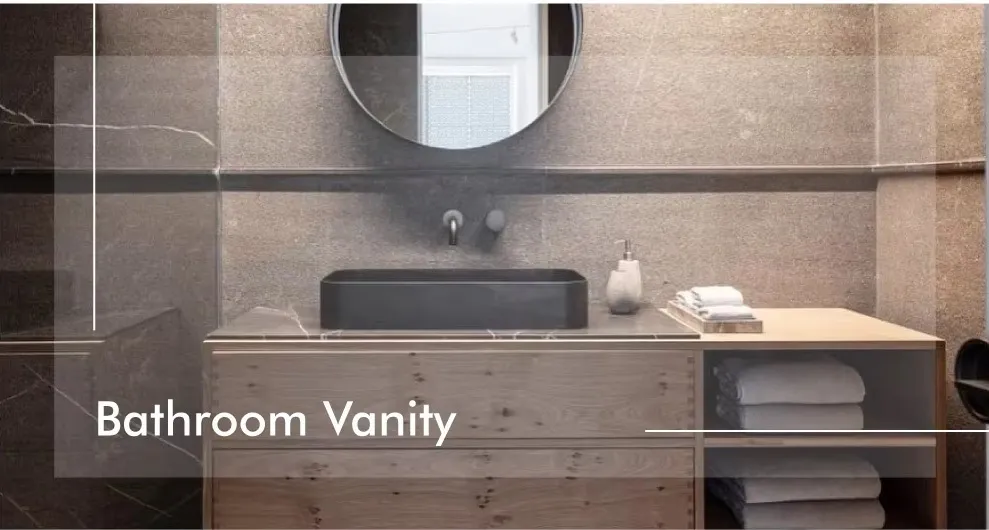
Imagine standing in your dream bathroom, admiring that perfect vanity you've envisioned for months. The sleek lines, the elegant finish, the smart storage solutions – everything exactly as you pictured. Now imagine your frustration when the actual piece arrives looking like a discount-store reject, with crooked drawers and a finish that chips at a touch. This gap between vision and reality crushes renovation dreams daily, but it doesn't have to be yours.
For designers, renovation specialists, and boutique retailers, the kitchen and bathroom vanity isn't just furniture – it's the centerpiece that transforms houses into dream homes. Partnering with the right suppliers makes all the difference between delighted clients and disaster zones. But how can you truly evaluate a new supplier without gambling your reputation on a container-load of potentially subpar vanities?
Small batch trial orders offer a surprisingly effective shield against supplier disappointment. Instead of rolling the dice on a full production run, you're essentially dipping your toe in the manufacturing waters. It's like getting a "try before you fully commit" option for your most important design elements – a chance to verify quality, assess craftsmanship, and evaluate communication before scaling up.
In today's globalized manufacturing landscape, finding a reliable bathroom vanity supplier feels like searching for hidden treasure. Photos dazzle on websites, promises sound bulletproof, and catalogs showcase perfection. But reality often tells a different story:
Real cost insight: One Seattle-based designer shared: "We lost $28,000 on a single vanity order last year – not to mention two furious clients. The samples were perfect, but full production ignored every specification. Small batch testing would've saved us."
These aren't hypothetical scenarios – they're daily occurrences in interior design and renovation. And they reveal a painful truth: traditional supplier vetting often fails when expectations meet real-world production.
Bathroom vanity small batch trials aren't just about making a few units – they're structured validation processes tailored to your non-negotiables:
Order units in different wood types or finish combinations to evaluate: "How does this walnut veneer hold up against our humid bathroom environments? Does the white lacquer yellow near heat sources?" Real-world testing beats catalogs every time.
Focus trials on complex elements: "Make two vanities with the soft-close drawer system and two with standard runners. We'll test longevity after 500 open/close cycles." Specific focus prevents surprise failures.
For custom designs: "Build one complete unit to our specs including that integrated LED lighting. We'll test fit, finish, and function in an actual bathroom context." Works especially well for that client dreaming of a completely integrated bathroom solution .
| Benefit Area | How Small Batch Trials Help | Real Impact |
|---|---|---|
| Cost Control | Limits exposure to flawed large orders | Save $20k+ on potentially failed full batches |
| Relationship Building | Reveals true communication patterns early | Identify responsive partners vs. problematic ones |
| Design Refinement | Catches ergonomic flaws before scaling | Adjust drawer depth or outlet placement |
| Time Savings | Shortens iteration cycles dramatically | Weeks instead of months for adjustments |
| Risk Mitigation | Reduces client/project jeopardy | Maintain reputation and avoid refund scenarios |
"Our bathroom vanity trial batch revealed something we never considered – the specified drawer glides couldn't handle the weight of toiletries when fully loaded. Discovering this with 5 units saved us from installing 87 flawed vanities. That trial batch paid for itself 50 times over."
- James R., Senior Designer at Metropolitan Bath Concepts
Before approaching suppliers, document exactly what success looks like. Beyond "good quality," define measurable standards: What drawer slide cycle count constitutes durability? How do you objectively measure color consistency? Documenting benchmarks transforms subjectivity into actionable data.
Approach potential suppliers with a clear proposal: "We'd like to order 3-5 units of our Modena vanity for quality validation ahead of projected 100-unit quarterly orders." Good partners see this as reasonable, problematic ones resist transparent testing.
Put those vanities through punishing real-world simulations:
Compile findings: Which specifications were met perfectly? Where did performance differ from samples? Present this objectively: "Drawer glide performance at 75% capacity meets our benchmark but fails at max load. Can we reinforce runners?"
Based on results and the supplier's response to feedback, decide: Do you move forward with confidence, continue iterating, or restart your search? This clear go/no-go point prevents ambiguous relationships.
The golden range? 3-7 units. Fewer misses patterns, more becomes costly. Exceptions exist for highly complex designs requiring more validation, but justify each additional unit.
select what matters: If you offer five vanity finishes, test the two most problematic colors (dark stains often reveal blotchiness; white lacquers show yellowing). Don't waste resources testing easy options.
Document visually: Take timestamped photos throughout testing: Day 1 finish, after humidity cycling, after weight stress testing. Visual evidence makes feedback undeniable.
Communicate clinically: Present findings dispassionately: "Unit #3 drawer front alignment deviated 3mm after humidity cycling, exceeding our 1mm tolerance." Objectivity disarms defensiveness.
Pro Tip: Test the supplier's documentation systems. How easily can they provide batch-specific material certifications? This reveals organization level before large orders.
Consider Beach House Interiors' journey: After two disastrous vanity suppliers nearly sank their reputation, they launched a rigorous trial program:
The winner? A mid-priced supplier who embraced feedback: "We received detailed failure analysis on drawer glides and completely redesigned the mechanism within three weeks." The losers either resisted the data or couldn't meet specs.
Results? 92% client satisfaction on installed vanities and zero failures in 18 months. Their secret? Committing to the process.
In the world of bathroom design and renovation, the difference between triumph and catastrophe often comes down to what happens before the big orders ship. Small batch trial orders transform supplier selection from high-stakes gambling into a manageable, measurable process.
Yes, it requires upfront effort – defining metrics, coordinating testing, analyzing results. But compare this to the true costs of failure: Angry clients, refund demands, damaged reputations, and thousands in discarded inventory. Suddenly, that investment seems minuscule.
For designers who've adopted this approach, the refrain is consistent: "We'll never select a vanity supplier without validation again." They've seen firsthand how structured trial batches protect projects, preserve profits, and ensure client delight.
For your next vanity collaboration – whether you're designing luxury spas or family bathrooms – remember: Don't bet your reputation on promises alone. Test, verify, and install with confidence.
Recommend Products












