
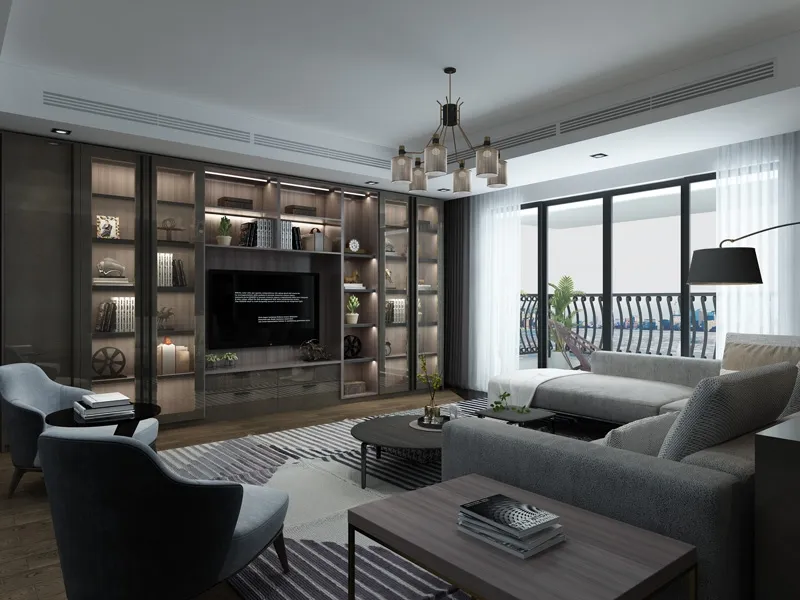
Remember the last time you tried to buy a TV cabinet? Most options feel like they're designed for a generic showroom—not your unique space. Off-the-shelf pieces rarely cater to that awkward corner in your loft or the specific style of your minimalist apartment. That’s where small-batch custom TV cabinets come in—they're not just furniture; they're solutions tailored to spaces that don't fit the mold.
These aren’t mass-produced units cranked out of factories. Think of them as functional art—pieces born from dialogue between you and the maker. The craftsman isn't just building furniture; they're solving problems unique to your space. Maybe you've got quirky ceiling heights, or you're blending Scandinavian minimalism with industrial accents? That's exactly the gap these artisans fill.
The demand isn't about luxury alone—it’s about addressing the unique challenges of real spaces, especially in compact homes or historically shaped rooms where square footage is both limited and precious.
Mass manufacturers design for the broadest audience—low ceilings and narrow hallways? They're overlooked, sacrificed for efficiency. But homeowners increasingly demand solutions that prioritize their specific challenges, especially where every inch matters.
Consider aging neighborhoods with period architecture or modern urban lofts with unconventional layouts. These spaces reject cookie-cutter furniture. For example:
That’s where the custom furniture world thrives. Makers can pivot quickly—incorporating sustainable sourcing, ergonomic features, or even smart-home tech integration because they're creating for people, not warehouses.
The gap is noticeable:
For people renovating unique homes—whether tiny houses or historic restorations—this isn't a compromise they’re willing to make anymore.
Imagine choosing a cabinet built around your space—say, a TV unit designed to snake around a curved living room wall, incorporating integrated lighting and ventilation for media equipment. The result? It disappears into your home rather than competing with it.
Craftsmen work in materials that tell stories and last:
Each piece becomes a dialogue. The maker adjusts heights for accessibility, angles for sightlines, or creates floating illusions for cramped apartments. And unlike IKEA flat-packs, these pieces are assembled for longevity—joinery is precise, finishes durable, drawers slide quietly year after year.
In Park Slope, Brooklyn, a century-old brownstone presented a familiar headache: original bay windows awkwardly collided with the modern need for a TV setup. Pre-made units left dead spaces around windows, collecting dust and frustrating the owners.
Artisan Joel Travers of Timber & Steel designed a U-shaped floating cabinet. Using FSC-certified oak, Joel constructed a frame that hugged window curves seamlessly:
Clients reported surprise: "It doesn’t dominate the room. It quietly disappears while doing its job." The piece also addressed noise control for neighbors (thin brownstone walls!) by incorporating subtle cork layers beneath the oak.
This example highlights how bespoke craft adapts where retailers can’t—small makers listen.
It's easy to see furniture as object, not story. But in custom work, the maker becomes your collaborator:
Ana operates out of a repurposed warehouse. Her signature? Using exclusively urban-sourced timber—salvaged from demolished houses and fallen city trees. Her mission resonates with Portland’s eco-conscious buyers.
Michael blends minimalist metal frames with Japanese ash wood. He spends weeks discussing needs: “People tell me about foot traffic, charging stations, pet fur—it’s never just aesthetics.”
These aren’t abstract creators—they’re problem-solvers who value the connection as much as the design itself.
Yes, these pieces carry a premium—they should. But don't assume they're off-limits:
A standard cabinet replaced every 5 years ends up costing more than a custom piece built to endure half a century or longer.
Looking ahead, personalization will only intensify. Smart-home tech integration—think hidden charging stations or voice-activated shelves—will drive evolution. Plus, as urban density rises globally, solutions for awkward layouts will become essential, not niche.
Sustainability also plays a huge role. Buyers increasingly demand transparency around sourcing and carbon footprints. These craftsmen already track wood origins; now they're innovating bio-resins and zero-waste techniques.
Small batches are inherently better for the planet—they avoid overproduction cycles and cut international freight emissions. So while each cabinet addresses your spatial puzzle, it quietly helps rebuild healthier production ecosystems.
Inspired? Take these steps:
Start conversations with phrases like: “My hallway’s only 29 inches wide—can you build shallow-depth storage?” or “We need noise-reducing materials under a busy kids’ room.” That’s gold to these artisans.
These cabinets represent what happens when craft respects context. They aren’t about elitism—they’re about solving problems beautifully. Whether adapting to historic limitations or reflecting personal ethics around sustainability, custom craft makes spaces work while nurturing connections.
Think beyond the big-box store. Your awkward nook isn’t a design flaw—it’s just waiting for the right maker to turn it into a highlight.
Recommend Products












