
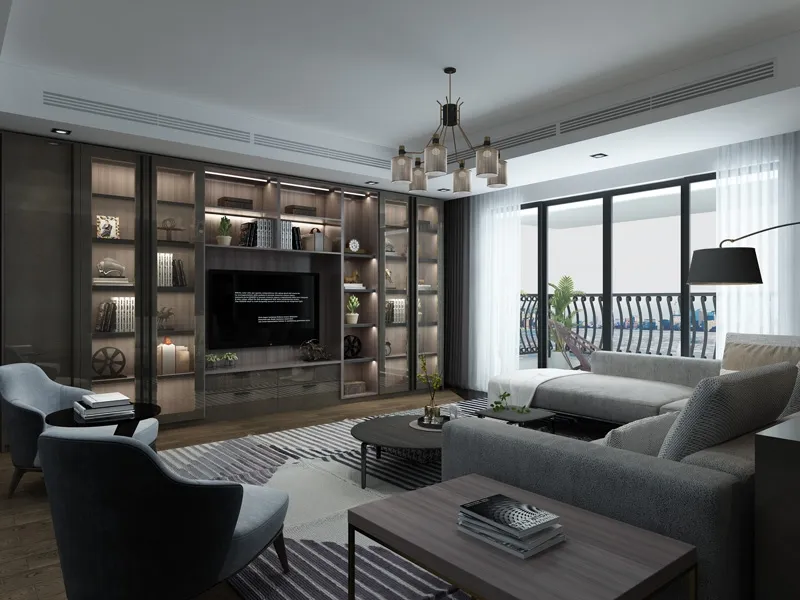
Walking into a living room and spotting that custom tv cabinet blending effortlessly with the décor – it’s the kind of moment that makes interior design feel personal and powerful. But how do we get from vague sketches on a napkin to that stunning finished piece? Whether you're a homeowner dreaming up a new media center or a designer tackling your hundredth project, each TV cabinet journey holds layers of artistry and problem-solving worth celebrating.
Today, we’ll dive deep into how custom furniture morphs from raw inspiration into functional art, using TV cabinets as our canvas. You’ll see why tailored solutions beat mass-produced alternatives every time, get a sneak peek into workshops where design challenges are transformed into triumphs, and understand why the journey matters just as much as the destination.
Every great piece starts with a spark – maybe it’s a client’s Pinterest board filled with minimalist floating units, or perhaps an awkward living room corner begging for smart storage. Custom TV cabinets aren't just furniture; they’re spatial problem solvers. We once worked with a couple in Toronto who loved entertaining but hated visible cords and gadgets disrupting their clean mid-century aesthetic. Their lightbulb moment? "Can we hide everything but still feel open?"
This is where one-stop architectural solutions shine. By combining client lifestyles, room measurements, and functional needs upfront, designers avoid the dreaded "it looked better online" syndrome. Think integrated cable management, specialized compartments for gaming consoles, and even hidden pet beds – features big-box retailers simply don’t offer. As one woodworker friend says, "Mass production solves problems broadly; custom solves YOUR problems."
Challenge: 450 sq ft apartment needing storage, display, and tech concealment without overwhelming the space.
Solution: A walnut wall unit with motorized lift mechanism (TV rises from cabinet at touch), flanked by asymmetric open shelving and lacquered push-lock cabinets.
The magic happened in blending concealed tech with breathing room. Clients got clutter-free zones while keeping treasured books and ceramics visible – proving customized pieces can multitask beautifully.
Material selection’s where poetry meets practicality. Solid oak whispers tradition; matte lacquered MDF screams modern edge. But beyond aesthetics? Durability matters. Ever seen veneer peel off cheap cabinets after a humid summer? Moisture-proof tiles or engineered wood withstands life’s spills and thrills.
For luxury builds, clients often choose walnut or teak – woods that patina beautifully over decades. Budget-conscious? Bamboo composites deliver eco-friendly strength. And metal accents aren’t just pretty; stainless steel fittings ensure drawers glide smoothly year after year. Pro tip: Always cross-reference material choices with local climate conditions. What thrives in arid Arizona might warp in muggy Miami.
| Material | Best For | Lifespan | Maintenance Level |
|---|---|---|---|
| Solid Hardwood (Oak, Walnut) | Heirloom pieces, traditional spaces | 25+ years | Moderate (seasonal polishing) |
| Engineered Bamboo | Eco-conscious budgets, humid climates | 15-20 years | Low (damp wiping) |
| Matte Lacquered MDF | Sleek contemporary looks, complex shapes | 10-15 years | Low (dust regularly) |
| Concrete Composite | Industrial chic, maximalist statements | 20+ years | Very Low (wipe spills) |
Here’s where sketches leap into 3D reality. Master craftsmen liken cabinet building to slow dance – you can’t rush precision. Dovetail joints? Hand-cut for strength that outlives glue. Fire wall boards ? Installed discreetly for safety without sacrificing style. Even LED lighting strips get painstakingly channeled so wires vanish completely.
Watching artisans transform raw slabs into fluid curves is mesmerizing. One Vancouver workshop uses steam-bending techniques for waterfall edges that appear to defy physics. "Wood has memory," explains lead builder Mei Chen. "Respect its grain, and it rewards you with strength. Force it, and it cracks." This mindful approach separates custom pieces from assembly-line products.
"Our toughest build was a TV cabinet doubling as room divider in a heritage loft. We used architectural façade solutions and steel reinforcement to create floating glass shelves supporting a 85" screen. Stressful? Absolutely. Worth it? When clients cried happy tears at install."
Install day thrills are real – seeing that finished cabinet nestle perfectly into its intended space. But pro teams sweat the small stuff: micro-adjusting legs until units stand perfectly level, installing childproof corner bumpers, even programming smart home integrations so lights dim when the TV powers on.
Post-install? Proper care ensures decades of beauty. We recommend:
Remember Monica's oversized wall panel obsession? Final quality checks spot such flaws before they become headaches.
Challenge: Busy family needing charging station, game storage, and display space for soccer trophies without becoming an eyesore.
Solution:
A multi-level ash unit featuring:
- Locked cabinet for medication
- Pull-out bin for controllers/headphones
- Magnetic backsplash for kids’ artwork
- Ventilated section for gaming consoles
Three years post-install, they report: "We declutter in seconds before guests arrive. Worth every cent."
At its core, commissioned furniture celebrates individuality. Unlike temporary trends flooding big-box stores, a thoughtfully crafted TV cabinet becomes part of your family’s rhythm – hiding remotes before movie night, showcasing vacation photos year-round, surviving toddler tantrums.
The "concept to completion" journey, with its collaborative sketches and wood shavings, transforms houses into emotional homes. So whether you're building a walk-in closet media hub or minimalist Scandinavian floating shelf, remember: your unique quirks inspire extraordinary design solutions. Ready to start dreaming up your perfect piece?
Recommend Products












