
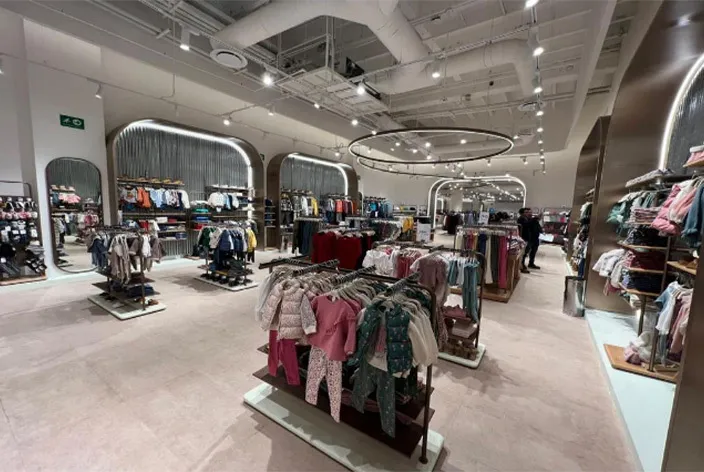
Ever wondered how global retail giants achieve those perfect, inviting atmospheres? Much of it comes down to smart lighting – and China's factories are powering this revolution.
Walking into a store in Riyadh or Rome, chances are high that the elegant commercial lighting above you started its journey in Guangdong or Zhejiang. China's lighting ecosystem isn't just big – it's a well-oiled machine blending tech innovation with hard-earned craftsmanship. Factories here produce over 70% of the world's LED fixtures, thanks to vertically integrated supply chains that handle everything from chip production to precision metalwork.
What sets them apart? For starters, they've mastered cost efficiency without sacrificing durability. I've seen workshops where a single production line can shift seamlessly from rugged warehouse LEDs to museum-grade architectural lighting solutions . It’s like watching a chef effortlessly switch between street food and fine dining.
Talk to any Saudi Arabia lighting supplier , and they'll tell you – Middle Eastern clients demand two things: heat resilience and energy thriftiness . In Dubai’s 50°C summers, cheap plastic housings warp, and poorly vented drivers fry. That’s why factories near Shenzhen now use fiber-reinforced composites and ceramic-cooled LEDs that laugh at desert sun.
Saudi partners particularly love modular systems that simplify maintenance. Imagine replacing a mall’s ceiling panel without shutting down entire sections – a game-changer for high-traffic venues facing Ramadan rushes.
Modern shops aren’t just buying light fixtures; they’re investing in mood architects. Top China lighting manufacturer teams now embed wireless controls, daylight harvesting sensors, and even anti-pathogen UV modes ( post-pandemic must-haves ). I recently tested a Guangzhou-built system that adjusted brightness based on clothing colors under the lights – wild stuff!
The real magic happens in custom projects. Picture a luxury Riyadh boutique requesting gold-accented LED lights matching local architecture. Chinese factories deliver these in weeks, not months, thanks to digital prototyping and robotic metal-shaping cells.
| Priority | Budget Options | Premium Partners | Red Flags |
|---|---|---|---|
| Certifications | Basic CE/UL | ISO 9001, Dubai SESHQ | Vague "compliance" claims |
| Customization | Color/size swaps | Full optical redesigns | 6+ week response times |
| Tech Support | Manual PDFs only | 3D installation simulators | No fault diagnostics |
While Western brands tout "green" lines, I’ve watched Dongguan facilities recycle 98% of aluminum offcuts into new commercial lighting frames. Their solar-powered plants now output "carbon negative" fixtures – absorbing more emissions in production than they’ll ever consume.
One Ningbo innovator even plants mangroves for every 1,000 units sold. For eco-conscious European retailers, this isn’t charity; it’s a competitive edge in proposals.
A Saudi Arabia wall material distributor once struggled with lighting-induced heat damaging decorative panels. Their Chinese partner co-engineered ultra-low-IR LEDs that preserved surfaces while slashing AC costs by 18%. Win-win innovations like this keep clients loyal for decades.
Then there’s the Australian mall that fought glare in glass storefronts. Custom baffles from Zhongshan solved it so elegantly, they became the supplier’s unofficial design consultants.
The next wave? AI-driven predictive maintenance. Imagine fixtures alerting you about fading outputs before humans notice. And with solid-state tech, we’re approaching LED lights that outlive the buildings they illuminate.
For distributors, the lesson is clear: Partner with factories investing in R&D, not just replication. Because today’s trendy solution becomes tomorrow’s liability without forward-thinking tech.
Recommend Products












