


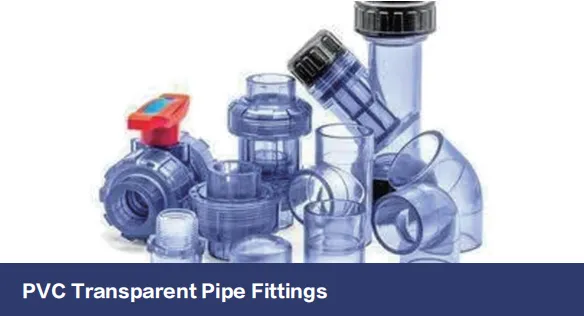
When it comes to food and beverage applications, using PVC transparent pipe fittings isn’t just about finding something that looks clear or fits a budget. Oh no, there’s way more riding on it—safety, durability, and compliance all come into play. After reviewing top industry resources, let’s dive into everything you need to know, but with that real-world, easy-to-digest perspective you don’t usually get.
Imagine walking into a brewery or dairy plant and seeing these clear pipes everywhere. You trust them to safely carry everything from milk to beer without tainting the flavor or risking health hazards. But how exactly do they pull that off? Well, stick around because we’re breaking down the overlooked specs that separate the winners from the potential disasters.
Beyond "FDA-Approved": The Real Deal with Material Safety
Everybody throws around the term "FDA-compliant," but what’s beneath the surface? You need pipe fittings that meet FDA and NSF standards—that means they’re certified not to leach chemicals or alter taste, even under high temperatures. The catch? Not all PVC is the same. Rigid vs. flexible? Each has specific additives that impact performance:
- Rigid PVC : Great for structural stability but needs plasticizers for flexibility.
- Flexible PVC : Requires additives for bendability that might affect chemical resistance.
And hey, don’t gloss over migration tests . Just because a pipe looks clear doesn’t mean it’s inert—low-grade PVC can release stabilizers when hot water or acidic liquids run through.
What They Don’t Tell You About Temperature & Pressure Ratings
You’ve seen the labels—"rated for 140°F." But here’s the reality check: in food processing, temps can swing wildly. Pasteurization? Filling lines? Each scenario demands its own tolerance level.
Picture this: You install pipes rated just above your max operating temp. Six months in, they start to warp or micro-crack because real-world cycling wasn’t factored in. That’s why you should always look for:
- Continuous vs. peak temperature ratings.
- Pressure cycling certifications, especially for carbonated drinks or CIP (clean-in-place) systems.
- Real-world validation data—ask suppliers for case studies.
Clarity Isn’t Just for Show—Why Wall Thickness Matters
Thicker walls mean added burst strength, right? True… but thickness impacts flow rate too. In bottling plants where every second counts, narrow or inconsistent ID can throttle your entire operation. Here’s where things get technical:
- ASTM D876 standards for ID/OD tolerances (±0.004").
- Impact resistance (Izod test) ratings for cold environments.
- UV stabilization if pipes run near windows or outdoor sections.
It’s like building a reliable water supply and drainage system —consistency in every inch matters way more than you think.
Chemical Resistance: Overlooked Villains in Food Plants
Everybody worries about bacteria. But acidic fruit juices, harsh sanitizers, and CIP chemicals? That’s where the real war happens. Poorly specified PVC will deteriorate faster, causing:
- Cloudiness that hides contamination.
- Cracks forming around clamped areas.
- Leaching into sensitive products like dairy or infant formula.
Always verify compatibility charts for alkalis, acids, alcohols, and hydrogen peroxide-based cleaners used in your facility.
Physical Properties: Flexibility vs. Rigidity Trade-offs
Think installing pipes is just plug-and-play? Think again. Vibration from machinery or seasonal temperature shifts puts serious stress on joints. Flexible tubing handles bends better but sags over long runs; rigid pipes resist sagging but crack at stressed fitting points.
Solutions? Look for:
- Shore hardness ratings above 80A for durability.
- Cold bend testing for outdoor or refrigerated zones.
- Elongation ratings—aim for at least 300%.
End-Use Nuances You Won’t Find on Datasheets
Breweries demand zero oxygen permeability for flavor retention. Dairies prioritize smooth inner walls to resist bacteria buildup. Beverage lines handling sugars need anti-static properties. Here's how to match PVC specs to your world:
| Application | Crucial Specs | Red Flags |
|---|---|---|
| Carbonated drinks | High burst pressure + gas barrier layer | Fittings without permeation tests |
| Hot filling (juices, sauces) | Thermal stability over repeated cycles | HDPE blends that distort above 150°F |
| Meat/poultry chilling | -40°F impact resistance | Generic "food-grade" with no cryo data |
Putting It All Together: A Buyer’s Checklist
Ready to choose wisely? Skip the jargon-heavy datasheets and ask these straight questions:
- Can I see your FDA/NSF letter of certification?
- Share pressure cycling results at my max operating temp?
- Got migration test reports against my specific product matrix?
- Does your material meet ASTM F2023 for beverage handling?
- Show me dimensional consistency across five random samples?
Because frankly, vague promises don’t pass inspections or prevent recalls. Solid data does.










