


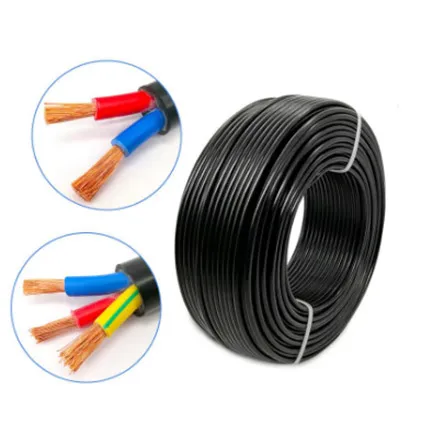
Picture this: you're walking through a busy factory floor where machines hum in perfect rhythm. But deep below the surface, there's an unsung hero silently powering this complex dance - cables built tough enough to handle everything industry throws their way. Industrial cables might not get the spotlight, but without these vital pathways designed to IEC specifications, that perfect mechanical ballet would grind to a halt.
Why industrial cables live a tough life
Not all cables are created equal - and nowhere is this truer than in industrial settings. While your home wiring enjoys a climate-controlled existence, industrial cables face challenges that would make ordinary cables cry:
- Extreme temperatures : From foundries hotter than summer asphalt to freezing cold storage facilities
- Chemical warfare : Oils, solvents, acids, and alkalis all attacking insulation daily
- Physical assault : Constant vibration, abrasion, impact, and rough handling
- Electrical torture : Power surges, voltage spikes, and electromagnetic interference
Throw in potential explosive atmospheres and non-stop 24/7 operation, and you understand why generic cables just won't cut it. That's where IEC standards come in - they're like personal trainers for cables, making sure they're ready for industrial bootcamp.
IEC: The global rulebook for tough cables
The International Electrotechnical Commission (IEC) plays the critical role of the cable industry's referee. Think of them as the world's strictest quality control inspectors creating the rules manufacturers must follow. Here's how their standards ensure cable reliability:
| IEC Standard | What It Checks | Why It Matters to You |
|---|---|---|
| IEC 60228 | Conductor size and composition | Ensures cables can handle specific power loads safely |
| IEC 60502 | High voltage performance (up to 30kV) | Critical for heavy machinery and substation applications |
| IEC 60811 | Insulation material durability | Tests resistance to heat, chemicals, and environmental stress |
| IEC 60079 | Explosion protection features | Lifesaving in facilities handling flammable substances |
These standards aren't just theoretical exercises - they replicate real-world industrial punishment. When you see IEC certification, you know that cable has survived brutal testing that mimics years of industrial abuse compressed into days.
Matching cables to industrial battlefields
Picking industrial cables isn't about finding "the best" - it's about finding the right soldier for each combat zone. Let's examine how IEC standards adapt to specific industrial environments:
The Chemical Warfare Zone
Chemical plants have environments more corrosive than a barrel of battery acid. Cables here need:
- Specialized PVC or XLPE jackets that laugh at chemical attacks
- Extra shielding as contaminants can eat through standard covers
- Impervious seals on connections where chemicals might creep in
IEC 60811 puts potential jacket materials through chemical torture tests simulating years of exposure.
Deep Underground Mining
Forget surface-level challenges - mining cables face darkness, dampness, dirt, and danger:
- Reinforced armor protection against crushing rock and heavy gear
- Waterproofing so tight it makes submarines jealous
- Fire-resistant materials that won't spread flames in confined tunnels
Standards like IEC 60332 (fire performance) and IEC 60331 (circuit integrity during fires) become lifelines down here.
The Extreme Heat Frontline
Steel mills, glass factories, and power generation facilities are industrial saunas. Cables must handle:
- Continuous temperatures that would melt standard plastic insulation
- Occasional extreme spikes from equipment malfunctions
- Thermal cycling that causes repeated expansion and contraction
IEC 60216 evaluates insulation's thermal aging while IEC 60811 tests resistance to thermal shock.
Here's an insider tip: Always request manufacturer test certificates showing how cables performed specifically against the standards relevant to your operation . Generic IEC compliance isn't enough - the certificate should reference the exact sub-standards for your use case.
When cables save the day: Real-world rescues
IEC compliance isn't just paperwork - it makes tangible differences where failures would be catastrophic:
North Sea Oil Platform Survival
North Sea platforms face cold that chills to the bone, salt spray that corrodes everything, and pounding waves that test every connection. When engineers equipped a major drilling platform with cables meeting IEC 60079 and IEC 60502 standards:
- Zero cable-related failures during severe winter storms
- Maintenance costs reduced by 40% compared to previous installation
- 30% fewer emergency shutdowns despite worse weather than forecasted
German Chemical Plant Overhaul
A chemical facility needed to upgrade while preventing even minute leaks of volatile substances. Using IEC 60332 and IEC 60811 certified cables:
- Avoided replacement costs from premature insulation breakdown
- Prevented potential plant-wide shutdowns from contaminant ingress
- Passed strict EU environmental inspections with flying colors
Powering Australian Mine Automation
Modern underground mines increasingly rely on robotics in dirty, dangerous tunnels. Implementing IEC 60079 compliant explosion-proof cables enabled:
- Continuous operation of robotic extraction equipment
- No shutdowns despite explosive methane concentrations detected
- 30% productivity increase by allowing hazardous-area mining activities
Global language of quality
IEC standards provide a universal vocabulary for cable quality that bridges international boundaries:
- Europe : Incorporates IEC standards verbatim as EN standards
- North America : Increasingly harmonizes UL standards with IEC protocols
- Asia : China's GB/T standards build directly on IEC foundations
This global consistency allows multinational operations to standardize maintenance practices, reduces spare part inventories, and simplifies procurement - critical advantages in today's interconnected industrial landscape.
But there's a critical caveat: When sourcing globally, always verify regional certifications on top of IEC compliance. For example:
- Europe demands CE marking
- North America requires UL or CSA listings
- Australia/NZ have mandatory SAA approval
Think of IEC as the baseline qualification, with local certifications as operational licenses.
Future-proof cables: What's coming next
The cable industry isn't standing still - evolving industrial demands are shaping tomorrow's standards:
The Sustainability Imperative
Industrial operations face growing pressure to reduce environmental impact - and cables are in focus. Standards are adapting to address:
- Lifecycle analysis requirements for insulation materials
- Halogen-free options that minimize toxic smoke during fires
- Recyclability protocols for end-of-life cable disposal
These improvements are particularly vital given that environmentally friendly building materials represent a critical focus for facility managers. A factory is only truly sustainable when every component, including cables, minimizes environmental impact.
Smart Cable Integration
Next-gen industrial cables are evolving beyond simple conductors:
- Integrated fiber optics provide real-time temperature monitoring
- Self-diagnosing cables alert maintenance teams of developing issues
- Current-measuring sensors built into power cables
Emerging standards address how these new capabilities integrate safely into hazardous locations and complex control systems.
Material Science Breakthroughs
Tomorrow's industrial cables will feature:
- Nanocomposite insulation allowing thinner walls with better protection
- Bio-based jacket materials from renewable sources
- Self-healing polymers that seal minor damage automatically
Making the right choice
Selecting industrial cables isn't a product choice - it's a safety decision, an operational strategy, and an insurance policy all wrapped together. By understanding:
- The harsh realities of your specific operating environment
- The precise IEC standards that address your risks
- How verified compliance differs from marketing claims
- The total cost of ownership rather than just purchase price
You transform cables from vulnerable components into robust enablers of operational excellence.
Professional tip : Develop a cable specification checklist specific to your facility that:
- Identifies your primary environmental threats
- Maps these threats to relevant IEC sub-standards
- Requires documented test results for each requirement
This turns abstract standards into practical selection tools.
Final thoughts: Beyond compliance
While IEC standards provide essential guardrails, truly resilient industrial operations understand that:
- Standards represent minimum requirements , not best practices
- Real-world conditions often exceed test parameters
- Installation quality determines whether certified cables perform as designed
- Regular maintenance ensures ongoing integrity
So specify IEC-compliant cables not just because regulations require it, but because operations deserve the protection, reliability, and longevity only properly engineered cables deliver. In facilities where failure means more than just downtime - where it can threaten lives, the environment, and business continuity - that IEC badge becomes a promise of performance you can literally bet your operation on.










