
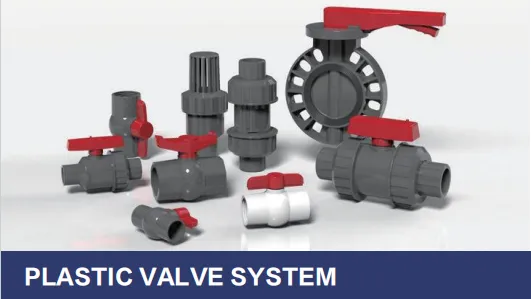
When you're knee-deep in planning a large-scale construction, infrastructure, or industrial project, every decision feels critical. But few choices carry as much weight as selecting the right supplier for your plastic valve system orders. These unassuming components—whether they're regulating water flow in a commercial building, managing chemical transport in a factory, or ensuring plumbing efficiency in a residential complex—are the silent workhorses that keep projects running smoothly. Choose poorly, and you could face delays, budget overruns, or even safety risks. Choose wisely, and you'll not only meet deadlines but also build a foundation for long-term success. As someone who's guided countless project managers through this process, I'm breaking down the essential tips and tricks to help you find a plastic valve system supplier that doesn't just meet your needs, but exceeds them.
Before you even start scrolling through supplier directories, take a step back and map out exactly what you need. Large-scale orders are rarely one-size-fits-all, and assuming a supplier can "handle it" without specifics is a recipe for miscommunication. Ask yourself: What's the primary function of the plastic valve systems? Are they for potable water, wastewater, chemical processing, or something else? What pressure ratings and temperature ranges do they need to withstand? Do they need to comply with specific industry standards—like ASTM D2846 for CPVC pipes and fittings, DIN PN10 for PVC systems, or local regulations in regions like Saudi Arabia, where building codes can be particularly stringent?
Don't forget to factor in volume and timeline. Are you ordering 10,000 units or 100,000? Do you need them delivered in batches over six months, or all at once in 30 days? Even seemingly small details, like custom threading or specialized coatings, can impact a supplier's ability to deliver. Jotting these down in a clear, detailed document will not only help you narrow down potential suppliers but also ensure you're comparing apples to apples when evaluating proposals.
In the world of large-scale orders, a supplier's reputation is everything. But how do you separate the reliable players from the ones who'll vanish when things get tough? Start by digging into their track record. How long have they been in business? A company with 10+ years of experience has likely weathered industry ups and downs and refined their processes—though newer suppliers can sometimes offer innovation, so balance is key. Next, check for client testimonials and case studies. Look for projects similar to yours in size or industry; if they've successfully delivered plastic valve systems for a 50-story commercial complex in Riyadh, they're more likely to handle your hospital expansion than a supplier who specializes in small residential jobs.
Certifications are another red flag (or green light). A plastic valve system supplier worth their salt should hold ISO 9001 certification for quality management, and possibly industry-specific credentials like NSF/ANSI for potable water applications or WRAS approval for the UK market. If your project is in Saudi Arabia, ask about compliance with SASO (Saudi Arabian Standards Organization) regulations—local knowledge can save you from costly delays at customs or inspection.
Don't shy away from asking tough questions: Can they provide references from past clients with large orders? What's their on-time delivery rate for bulk shipments? Have they ever faced production issues, and how did they resolve them? A reputable supplier will answer openly; evasion is a warning sign.
When you're ordering thousands of plastic valve systems, a single defective unit can derail a section of your project. That's why quality assurance should be non-negotiable. But how do you ensure a supplier's products meet your standards without inspecting every valve? Start by asking about their quality control (QC) processes. Do they test raw materials before production? What in-line testing do they perform—pressure testing, leak detection, dimensional checks? A supplier that invests in automated QC systems is far less likely to ship faulty products than one that relies on manual inspections alone.
Request samples—lots of them. Test a small batch under conditions that mimic your project's environment: expose them to the expected pressure, temperature, and chemicals. If possible, hire a third-party lab to verify compliance with your required standards (e.g., ASTM D2846 for CPVC or DIN PN10 for PVC). This might cost a few hundred dollars upfront, but it's a fraction of the cost of replacing thousands of defective valves later. Remember: a supplier who refuses to provide samples or charges exorbitantly for them is probably hiding something.
It's also worth asking about their failure rate. What percentage of their products are returned or fail inspection? A rate below 0.5% is industry standard for high-quality suppliers. If they can't provide this data, or if it's significantly higher, cross them off your list.
A supplier might have glowing reviews and top-notch quality, but if they can't scale production to meet your volume needs, they're not the right fit. For large-scale orders, you need to ensure their manufacturing capacity aligns with your timeline. Start by asking about their production lines: How many do they have dedicated to plastic valve systems? What's their daily output? Can they ramp up production if your order size increases unexpectedly? A supplier with 5 production lines running 24/7 is better equipped to handle a 100,000-unit order than one with a single line operating 8 hours a day.
Raw material sourcing is another critical factor. Does the supplier have long-term contracts with reliable resin suppliers, or do they buy on the spot market? Spot market purchases can lead to price fluctuations and delays if raw material costs spike or availability drops. A supplier with diversified sourcing—maybe even backup suppliers for critical materials—will be more stable.
The best suppliers don't just sell products—they offer plastic valve system solutions. What does that mean? It's about going beyond the valve itself to provide support that makes your life easier. Maybe they offer technical assistance during the design phase, helping you select the right valve type for your specific application. Or perhaps they provide on-site installation guidance, training your team on proper fitting and maintenance. Some even offer custom labeling or packaging to streamline your inventory management—critical for large orders where tracking thousands of units can be a logistical nightmare.
For example, if your project involves retrofitting an older building with new plastic valve systems, a supplier that offers compatibility testing with existing pipes (like UPVC or PEX) can save you from costly mistakes. Or if you're exporting to Saudi Arabia, a supplier with experience navigating local shipping and customs—including documentation like certificates of origin or SASO conformity—can turn a headache into a breeze. These value-added services might cost slightly more upfront, but they pay off in reduced stress and fewer delays.
Let's talk money. Large-scale orders often come with bulk discounts, but they can also hide sneaky fees that erode those savings. When evaluating quotes, look beyond the per-unit price. Ask for a detailed breakdown: Does the price include shipping to your location, or is that extra? Are there fees for customization, like special colors or threading? What about taxes, duties, or import tariffs (especially important for international orders, like into Saudi Arabia)? A supplier that provides a clear, itemized quote is more trustworthy than one who gives a vague "all-in" number.
Negotiate, but don't fixate solely on the lowest price. A supplier offering $1 per valve might cut corners on material quality or QC, while a competitor at $1.20 could deliver 99.9% defect-free products and on-time delivery. Calculate the total cost of ownership: factor in potential delays, replacement costs, and maintenance. Often, the slightly pricier option ends up being cheaper in the long run.
Also, ask about payment terms. Do they require 50% upfront and 50% on delivery? Can you negotiate net-30 terms for repeat orders? Flexibility here can help with cash flow, especially for projects with tight budgets.
The relationship with your supplier shouldn't end when the last valve is delivered. What happens if a batch arrives damaged? Or if you discover a defect six months into installation? A good plastic valve system supplier stands behind their products with robust after-sales support. Look for clear warranty policies: How long is the warranty (1 year? 5 years?), and what does it cover? Will they replace defective units free of charge, or just repair them? Do they offer technical support via phone, email, or even on-site visits if needed?
Consider their responsiveness, too. Send a test email or call their customer service line with a hypothetical question—how long does it take them to get back to you? A supplier that takes 3 days to respond to a simple inquiry is unlikely to be helpful in a crisis. Prioritize those with 24/7 support or dedicated account managers for large clients; you want someone who knows your project by name when you call.
To make your evaluation process even smoother, use this checklist to compare suppliers side by side. Print it out, and take notes during meetings or calls—you'll be surprised how quickly the best candidates rise to the top.
| Evaluation Category | Key Questions to Ask | Why It Matters |
|---|---|---|
| Credentials |
• How long have you specialized in plastic valve systems?
• What certifications do your products hold (ISO, ASTM, SASO, etc.)? • Can you share 3 references from clients with large-scale orders? |
Verifies experience and adherence to quality standards. |
| Production & Capacity |
• What's your maximum monthly output for plastic valve systems?
• Do you have backup suppliers for raw materials? • What's your typical lead time for orders of [X] units? |
Ensures they can meet your volume and timeline needs. |
| Quality Control |
• What in-line testing do you perform during production?
• What's your defect rate, and how is it measured? • Can you provide third-party lab test reports for your products? |
Reduces risk of faulty products derailing your project. |
| Cost & Terms |
• What's the total cost breakdown (product, shipping, taxes, customization)?
• Do you offer bulk discounts for orders over [X] units? • What are your payment terms (e.g., 50% upfront, net-30)? |
Prevents hidden fees and ensures budget alignment. |
| Support & Solutions |
• Do you offer technical assistance for installation or design?
• What's your warranty policy, and how is it enforced? • Can you provide custom plastic valve system solutions (e.g., specialized coatings, threading)? |
Ensures ongoing support and flexibility for unique project needs. |
Selecting a supplier for large-scale plastic valve system orders isn't just a transaction—it's the start of a partnership. The right supplier will feel like an extension of your team, invested in your project's success and ready to problem-solve when challenges arise. By starting with clear needs, vetting credibility, prioritizing quality and capacity, and demanding transparency, you'll not only find a supplier who can deliver the goods but one who'll help you build a reputation for reliability and excellence.
Remember: this process takes time. Rushing to sign a contract with the first supplier who responds might save you a few weeks now, but it could cost you months (and thousands of dollars) later. Take the time to research, ask tough questions, and trust your gut. When you find a plastic valve system supplier that checks all these boxes, hold onto them—they're worth their weight in (plastic) gold.
Recommend Products












