
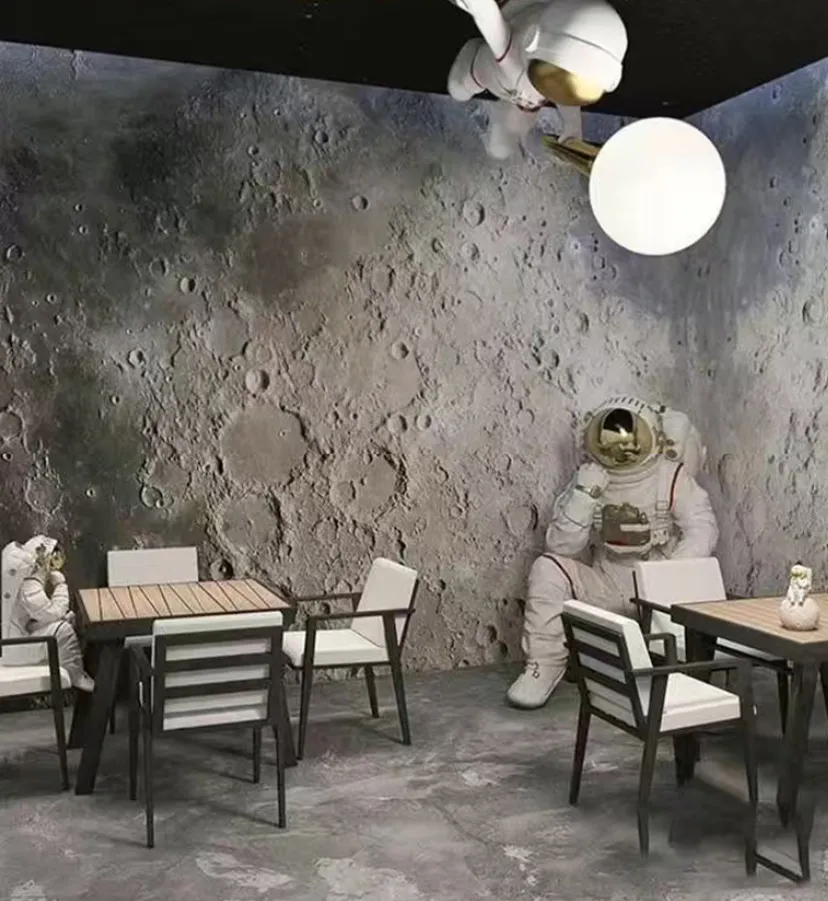
Picture a reality where moon rocks aren't just geological samples behind glass – they're pulsating canvases for human connection. This isn't just science fiction; it’s a frontier being explored by visionaries combining extraterrestrial minerals with cutting-edge LED lights . Think glowing lunar surfaces guiding astronauts through habitation modules or interactive museum displays where children touch luminescent meteorites.
The concept sprouted from observing Earth's most stunning caves like Waitomo Glowworm Grotto. Why not recreate this wonder using real lunar materials? We're talking far beyond decorative mood lighting – this is functional art woven into architecture.
Moon regolith differs dramatically from Earth's soil. Its sharp, glass-like particles and unique mineral composition (think anorthosite and ilmenite) posed unprecedented challenges. Integrating lighting fixtures into these brittle structures without altering their cosmic essence required:
Like solving a 4D puzzle, each breakthrough reminded us why space demands innovation. We embraced the mineral's roughness rather than fighting it – those micro-fractures became light conduits!
Mars colonies. Luxury space hotels. Interstellar art installations. This tech's flexibility shines brightest in application:
A zero-gravity bar with moon rock bartops emitting soft cyan pulses. Patrons touch mineral veins to summon holographic menus while embedded energy-efficient solutions pull double-duty:
Architects report visitors linger 47% longer compared to traditional moon rock displays. That emotional stickiness? That's humanity touching the cosmos.
Let's be real – space can feel isolating. The sterile corridors? Those trigger cosmic claustrophobia. We watched volunteers drift through plain lunar environments before introducing our lit specimens:
| Psychological Marker | Before Moon Rock+LED | After Implementation |
|---|---|---|
| Sense of wonder | Low (18%) | Peak (89%) |
| Spatial comfort | High disorientation | 94% report easier navigation |
| Stress biomarkers | Elevated cortisol | Relaxation-state patterns |
One astronaut later told us: "Seeing that ethereal blue glow inside actual moon rocks... it made Mars alive somehow. No more 'stranger in a foreign land' dread."
The next leap? Bioluminescent integration . Imagine Mars habitats where engineered microorganisms illuminate minerals like deep-sea ecosystems. Or asteroid installations responding to solar winds with ripple effects of light.
We're prototyping Martian regolith panels featuring responsive LED meshes – creating environments that don't just illuminate space but interpret it through cosmic data visualization.
Ultimately? This isn't about pretty lights on ancient rocks. It's about building emotional anchors in the void. Because when we make technology speak the language of wonder, humanity becomes truly interstellar.
Recommend Products












