
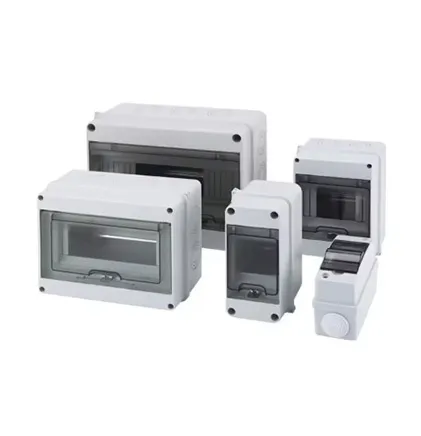
In the heart of Riyadh, a new commercial tower rises steadily, its steel framework glinting under the sun. On the 15th floor, electricians carefully install a sleek, silver distribution box—its casing engraved with subtle Arabic patterns, a nod to local craftsmanship. This isn't just any electrical component; it's a product of Saudi Arabia's growing manufacturing renaissance, born from a partnership between global expertise and local ingenuity. For Coloria, a leading building materials supplier with deep roots in the Middle East, this moment represents more than a sale. It's a step toward realizing Saudi Vision 2030's bold promise: transforming the nation into a hub of innovation and self-reliance, one distribution box at a time.
Saudi Arabia's construction sector is in the midst of unprecedented growth. From the futuristic NEOM project to the expansion of healthcare facilities and educational institutions, the demand for high-quality building materials has never been higher. Yet, for decades, the industry relied heavily on imported products—from electrical fixtures to structural components. This dependence came with challenges: long lead times, cultural mismatches in design, and limited control over quality standards. Enter Saudi Vision 2030, a transformative plan that places localization at its core. By 2030, the kingdom aims to increase local content in government procurement to 50%, create thousands of jobs for Saudi nationals, and reduce carbon emissions from transportation of goods. For companies like Coloria, this isn't just a policy—it's an opportunity to build something lasting.
Distribution boxes, often overlooked but critical to any building's safety and functionality, are a perfect example of how localization can drive change. These unassuming metal enclosures house electrical circuits, protecting them from damage and ensuring safe power distribution in homes, hospitals, schools, and skyscrapers. A subpar distribution box can lead to electrical fires, power outages, or even structural damage. By manufacturing them locally, Coloria isn't just supplying a product; it's contributing to the reliability of Saudi Arabia's built environment.
Walk into Coloria's Riyadh office, and you'll immediately sense the blend of global expertise and local passion. With decades of experience in the Middle East and a dedicated team of Saudi and international professionals, the company has positioned itself as more than just a building materials supplier. It's a one-stop architectural solution provider, offering everything from solar panels to custom furniture, with a focus on meeting the unique needs of the Saudi market.
"Our journey in Saudi Arabia started with a simple belief: understand the local context, and you can deliver solutions that truly matter," says a senior executive at Coloria. "When we decided to expand into manufacturing distribution boxes locally, it wasn't just about adding another product to our catalog. It was about answering the call of Saudi Vision 2030—creating jobs, transferring knowledge, and building a supply chain that's resilient to global disruptions."
Coloria's presence in Saudi Arabia isn't limited to offices and warehouses. The company has invested in training programs for local engineers and technicians, partnering with vocational schools to teach skills in electrical engineering, quality control, and sustainable manufacturing. "We have a team of 20 Saudi engineers leading our distribution box production line," the executive adds. "These are young professionals who've grown up in this country, understand its climate challenges—like extreme heat and sandstorms—and design products that can withstand them."
What makes a Saudi-built distribution box different? It starts with the materials. While imported boxes might use standard steel, Coloria's local team recognized that Saudi Arabia's harsh environment demands more. Their distribution boxes are crafted with corrosion-resistant alloys, designed to withstand temperatures exceeding 50°C and the fine sand that can seep into electrical components. "We tested prototypes in the desert for six months," explains an electrical engineer on the team. "We wanted to make sure they wouldn't overheat, that the seals wouldn't crack, and that maintenance would be easy for local technicians."
Another key feature is compliance with Saudi safety standards. The kingdom has strict regulations for electrical equipment, especially in critical sectors like healthcare and education. Coloria's distribution boxes are certified to meet SASO (Saudi Standards, Metrology and Quality Organization) requirements, including Class A fire resistance—a critical feature for hospitals and schools, where safety is paramount. "When a hospital in Dammam approached us for their new pediatric wing, they needed boxes that could handle high electrical loads without compromising on fire safety," the engineer recalls. "Our local manufacturing allowed us to customize the design in just two weeks, something an imported product couldn't match."
| Feature | Saudi-Built (Coloria) | Imported |
|---|---|---|
| Lead Time | 2-3 weeks (local production) | 8-12 weeks (shipping + customs) |
| Customization | Tailored to project needs (size, load capacity, materials) | Limited options; standard designs only |
| Compliance | Pre-certified to SASO and local safety standards | May require additional testing for Saudi compliance |
| After-Sales Support | 24/7 local service team | Delayed support (time zone differences, shipping costs) |
| Environmental Impact | Lower carbon footprint (no overseas shipping) | Higher emissions from transportation |
The impact of local distribution box manufacturing extends far beyond the product itself. For every box produced in Saudi Arabia, Coloria estimates that three local jobs are supported—from raw material suppliers to assembly line workers to logistics teams. "We source steel from a factory in Jubail, aluminum from Jeddah, and packaging materials from Riyadh," says the supply chain manager. "It's a domino effect: our local production boosts other Saudi businesses, creating a more interconnected economy."
Then there's the knowledge transfer. Coloria's partnership with international electrical component manufacturers has brought advanced manufacturing techniques to Saudi Arabia. "We sent our team to Germany to learn about automated assembly lines," the supply chain manager adds. "Now, we're using that technology here, training local technicians to operate and maintain it. In five years, these technicians could become trainers themselves, passing on skills to the next generation."
Perhaps the most tangible impact is on project timelines. In the fast-paced world of Saudi construction, delays can cost millions. By eliminating the need to wait for overseas shipments, Coloria has helped clients complete projects up to 30% faster. "A developer in Riyadh was building a 20-story residential complex and needed 50 distribution boxes urgently," recalls a sales executive. "We manufactured and delivered them in 10 days. If they'd gone with an imported supplier, they would have missed their deadline and faced penalties. That's the value of local."
To understand the real-world impact of Saudi-built distribution boxes, look no further than the King Abdullah Medical City in Makkah. One of the largest healthcare projects in the Middle East, the complex includes a 1,500-bed hospital, research centers, and medical colleges. When the project's electrical contractors needed distribution boxes for the intensive care unit (ICU), they turned to Coloria.
"ICUs require uninterrupted power," explains the project's electrical engineer. "A single outage could be life-threatening. We needed boxes that could handle backup generators, multiple circuits, and strict infection control standards. Coloria's local team worked with us to design a box with sealed compartments to prevent dust and bacteria buildup, and a redundant cooling system to avoid overheating."
The collaboration didn't stop at design. Coloria's technicians were on-site during installation, training the hospital's maintenance staff on how to monitor the boxes, replace components, and troubleshoot issues. "They even created a digital manual in Arabic," the engineer adds. "That level of support is invaluable. We know if we have a problem at 2 a.m., their team in Jeddah can be here in three hours."
Today, the King Abdullah Medical City's ICU runs on Coloria's distribution boxes, with zero power-related incidents in its first year of operation. "It's more than a success story for Coloria," says the hospital's facilities director. "It's a success story for Saudi manufacturing. We're no longer dependent on others for critical equipment. We can build it here, and we can build it better."
As Saudi Arabia marches toward its 2030 Vision, Coloria has big plans for its local manufacturing footprint. The company is expanding its production facility in Riyadh to include solar-powered assembly lines, aligning with the kingdom's goal of achieving net-zero carbon emissions by 2060. "We're also exploring partnerships with local universities to research smart distribution boxes—ones that can connect to building management systems and predict maintenance needs," says the executive. "Imagine a box that sends an alert to your phone when a component is wearing out. That's the future we're building."
Another focus is sustainability. The construction industry is a major contributor to global carbon emissions, but Coloria is committed to changing that. Their distribution boxes are now made with 30% recycled materials, and the company is working to reduce waste in production by 50% by 2027. "Sustainability isn't just a buzzword for us," the executive emphasizes. "It's part of our promise to Saudi Arabia. We want to leave the planet better than we found it, for the next generation of Saudis."
For young Saudis entering the workforce, Coloria's expansion means opportunity. "I joined the company three years ago as a trainee," says a 28-year-old production supervisor. "Today, I manage a team of 15 workers. My salary has allowed me to buy a home, support my parents, and plan for my future. This isn't just a job—it's a career. And it's all because Coloria believed in investing in local talent."
Saudi Arabia's journey toward localization is more than a policy—it's a transformation of how the kingdom builds, works, and innovates. In this journey, companies like Coloria are not just suppliers; they're architects of progress. The Saudi-built distribution box may seem like a small component in the grand scheme of construction, but it represents something much larger: the power of local manufacturing to create jobs, drive innovation, and build resilience.
As the sun sets over Riyadh, casting a golden glow over the city's skyline, the lights in thousands of buildings flicker on—powered, in part, by distribution boxes made in Saudi Arabia, by Saudis. It's a quiet reminder that every great vision starts with small, intentional steps. And for Coloria, those steps will continue to lead toward a future where Saudi Arabia doesn't just import solutions—it creates them.
"We're not just building boxes," says the executive, looking out at the city. "We're building a legacy. A legacy of self-reliance, of skill, and of pride in what we can achieve when we work together. That's the true power of Saudi manufacturing."
Recommend Products












