
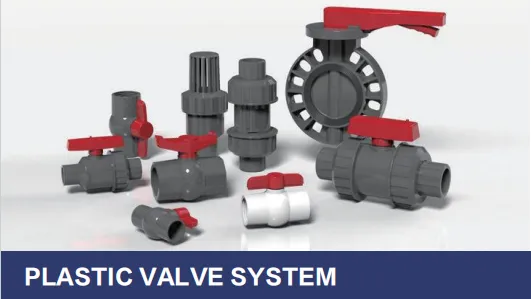
Ever worry about your water system's safety? Whether in your home's plumbing or an industrial facility, the valves controlling fluid flow play a crucial role in preventing accidents and ensuring reliability. Plastic valve systems - particularly PPR (Polypropylene Random Copolymer) - have revolutionized fluid control with advanced safety features that often outperform their metal counterparts. Let's explore why these innovative systems have become the go-to solution for engineers and homeowners alike.
At the heart of every reliable plastic valve system lies the material itself. PPR isn't just another plastic; it's a carefully engineered thermoplastic designed specifically for fluid control applications:
Unlike some metal valves that can leach heavy metals, PPR valves contain no lead, cadmium, or other toxic substances. They maintain water purity by preventing corrosion byproducts from contaminating drinking water - a critical safety advantage for potable water systems in residential and commercial buildings alike.
PPR demonstrates remarkable resilience against chemicals commonly found in water treatment, including chlorine that would corrode metal valves over time. This resistance prevents material degradation, maintaining the integrity of the entire water supply and drainage system throughout years of operation.
The true test of any valve system occurs when pressures exceed normal operating ranges. Plastic valves incorporate multiple layers of protection:
Each PPR valve carries clear pressure ratings determined through rigorous hydrodynamic testing. For example, quality PPR ball valves can typically handle pressures up to 20 bar at 20°C (approximately 290 PSI), with derating charts provided for higher temperatures. This engineering transparency allows proper system design preventing accidental pressure buildup.
When inlet pressure exceeds the calibrated spring force in spring-loaded safety valves, the disc lifts precisely to create a controlled opening. Plastic valves achieve rapid response through optimized design - the valve opens fully at 110% of set pressure and reseats securely at pressures just 3-5% below set point. This quick action/reaction prevents pressure spikes while maintaining system stability.
Leak prevention is arguably the most critical safety function in any valve system. Plastic valves combat leakage through multi-faceted approaches:
PPR ball valves employ an ingenious double-seal system. The ball rotates within durable seals made of EPDM or Viton elastomers that maintain elasticity across temperature ranges. When closed, the ball compresses these seals against the valve body with mathematical precision - creating a hydraulic lock that defeats even high-pressure fluid penetration attempts.
The quarter-turn operation (90° rotation from open to closed) provides visual and tactile confirmation of valve position. Unlike multi-turn valves that might appear closed when partially open, ball valves offer unmistakable open/closed positions. This prevents accidental flow that could lead to flooding or dangerous mixing of incompatible fluids.
Plastic valve systems face extreme challenges from temperature fluctuations, but incorporate remarkable engineering to maintain safety:
PPR possesses unique self-extinguishing properties - it stops burning within 30 seconds after ignition source removal, earning it Class B1 fire rating. This prevents small fires from spreading through valve systems. Meanwhile, at sub-freezing temperatures, PPR's controlled flexibility allows expansion (approximately 0.15 mm/m·K) when water freezes within pipes, preventing cracking that would destroy rigid metal valves.
Smart plastic valve designs incorporate pressure-temperature compensation curves, which pilots in pilot-operated safety valves constantly monitor. For example, while a valve might withstand 25 bar at 20°C, it automatically adjusts its relief pressure downward at higher temperatures to account for material softening. This real-time adjustment prevents dangerous overpressure scenarios in heating systems.
Valves don't operate in ideal conditions - they must respond safely to abnormal system behaviors:
| Stress Scenario | Plastic Valve Response | Safety Advantage |
|---|---|---|
| Thermal Expansion (in closed systems) | Pressure rises gradually at ≈0.2 bar/°C in typical hydraulic systems | Safety valves open incrementally at preset pressure to relieve exactly the needed amount of fluid |
| Water Hammer (sudden pressure surge) | Pressure spikes reaching 5-10× normal operating pressure | Resilient plastic components dampen shockwaves; pilot valves respond in milliseconds to protect pipelines |
| Backpressure Buildup | Discharge pressure exceeds inlet pressure by 10-25% | Balanced bellows in safety valves compensate; PPR ball seal geometry prevents reverse flow leaks |
| Freeze-Thaw Cycling | Ice expansion ≈9% volumetric increase | Controlled expansion joints and flexible pipe sections relieve ice pressure on valves |
Modern plastic valve systems incorporate technologies that create multiple layers of safety:
A PPR valve isn't a single piece of plastic, but a meticulously engineered system. The main valve body handles pressure containment, while seats provide sealing. Meanwhile, the ball or disc offers flow control. Should one component weaken, the system fails gracefully rather than catastrophically. For example, if spring force diminishes over decades of service, the safety valve still opens - though at slightly higher pressure - preventing disastrous system failure.
Advanced valves incorporate monitoring features that track performance. In pilot-operated safety valves, the pilot continuously senses system pressure using its integrated measuring chamber. Any deviation triggers cleaning mechanisms to clear debris, or signals the need for maintenance. This prevents unexpected failures by addressing minor issues before they compromise safety.
The next time you see plastic valves, recognize them not as inexpensive alternatives to metal, but as engineered safety systems designed specifically for reliability in water systems. With their non-toxic material properties, precise pressure control, multi-layer leak prevention, temperature resilience, and advanced failure modes, plastic valve systems represent an intelligent choice for anyone prioritizing safety.
The water supply and drainage systems in modern homes, hospitals, and industrial facilities increasingly rely on these plastic sentinels for good reason - they're engineered from the molecule up to keep us safe. As material science advances, the safety features we see today are just the beginning of what future valve systems will offer in protective technologies.
Recommend Products












