
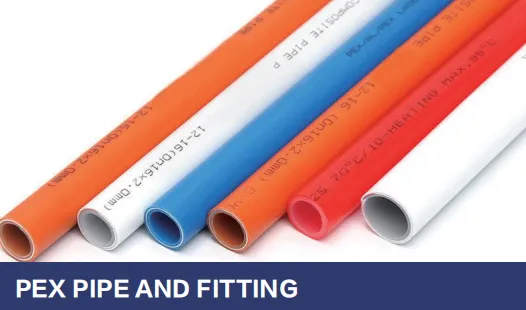
Hey there, homeowner! If you're researching plumbing materials for a renovation or new build, you've likely heard about PEX piping. But between all the myths and technical jargon floating around, understanding actual safety features can feel like finding a needle in a leaky haystack. Let’s cut through the noise together – no hard hats required.
We'll explore why modern PEX systems aren’t just "good enough" but represent genuine breakthroughs in plumbing safety, backed by certifications, smart engineering, and decades of real-world use. Grab a coffee, and let’s get you confidently informed!
The Reality: Early plastics earned their sketchy reputation, but modern PEX is a whole different beast. Rigorous NSF/ANSI certifications require extensive testing for over 100 contaminants. Think of it like this: your water bottle undergoes less scrutiny than certified PEX pipes. Brands meeting NSF/61 standards have proven zero harmful leaching - even under extreme temps and pressures.
The Reality: Unlike corroded metal pipes with rough interiors perfect for biofilm growth, PEX has an ultra-smooth inner surface. Ever noticed how mold struggles on glass? Same principle. Add chlorine-resistant formulations that maintain water freshness? Bacteria’s eviction notice is permanent.
The Reality: Modern PEX laughs at freeze cycles that shatter rigid pipes (more on that later!). Its flexible structure accommodates expansion without cracking. Studies show properly installed PEX maintaining integrity for 50+ years – outperforming many metals in aggressive water conditions.
NSF/ANSI 61 isn’t just alphabet soup – it’s your water’s bodyguard. Manufacturers must prove their material won’t impart odors, flavors, or toxins into drinking water through grueling tests:
Seeing that NSF mark? That’s third-party confirmation your pipes play nice with H2O.
Picture copper pipes as glass rods – they resist pressure until they explosively shatter. PEX? It’s more like memory foam. When water freezes and expands:
Real talk: This feature alone saves thousands in water damage claims annually.
Mineral buildup choking your flow? Rust particles staining fixtures? That’s metal pipe fatigue. PEX sidesteps entirely:
Your water stays metal-free and flowing freely. Like installing a permanent water softener!
Fittings are the handshake between pipe sections – weak ones ruin everything. This is where brass pex fittings become unsung heroes:
When plumbers insist on quality brass fittings? They're guarding against tiny failures that cause big headaches.
Calling PEX "plastic" is like calling a Ferrari "a car" – technically true but missing the genius. The magic happens during manufacturing:
By bombeting polyethylene molecules with controlled energy, engineers create 3D molecular bonds. This transforms floppy plastic into:
Reputable manufacturers disclose every additive at molecular levels. Nothing shady hiding here:
Full circle from the NSF testing we mentioned earlier!
| Risk Factor | Copper Pipes | PVC/CPVC | Modern PEX |
|---|---|---|---|
| Freeze Failure | High (cracks/ruptures) | High (shatters) | Very Low (expands/reforms) |
| Corrosion Impact | High (pinhole leaks) | Medium (mineral scaling) | None |
| Joint Integrity | Medium (solder fails) | Low (cement degrades) | High (cold-expansion) |
| Water Contamination | Medium (lead/copper leaching) | Low (plasticizer concerns) | Very Low (certified inert) |
Numbers don't lie: PEX dominates modern safety benchmarks across categories.
Armed with knowledge, here’s how to verify your PEX system’s safety:
Final thought? PEX isn’t plumbing's future – it’s the reliable present . By leveraging material science and rigorous testing, today’s systems deliver worry-free water that’s as safe as it is efficient. Here’s to dry basements and pure drinking water for decades to come!
Recommend Products












