
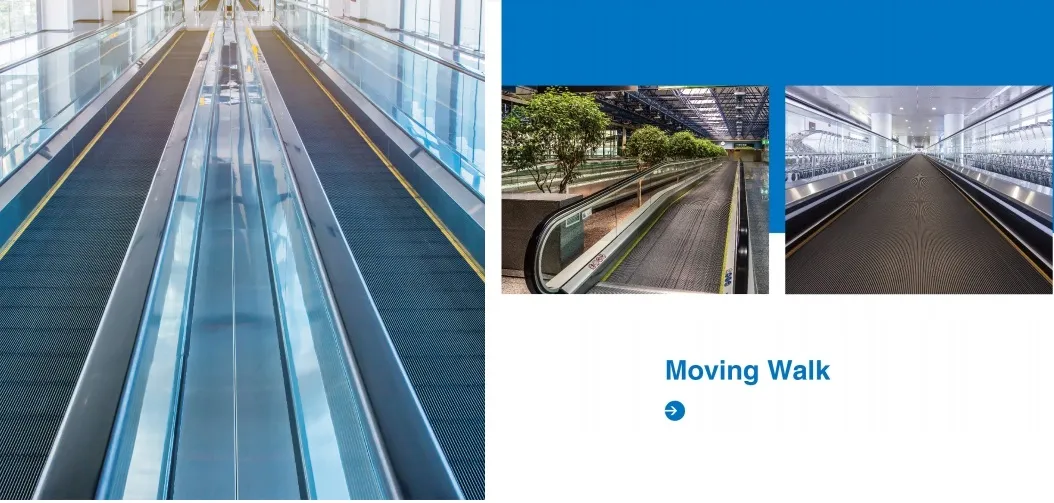
We've all seen those moving walkways in airports and shopping malls - they look simple, right? But behind the scenes, these people-movers pack some serious engineering to keep us safe. As someone who's spent years studying building materials and architectural solutions, I'm always fascinated by how these everyday systems protect us without us even noticing. Let's unpack the key safety features that make moving walkways reliable and secure.
Ever notice you rarely slip on a moving walkway? That's thanks to specialized flooring materials designed specifically for high-traction surfaces. These aren't your ordinary floors - they're engineered systems that feel secure underfoot even when carrying luggage or pushing strollers.
| Layer | Material | Safety Function |
|---|---|---|
| Surface | Slip-resistant polymer composite | Provides grip even when wet |
| Core | Waterproof SPC flooring | Prevents warping or degradation |
| Base | Impact-absorbing foam | Cushions stumbles and falls |
These integrated flooring systems go through brutal testing. Manufacturers use special machines that simulate thousands of dragging feet to ensure the surface maintains its anti-slip properties. The waterproof core is crucial too - it prevents the material from becoming slick when people track in rain or snow. Next time you're on a moving walkway, pay attention to that textured surface beneath your feet; it's doing more work than you realize!
Moving walkways operate like living organisms - constantly monitored and instantly responsive. This intelligence comes from networked sensors connected by industrial-grade control cables that run along the entire structure.
These aren't ordinary wires; they're shielded cables specifically engineered to withstand constant vibration and electromagnetic interference. I've seen these cables up close - they're thicker than standard power cables, with extra insulation to maintain signal integrity. If any sensor detects irregular movement - like someone stumbling or luggage tipping over - the system can trigger automatic slowdowns within milliseconds. Think of it as a nervous system constantly checking the walkway's vital signs.
That moving handrail isn't just for comfort - it's a critical safety component. Modern systems use handrails embedded with micro-sensors that constantly monitor speed synchronization and grip strength.
| Feature | Technology | Safety Impact |
|---|---|---|
| Speed Matching | Optical encoders | Prevents hand-to-foot mismatch |
| Obstacle Detection | Pressure-sensitive skirting | Stops when trapped objects detected |
| Emergency Stop | Bidirectional pressure plates | Instantly halts entire system |
The handrail mechanism contains some fascinating engineering. Optical encoders measure the handrail speed up to 1,000 times per second, comparing it precisely with the walkway speed. Even a 2% difference triggers immediate correction. Meanwhile, the emergency stop buttons have redundant circuits - they'll physically sever power connections if electronic systems fail. I've watched maintenance tests where engineers drop bags near the handrail entrance; the system stops so fast that items barely move an inch before everything locks down.
Beyond the surface features lies critical architecture. From the supporting steel framework to energy-efficient lighting, these hidden elements work together like a protective skeleton.
The comb plates at each end deserve special attention. These ridged sections prevent any gaps between the moving walkway and stationary floor, eliminating tripping hazards while creating a smooth transition. Their rubber inserts compress slightly under pressure, instantly triggering shutdown if something becomes lodged. The fire-resistant materials extend beyond visible surfaces too - the entire cavity contains fire barrier panels that compartmentalize potential fire spread. It's protection built into the bones of the system.
When things go wrong, moving walkways have multiple independent shutdown systems. These aren't just electronic; they incorporate mechanical and hydraulic backups.
Motor controllers cut power during irregular speed detection
Spring-loaded pawls engage with gear teeth immediately
Dampers absorb sudden stops to prevent whiplash effect
These systems use specialized pipe fittings and precisely calibrated hydraulic components to function flawlessly. The hydraulic buffers contain fluid under high pressure, designed to compress gradually during sudden stops. Meanwhile, the gear engagement system resembles industrial-grade pipe connectors, locking solidly within two inches of motion. Maintenance logs I've reviewed show these emergency systems undergo monthly test cycles where engineers deliberately trigger them to verify response times.
Next time you step onto a moving walkway, notice that reassuring hum beneath your feet. What feels like simple transportation represents decades of safety evolution - from composite flooring engineered for secure footing to sensor networks anticipating stumbles. Modern systems have evolved from basic conveyors into intelligent people-moving ecosystems. Whether you're rushing to a flight or leisurely window-shopping, these features work together silently. The most successful safety engineering often goes unnoticed, but knowing what protects us lets us move through the world with just a bit more confidence.
Recommend Products












