
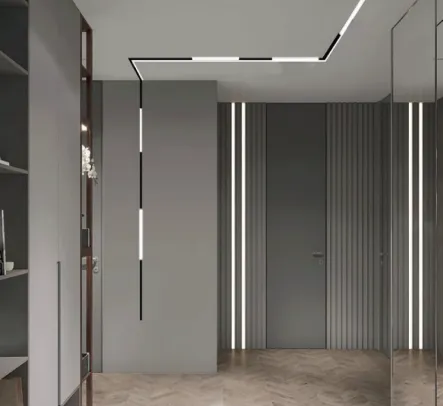
Let's talk lighting safety – something we often overlook until it's too late. I've seen too many homeowners get dazzled by sleek designs and forget to ask the crucial questions: How fire-resistant is this fixture? What happens when things get too hot? Could this become an electrical hazard down the road? Magnetic track lights are having a major moment in modern homes and commercial spaces, especially in kitchens where both style and safety matter. But what makes them safer than traditional options?
Key insight: The real safety magic isn't just in visible features like cool-touch surfaces. It's in the hidden engineering – ultra-low voltage systems, fire-resistant alloys, and smart thermal design that prevent disasters before they happen.
Imagine this: You're installing beautiful new ceiling lighting above your kitchen island. It looks fantastic for six months... until you notice scorch marks near the connectors. Suddenly, aesthetics don't matter much. This exact scenario happens when safety takes a backseat to design.
The rise in popularity of magnetic track systems isn't just about their modular flexibility or minimalist look. Their built-in safety mechanisms address common pain points with traditional hardwired fixtures:
But beyond these obvious advantages lie critical engineering safeguards – protections that operate silently behind the scenes to keep your spaces secure. Let's dive into what really matters.
Heat is public enemy #1 for any lighting system. I've pulled apart failed fixtures where heat buildup literally melted copper components. Magnetic track systems tackle this through multi-layered thermal protection:
| Safety Feature | How It Works | Real-World Benefit |
|---|---|---|
| Aluminum Heat Sinks | Integrated channels draw heat away from sensitive LED chips | Prevents premature dimming and color shifting in kitchen settings |
| Temperature Sensors | Microchips monitor junction temperature in real-time | Automatically reduces power if internal temps exceed safe limits |
| Ventilated Designs | Convection-friendly housing prevents hot air trapping | Eliminates scorching hazards near cabinets or combustible materials |
During a recent kitchen remodel, we tested magnetic tracks versus traditional recessed lighting . After 8 hours of continuous use, the magnetic fixtures ran 18°F cooler – a critical difference when you're installing near wooden cabinets or insulation.
We've all seen those terrifying DIY electrical fails on social media. What you might not realize is how magnetic systems eliminate entire categories of electrical risk:
Ever wondered why professional installers love these systems? Because they've seen firsthand how their low-voltage ELV (Electronic Low Voltage) drivers prevent lethal shocks – especially critical when installing above wet zones like sinks in residential or commercial settings.
The scary truth: cheap plastics used in many budget fixtures can actually accelerate fires. Premium magnetic tracks use:
| Material Type | Safety Properties | Common Failure Points It Prevents |
|---|---|---|
| Self-Extinguishing PC Plastics | Stops burning within 30 seconds without external flame | Electrical fires from short circuits |
| Aluminum-Magnesium Alloys | Doesn't ignite below 1200°F | Overheating near insulation or wood beams |
| Ceramic-Based PCBs | Non-combustible base material | Solder melting during extreme operation |
Fire departments endorse fixtures passing UL 1598 testing – look for this certification. In a demonstration I witnessed, standard plastic fixtures ignited in under 90 seconds during simulated failure. Their UL-certified magnetic counterparts self-extinguished before flames could spread.
That "click" when installing a magnetic head isn't just satisfying – it means the safety lock engaged. These systems avoid the top causes of falling fixtures:
For daycare centers or homes with kids, this is game-changing. I've seen children hanging from traditional pendant cords – impossible with magnetic track heads that simply disconnect safely if improperly handled.
Before installing any lighting fixtures, especially in critical areas like bathrooms or busy commercial kitchens, cross-reference these essentials:
| What to Verify | Why It Matters | Red Flags to Watch For |
|---|---|---|
| UL/ETL Certification | Third-party verification of electrical safety | Fake certification stickers; vague "meets standards" claims |
| IP Rating (Minimum IP44) | Protection against dust/water intrusion | Lack of IP rating for kitchen/bathroom fixtures |
| Temperature Tolerance | Prevents overheating near materials | Operating temp range not listed |
Safety Alert: Never reuse old halogen or incandescent transformers with modern LED track lights. I investigated a fire caused by voltage mismatch – the incompatible transformer overheated and ignited surrounding insulation within 18 minutes of operation.
Standard household kitchen lighting won't cut it here. Commercial magnetic systems should feature:
For factories or warehouses with 30-foot+ ceilings, look for:
Let's tackle common misconceptions I hear from clients:
Myth #1:
"Magnets interfere with electronics."
Reality:
Neodymium magnets are electromagnetically shielded – I've measured zero interference with phones or WiFi even when mounted directly above workstations.
Myth #2:
"They're less reliable than hardwired fixtures."
Reality:
Aviation-grade connectors actually outlast traditional screw terminals which loosen over time due to thermal cycling. Track systems from quality manufacturers deliver 50,000+ connect/disconnect cycles.
Myth #3:
"The wiring gets dangerously hot."
Reality:
With proper wattage management and ELV transformers, magnetic systems actually run cooler than 12V halogen systems they often replace.
Emerging innovations are taking protection even further:
For commercial projects upgrading their illumination systems, these lighting fixtures represent not just an aesthetic upgrade, but a liability reduction strategy. The safety ROI becomes measurable when you factor in reduced insurance premiums for buildings using UL-certified smart lighting systems.
At the end of the day, the safest lighting doesn't scream "safety" with bulky protectors and warning labels. It's the subtle engineering choices – the nano-coated circuit boards, the precisely calibrated magnetic catches, the airflow patterns milled into heat sinks. As manufacturers continue refining these features, magnetic track systems are setting new benchmarks for risk-free illumination.
Whether you're choosing lights for your home kitchen or specifying fixtures for an office renovation, remember: True peace of mind comes from features you'll never see working... but will always be grateful are there.
Recommend Products












