
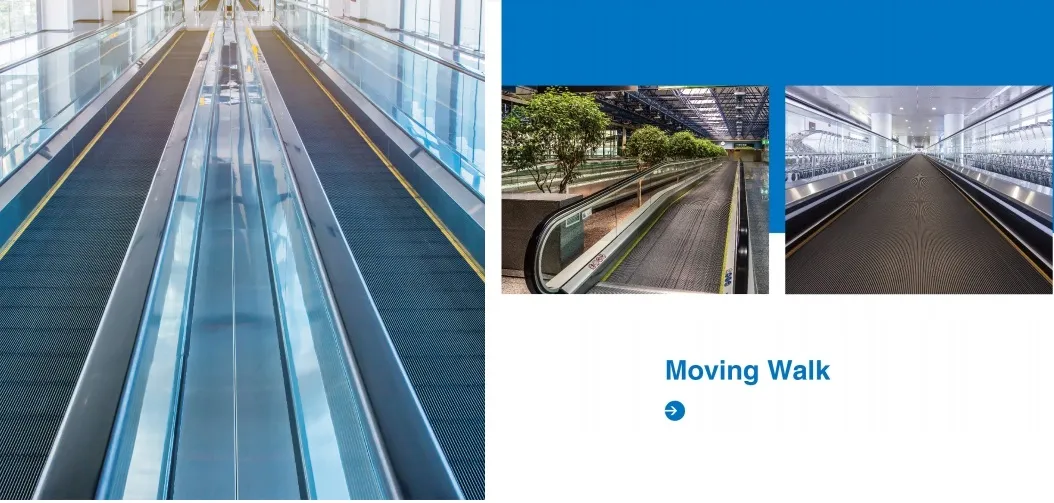
You step into the airport after a long flight, luggage dragging behind you, and there it is – that glimmering ribbon of moving steel inviting you to glide toward baggage claim. Moving walkways, those horizontal escalators we've all encountered, are engineering marvels hiding in plain sight. But have you ever wondered about the unspoken rules of these travelators? Or what happens if you ignore the yellow warning lines?
Picture this: Businesswoman Sarah was rushing through Chicago O'Hare, late for her connection. On the moving walkway, she leaned over to grab papers from her rolling suitcase when the wheel caught in the side gap. Within seconds, her bag toppled, pulling her off balance toward the combplate's dangerous teeth. If not for the quick-thinking maintenance crew nearby...
This guide will transform how you approach these ubiquitous people-movers. Whether it's an airport accelerator between terminals or a mall glide path spanning floors, you'll learn to navigate them safely while appreciating the engineering beneath your feet.
That smooth conveyor surface masking a complex symphony of components working in concert:
Modern systems use synchronized sensors that maintain constant speeds regardless of weight load. The secret? Industrial-grade motors like those in elevators – creating harmonious movement throughout multi-level structures.
| Component | Safety Function | Maintenance Check |
|---|---|---|
| Skirt Sensors | Detect obstructions along walkway edges | Tested during monthly inspections |
| Emergency Buttons | Instant shutdown within 3 seconds | Functionality verified weekly |
| Combplate Teeth | Prevent shoe/suitcase entrapment | Measured gap tolerance: <6mm |
| Non-Slip Flooring | Traction during wet conditions | Texture depth inspections quarterly |
We've all encountered the human roadblocks – tourists clustering at the entrance, families spread across the entire width, luggage sprawled like obstacle courses. This is where walkway diplomacy comes in.
Accidents don't just happen to careless travelers. Remember that architects design these systems alongside structural elements like pipe fittings carrying critical hydraulic fluids and pressurized air systems. A dropped coffee cup near junction boxes can trigger malfunctions impacting multiple systems.
The surrounding environment plays crucial safety roles:
Modern walkways incorporate sustainable elements too. At Singapore's Jewel Airport, the moving paths regenerate kinetic energy into electricity – enough to power surrounding sign systems and emergency lighting for hours.
Even with perfect design and technology, humans remain the unpredictable variable. Consider these documented incidents:
| Scenario | Common Causes | Prevention Strategy |
|---|---|---|
| Footwear Entrapment | Crocs, flip-flops near combplates | Step over transition lines, maintain stride |
| Pet Incidents | Leashed animals panicking at moving parts | Carry small animals across transitions |
| Baggage Tip-Overs | Top-heavy luggage wheels catching edges | Position bags vertically in front of you |
| Child Handrail Accidents | Children sitting on moving handrails | Constant supervision at arm's reach |
When approaching the exit: Take larger-than-normal steps when the floor seems solid beneath you – many falls happen at the transition where people misjudge the moving-to-static timing.
Moving walkways don't exist in isolation. Modern complexes link these systems with vertical transport like elevators and nearby structural components. The smooth operation relies on:
When designers coordinate these elements from the blueprint phase – from elevator placement to utility conduits – they create seamless passenger experiences. The best designs anticipate how people move between horizontal and vertical transport systems.
Tomorrow's walkways already exist in prototype phases:
Architects now consider these walkways not just as utilities, but architectural statements enhancing spaces like commercial flooring systems in corporate towers, where design complements functionality.
Our relationship with moving walkways is surprisingly profound. They represent trust in engineering, mutual social cooperation, and the fascinating intersection of human behavior and mechanical design.
Next time you approach that inviting metallic pathway, remember it's not just about getting from Gate A to Gate B. You're participating in a choreographed dance of physics, engineering psychology, and collective responsibility. By understanding the invisible safety layers beneath our feet – from the structural integrity of pipe fittings to the carefully measured gaps in combplate teeth – we transform rushed transit into confident journeys.
Moving walkways, after all, only move in one direction. But the safety consciousness they foster? That can spread through every aspect of how we navigate shared spaces.
Recommend Products












