
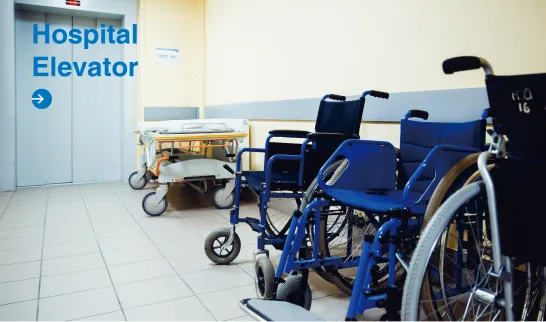
In the bustling environment of a hospital, where every second counts and patient comfort is paramount, elevators are more than just a means of transport—they're a lifeline. For elderly patients, whose mobility may be limited by age, illness, or injury, navigating these vertical spaces can be a source of anxiety or even risk. That's why accessible design isn't just a regulatory checkbox; it's a commitment to ensuring every patient, regardless of ability, feels safe, respected, and empowered. Let's dive into the key design features that make hospital elevators truly elderly-friendly, and how the right partners are redefining what "safe" looks like in healthcare mobility.
Think about a typical hospital visit for an 80-year-old patient recovering from a hip replacement. Every step is deliberate, every movement requires focus. Now imagine stepping into an elevator with narrow doors, dim lighting, and tiny buttons mounted high on the wall. For someone with arthritis, shaky hands, or poor eyesight, that elevator isn't just inconvenient—it's a barrier. According to the World Health Organization, by 2050, the global population of adults over 65 will nearly double, making age-friendly healthcare infrastructure more critical than ever. Hospitals, as spaces designed to heal, must lead the way in removing these barriers, starting with the elevators that connect patients to their care.
Elderly patients often face a unique set of challenges: slower reaction times, reduced muscle strength, sensory impairments (like hearing or vision loss), and a higher risk of falls. Traditional elevators, built with a one-size-fits-all mindset, frequently overlook these needs. A door that closes too quickly, a floor indicator that's hard to read, or a lack of handrails can turn a simple ride into a stressful ordeal. The goal of accessible design is to anticipate these challenges and create elevators that adapt to the user, not the other way around.
Before diving into specific features, it's important to ground ourselves in the principles that guide truly accessible elevator design. These aren't just technical specs—they're values that prioritize human dignity and independence:
These principles aren't just "nice-to-haves." They're the foundation of elevators that don't just move people, but care for them.
So, what does this look like in practice? Let's break down the features that make a real difference in an elderly patient's experience. We'll compare traditional elevator design with accessible design to highlight the critical gaps that need closing:
| Design Aspect | Traditional Hospital Elevators | Accessible Elderly-Friendly Elevators |
|---|---|---|
| Cabin Size & Layout | Often narrow (1.2–1.5m wide), tight turning radius for wheelchairs/walkers. | Spacious (minimum 1.8m x 1.8m), with clear floor space for 2+ wheelchairs and caregivers. |
| Door Design | Standard 80cm doors, closing time of 3–5 seconds. | Wider doors (minimum 90cm), slow-closing mechanism (10–15 seconds) with motion sensors to re-open if obstructed. |
| Control Panels | Small buttons (2–3cm diameter), mounted at 1.5m height, minimal contrast between buttons and background. | Large, convex buttons (5cm+ diameter), backlit with high-contrast colors (e.g., white on blue), Braille labels, and dual height mounting (1m and 1.5m) for seated and standing users. |
| Safety Features | Basic emergency stop button, no dedicated fall prevention. | Continuous handrails (360° around cabin), non-slip flooring, emergency call button with two-way voice communication, and floor leveling sensors to eliminate gaps between elevator and landing. |
| Sensory Aids | Blinking floor indicators, standard beeps. | Clear audio announcements (e.g., "Floor 5, Oncology Ward"), visual floor displays with large fonts, and gentle chimes instead of loud beeps to avoid startling users. |
Ever tried maneuvering a walker in a crowded elevator? It's like solving a puzzle with a time limit. For elderly patients, tight spaces aren't just frustrating—they increase the risk of bumping into walls or other passengers, which can lead to falls or exacerbate pain. Accessible elevators prioritize space: a minimum cabin size of 1.8m x 1.8m ensures there's room for a wheelchair, a caregiver, and even medical equipment like IV poles. The layout is also key—no sharp corners or protruding fixtures, just open, unobstructed floor space that feels safe to navigate.
There's a reason "elevator anxiety" is a real thing, especially for the elderly. Traditional elevator doors close quickly, often before someone with limited mobility can fully board. Accessible designs fix this with two key features: slow-closing mechanisms (10–15 seconds, compared to the standard 3–5) and infrared motion sensors. These sensors detect if someone is still entering or exiting and automatically hold the doors open, eliminating the need to "hurry up." For patients with tremors or weakness in their hands, there's also a "hold open" button inside the cabin, allowing them to extend the door stay if needed.
Imagine squinting at tiny, unlit buttons while balancing on a walker—that's the reality for many elderly patients using traditional elevator panels. Accessible panels are a game-changer. Large, convex buttons (think 5cm in diameter, not 2cm) are easy to press even with arthritic fingers. High-contrast colors (like white text on a dark blue background) make numbers pop, while backlighting ensures visibility in dimly lit hospital corridors. Braille labels aren't just for the visually impaired—they're a backup for anyone who struggles to read small print. And dual-height mounting (one panel at 1m for seated users, another at 1.5m for standing) ensures everyone can reach, no stretching or bending required.
Falls are the leading cause of injury in hospitals, and elevators are a high-risk area. Accessible designs tackle this head-on with continuous, sturdy handrails that run 360° around the cabin. These rails are padded for comfort and mounted at a height (85–90cm) that's easy to grip for both seated and standing users. The flooring is another critical detail—non-slip, textured surfaces prevent slips even if the floor is wet (from a spilled drink or cleaning). And in case of emergencies, elevators are equipped with two-way voice communication systems (not just alarms) that connect directly to hospital staff, so help is never more than a button press away.
For patients with dementia or sensory impairments, disorientation is a constant threat. Accessible elevators use multi-sensory cues to keep users informed and calm. Clear audio announcements ("Now arriving at Floor 3, Cardiology Unit") with slow, distinct speech help users track their location. Bright, large-font floor indicators (both inside and outside the cabin) confirm the current floor, while gentle chimes (not harsh beeps) signal door openings and closings. These cues reduce anxiety by making the ride predictable—no more guessing if you've missed your floor or if the doors will close before you're ready.
While core design features lay the groundwork, technology is taking elderly-friendly elevators to the next level. These innovations aren't about flash—they're about solving real problems that traditional designs miss:
Waiting for an elevator can be tiring for elderly patients, especially if they're standing in a busy corridor. Smart summoning systems let users call elevators from their hospital bed or via a mobile app (for caregivers), so the elevator is ready when they arrive. Some systems even remember user preferences—like a patient who always needs to go to the 5th floor for physical therapy—and automatically select the floor, reducing the need for manual input.
Nothing is scarier than an elevator breaking down mid-ride, especially for someone with a medical condition. Predictive maintenance uses sensors and AI to monitor elevator performance in real time—tracking things like door alignment, motor noise, and brake function. If something seems off, the system alerts technicians before a breakdown occurs, minimizing downtime and keeping patients safe.
In a medical emergency, every second matters. Modern elevators integrate with hospital emergency systems, so if a patient presses the help button, staff can see exactly which elevator they're in and respond immediately. Some elevators even have built-in cameras (with privacy safeguards) that allow nurses to visually check on patients if they're unresponsive, ensuring help is tailored to the situation.
Across the globe, healthcare facilities are recognizing the need for elderly-friendly elevators, and regions like Saudi Arabia are leading the charge. With a growing elderly population and a strong focus on healthcare infrastructure under initiatives like Saudi Vision 2030, the demand for accessible solutions is higher than ever. Let's look at how a local hospital partnered with a saudi arabia building materials supplier specializing in hospital elevator solutions to transform their patient experience.
King Faisal Hospital in Riyadh, a 500-bed facility treating thousands of elderly patients annually, faced a common challenge: their elevators were causing delays and discomfort for older users. Narrow doors led to frequent bottlenecks, while small buttons and fast-closing doors left many patients feeling stressed. The hospital turned to a one-stop architectural solution provider with deep experience in healthcare mobility—one that could handle everything from design to installation to maintenance.
The result? A complete elevator overhaul that prioritized elderly patients. New cabins were widened to 1.9m, with continuous handrails and non-slip flooring. Control panels got large, backlit buttons with Braille, and doors were fitted with motion sensors and 15-second hold times. The supplier also integrated smart summoning via the hospital's patient app, allowing elderly patients to call elevators from their rooms. Within six months, patient feedback surveys showed a 78% reduction in elevator-related anxiety and a 40% drop in fall incidents in elevator lobbies.
This case isn't an anomaly—it's a blueprint. When hospitals partner with suppliers who understand both accessibility and local needs, they don't just upgrade elevators; they upgrade the entire patient experience.
Accessible design isn't just about good intentions—it's about meeting rigorous standards that protect users. Globally, organizations like the Americans with Disabilities Act (ADA) and the International Organization for Standardization (ISO) set benchmarks for elevator accessibility. For example, ISO 22559 specifies requirements for lifts used by persons with mobility impairments, including door width, cabin size, and control panel design. In Saudi Arabia, local regulations align with these global standards while also incorporating cultural and climatic considerations—like durable materials to withstand high temperatures and humidity.
Working with a hospital elevator supplier that prioritizes compliance isn't just about avoiding fines; it's about ensuring patients get the safe, reliable elevators they deserve. Reputable suppliers will not only meet these standards but exceed them, using third-party certifications to verify their commitment to accessibility.
Designing, installing, and maintaining accessible elevators is a complex process—one that requires coordination across multiple teams. That's where a one-stop architectural solution provider shines. Instead of juggling separate contractors for design, supply, and maintenance, hospitals can partner with a single team that understands the full lifecycle of elevator accessibility. This approach offers three key benefits:
In short, these providers don't just sell elevators—they build partnerships focused on long-term patient safety.
As our population ages and healthcare evolves, so too will the needs of elderly patients. The elevators of tomorrow will likely blend accessibility with sustainability and smart technology. Imagine elevators made with recycled, low-emission materials (aligning with global "green hospital" trends), or AI-powered systems that learn user preferences—like automatically lowering the cabin floor to match the landing for a patient with limited leg strength. Localization will also play a role, with suppliers in regions like Saudi Arabia tailoring solutions to meet the unique needs of their communities, from cultural considerations to climate resilience.
But no matter how technology advances, the core mission will remain the same: to create elevators that see patients as people, not just passengers. Because at the end of the day, a safe elevator ride isn't just about getting from A to B—it's about showing elderly patients that their needs matter, their comfort is a priority, and they deserve dignity in every step of their healthcare journey.
Elevators are often overlooked in healthcare design, but they're a powerful symbol of a hospital's commitment to its patients. For elderly users, accessible elevators aren't a luxury—they're a basic right. By prioritizing features like spacious cabins, intuitive controls, and smart safety systems, hospitals can turn a potentially stressful experience into one that feels supportive and empowering.
The key, of course, is choosing the right partner. A hospital elevator supplier that understands accessibility, local needs, and the human side of healthcare can transform elevators from mere machinery into tools of care. As we look to the future, let's remember: every detail, from the width of a door to the size of a button, is a chance to say, "We see you, and we're here to help."
In the end, safe hospital elevators for elderly patients aren't just about moving up and down—they're about lifting up the standards of care for everyone.
Recommend Products












