
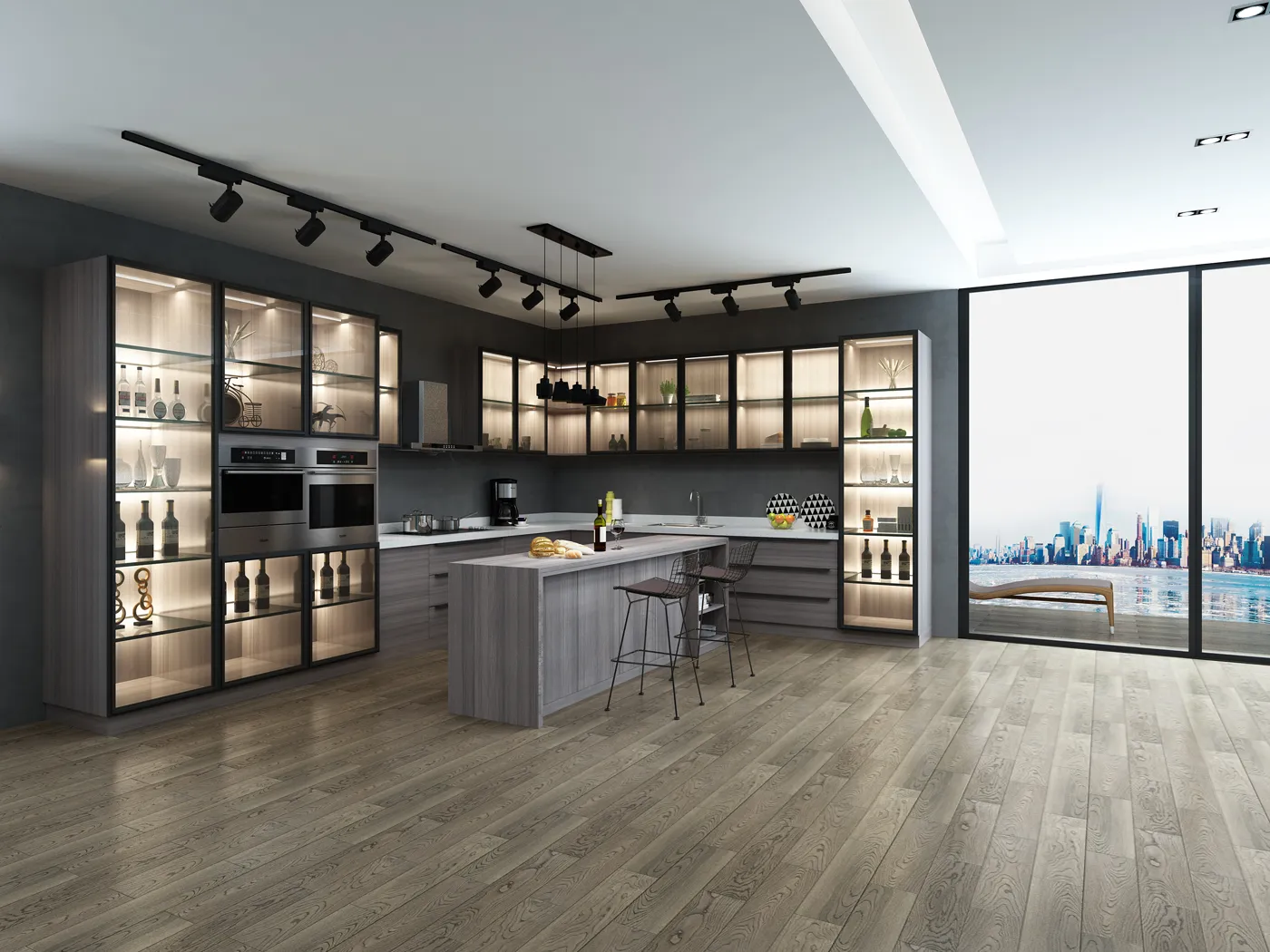
When you step into a Russian or Eastern European kitchen, you're not just entering a functional space – you're walking into the heart of family life, infused with centuries of tradition. The Russian phrase "кухня - душа дома" (kitchen is the soul of the home) isn't just poetic sentiment; it reflects the genuine cultural significance of this space.
In many post-Soviet households, the kitchen remains the primary gathering space, evolving from tiny communal apartment galley kitchens to modern family hubs where meals stretch for hours over deep conversations.
You'll notice an interesting duality in material preferences. High-end kitchens often feature luxurious woods like Karelian birch or Caucasian oak - locally sourced materials that carry national pride. Yet at the same time, there's growing acceptance of innovative alternatives like wood plastic composites (WPC) that offer durability against harsh continental winters.
The color palette typically leans toward rich, warm tones - deep burgundies, forest greens and imperial golds that create cozy atmospheres during long winters. These aren't just aesthetic choices; they're psychological responses to the climate.
Smaller urban apartments drive clever space solutions - peninsula layouts replacing walls, transformable surfaces, and vertical storage systems. The Soviet-era "кухонный уголок" (kitchen corner) concept has evolved into sophisticated multifunctional islands with breakfast bars.
Tech adoption patterns reveal fascinating contradictions. While premium markets embrace smart cabinets with LED lighting and motion sensors, mainstream kitchens prioritize practical solutions like anti-condensation systems and reinforced joints to withstand temperature fluctuations from -30°C winters to humid summers.
Cultural nuances significantly influence cabinet aesthetics. Polish kitchens often incorporate Baroque flourishes reflecting Western influences, while Ukrainian designs favor vibrant folk embroidery patterns on glass cabinet inserts. Baltic states lean toward Scandinavian minimalism blended with traditional woodwork techniques.
Unlike Western kitchen trends focused on entertainment value, Eastern European designs prioritize practical meal preparation . You'll consistently find deeper countertops to accommodate traditional food preservation techniques, specialized storage for pickling jars, and reinforced sections for heavy cast iron cookware.
Cabinet heights reflect this functionality too - many are 10-15cm taller than standard Western units to accommodate large stockpots needed for "варенье" (jam-making) and other seasonal food preservation traditions.
Navigating price expectations requires understanding regional economic disparities. In Moscow or Warsaw, premium custom kitchen cabinets may command prices 20-30% higher than equivalent Western markets. Yet in provincial areas, even modest pricing requires justification through perceived longevity.
Here's how purchase decisions break down by income segment:
A sales tactic that resonates powerfully: Framing cabinet purchases as "наследство" (inheritance) items that will serve multiple generations. This positions cabinets not as disposable furniture but as heritage investments.
Material cost variations significantly impact market positioning. Solid hardwoods increase cabinet prices by 40-60% versus MDF alternatives, creating a major purchase barrier outside major cities. Yet innovative solutions like thermo-foiled MDF with wood textures achieve 92% consumer acceptance at mid-range price points.
Interestingly, pricing strategies that bundle appliances with cabinetry show 30% higher conversion than standalone cabinet offerings - the bundled approach psychologically reframes the total kitchen cost.
While customization options drive premium sales, Russian buyers exhibit unique requirements: reinforced shelving for heavy serving dishes (particularly crucial for holiday entertaining), specialized compartments for tea service sets, and wider pull-outs for large baking sheets.
Transportation realities create critical pricing constraints. Long overland shipments subject cabinets to temperature extremes and humidity fluctuations that cause warping - solutions like climate-controlled transit containers add 12-18% to costs but reduce returns by 40%.
Overcoming post-Soviet skepticism requires relationship building. Successful suppliers typically feature detailed manufacturing photography showing structural elements normally hidden - demonstrating where competitors might cut corners becomes a key trust-building strategy.
Brands thriving in these markets adopt localized approaches:
● High-density plywood cabinet sides (minimum 18mm) addressing humidity concerns with lifetime guarantees
● Integrated "сервировочная зона" (serving stations) with warming drawers and vertical plate storage
● Ice-resistant finishes for northern regions where condensation freezes in poorly insulated kitchens
● Custom stain options matching traditional furniture finishes prevalent across generations
◘ Flexible payment systems offering installment plans without interest prove especially effective during economic volatility
◘ Seasonal promotions tied to major holidays (New Year, Easter) when families gather increase conversion 27%
◘ Clear price segmentation: Entry-level modular (<€3,500), Mid-range custom (€3,500-€8,000), Premium designer collections (>€8,000)
Demographic and technological shifts are creating exciting opportunities:
As younger generations migrate to cities, compact solutions are driving innovation in transformable cabinetry. The "микрокухня" (micro-kitchen) segment is exploding with annual growth of 17%.
While Western eco-certifications have limited impact, local forest stewardship certifications showing sustainable lumber sources resonate powerfully, particularly with younger urban professionals.
Smart features gaining traction focus on practical solutions: humidity-monitoring ventilation systems, cabinet lighting with motion sensors saving electricity, and voice-controlled organization for visually impaired elders.
Success in Russian and Eastern European kitchen cabinet markets ultimately depends on recognizing these spaces aren't just functional rooms - they're cultural ecosystems. Products reflecting pride in national design traditions while meeting pragmatic environmental demands create powerful emotional connections that transcend price sensitivity. The most successful international brands hire local designers who intuitively understand how families gather around "стол" (the table) - both literally and metaphorically.
Navigating these markets requires cultural sensitivity beyond superficial adaptation. Suppliers that invest in understanding the complex relationship between family identity, culinary tradition, and physical kitchen space unlock remarkable loyalty despite economic volatility. The kitchen cabinet becomes more than furniture - it transforms into a treasured part of the family narrative.
Recommend Products












