
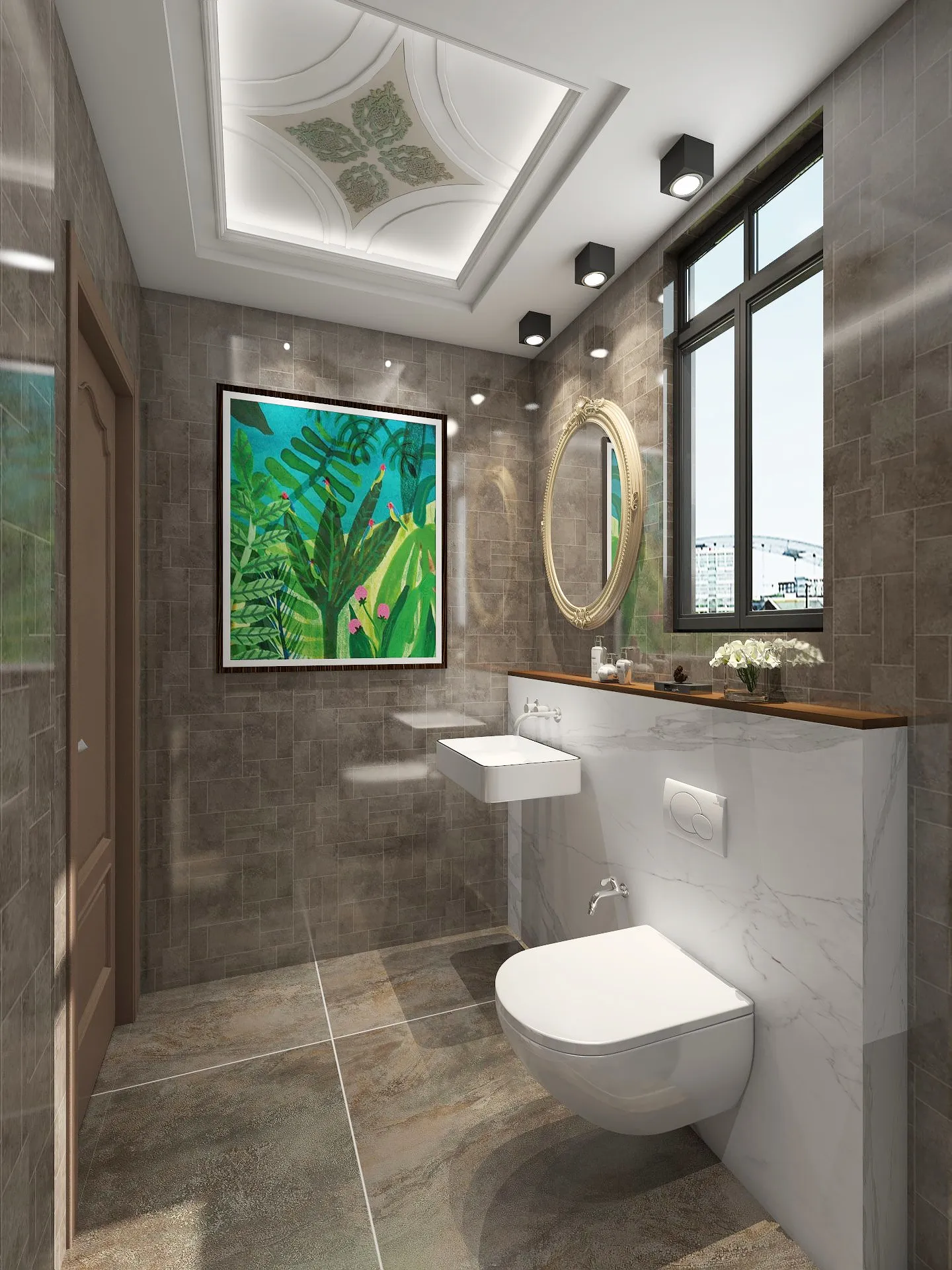
You probably don't give much thought to what happens before that sleek ceramic basin vanity top lands in your bathroom. I've seen homeowners marvel at the glass-like finish, run their hands over the smooth surface, and comment on the rich, consistent color. But here's what's fascinating – nearly every quality they're admiring was determined weeks earlier in the fiery depths of a kiln. The journey from clay to sophisticated bathroom centerpiece is an intricate dance of fire, chemistry, and precision engineering.
In my experience visiting manufacturing facilities across Europe and Asia, I've learned that the firing process separates mass-produced bathroom pieces from true luxury sanitaire. It's not just about baking clay – it's about orchestrating molecular transformation. When done right, firing turns fragile clay into a material that resists water absorption ( under 0.5% for premium pieces), withstands thermal shock, and maintains its beauty for decades. The vanity top holding your designer soap dish has survived a trial by fire – literally.
"Temperature isn't a single setting but an evolving journey. Like guiding a complex chemical reaction through different phases, we slowly coax minerals to transform without shocking the structure," explains Martina Rossi, a veteran kiln engineer at Florim Ceramica with over thirty years' experience.
The magic number for premium sanitary ware typically ranges between 1180-1280°C, but how you reach that peak matters more than the number itself. Let me walk you through what happens at key stages:
This is where physical water evaporates. Rush this stage and you'll get explosive steam pockets fracturing the clay from within. I've seen kiln technicians monitor humidity exhaust levels like ICU nurses watching vital signs.
Clay molecules contain hydroxyl groups that break away as water vapor. This is the most dangerous phase – too rapid heating causes structural collapse. I recall one factory where they call this "the whisper phase" because operators speak softly, afraid to disturb the process.
Here's where particles begin fusing. Fluxes like feldspar start acting as glass-formers. The vanity top's signature durability gets locked in during these intense hours. At one German facility, they display before-and-after cross-sections showing how porosity virtually disappears at this stage.
Temperature precision directly determines:
Modern kilns can technically reach maximum temperature in just hours, but the best manufacturers deliberately slow the process. I've timed cycles that span 24-48 hours for luxury vanity tops versus just 8-12 for economy pieces. This patience creates transformational differences:
| Phase Duration | Result on Product | Luxury Approach | Economy Approach |
|---|---|---|---|
| Heating to 600°C | Moisture evacuation | 9-12 hours | 3-5 hours |
| Critical Zone (900-1150°C) | Quartz inversion | Holds 30-90 mins | No holding period |
| Cooling Phase | Stress equalization | Controlled 22h+ | Rapid 6-8h |
"Rapid cooling is like quenching hot glass in water. You might get the shape, but it's internally screaming with tension," notes kiln engineer David Chen during a factory tour in Foshan, China. "The best vanity tops cool as slowly as they heat."
Here's something most homeowners never consider: the atmosphere inside the kiln dramatically affects color and material properties. During several facility visits, I've watched operators adjust oxygen levels like master perfumers blending scents:
Oxidizing Atmosphere: Excess oxygen brightens colors but can cause glaze blistering. Ideal for vibrant blues and greens popular in Mediterranean-style vanities.
Reducing Atmosphere: Limited oxygen deepens metallic hues and creates warmer tones. Crucial for achieving those sophisticated charcoals and taupes favored in modern luxury bathrooms.
For vanity tops, I've documented how master kiln operators use sophisticated sensors to maintain precise O₂ levels:
Burners operate fuel-rich early on to eliminate organic compounds. Prevents black coring issues I've seen in poorly fired pieces.
Once above 1000°C, introducing slight fuel excess modifies mineral structures. This intensifies color saturation significantly.
Final 30 minutes balance atmospheric effects to set finish characteristics without overshooting.
Premium manufacturers don't just load and unload kilns – they conduct material CSI. From witnessing quality inspections, I'm consistently impressed by their forensic attention to detail:
During one audit, I noted how technicians documented over 30 parameters per firing cycle. Their log included infrared images showing thermal gradients across kiln zones – explaining why vanity tops from certain positions consistently perform better.
"We've learned to 'read' the kiln's personality over thousands of cycles," shared quality manager Elena during my last factory visit. "Even the same model from different kiln positions develops different characteristics."
The industry isn't standing still. Recent technical innovations I've observed include:
Pulse Firing Technology: Instead of constant heat, newer kilns use short, intense energy bursts for more uniform temperature distribution. Reduces warping tendency near kiln doors.
Direct Digital Glaze Printing: Applying glaze designs after the first firing rather than before. Creates sharper patterns without bleeding effects I've documented in traditional processes.
Vacuum Dewatering: Removes moisture before firing begins, cutting initial heating cycle time without compromising structure.
Modern kiln designs recover up to 40% heat from exhaust gases. Combined with improved insulation, this cuts the enormous energy needs I've witnessed in older factories. Some facilities now use 30% less energy per vanity top than a decade ago.
That beautiful basin gracing your morning routine carries invisible imprints of its fiery birth. The specific duration at 1220°C determines whether fine red wine stains become permanent memories. The atmosphere during cool-down affects how light dances across its surface decades later.
Manufacturers who honor the complexity of this ceramic journey produce pieces that aren't just surfaces, but functional art. Their vanity tops become heirlooms rather than disposable items, carrying the fire-born strength that only perfect chemistry and patience can create.
So next time you admire that flawless ceramic surface, remember the controlled inferno that made it possible. What you're touching isn't just clay – it's captured fire, managed time, and human expertise distilled into elegant bathroom form.
Recommend Products












