
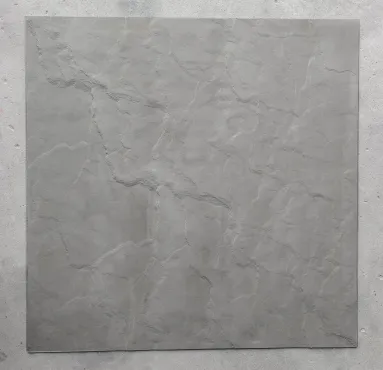
The marriage of historical grandeur and contemporary design isn't just a fleeting trend - it's a cultural reawakening. Across global architecture, we're witnessing what industry insiders call "neo-classical renaissance," a movement where the clean lines of modernism converse with ornate classical details. At the forefront of this transformation stands Epoch Stone, redefining architectural storytelling through material innovation that honors heritage while embracing tomorrow.
Picture this: You're walking through a cityscape where Ionic columns frame floor-to-ceiling glass windows, where gilded cornices crown minimalist concrete structures. This visual conversation between eras didn't happen overnight. Neoclassicism's roots dig deep into 18th-century Europe, inspired by democratic ideals and manifested in symmetrical buildings with domes, pediments, and strict proportion systems. Fast forward to the 21st century, and modernism introduced us to "less is more" – unadorned surfaces, industrial materials, and functional purity.
For decades, these styles existed in separate architectural worlds. That is until pioneers like the legendary Wang Shu began experimenting with historical vocabulary in contemporary contexts. His Xiangshan Campus at the China Academy of Art became a masterclass in tradition-modernity dialogue – Song Dynasty screens reimagined in modern forms, ancient painting techniques translated into spatial narratives. This work proved that cultural memory could live within innovative structures.
Simultaneously, projects like Xiamen's Zhongshan Park demonstrated how spatial planning itself could become a hybrid language. Its four distinct gatehouses became physical embodiments of acculturation: European arches married Ming Dynasty elements, three-row archways incorporated Minnan style. This wasn't imitation but evolution – taking inspiration from the past to build something entirely new.
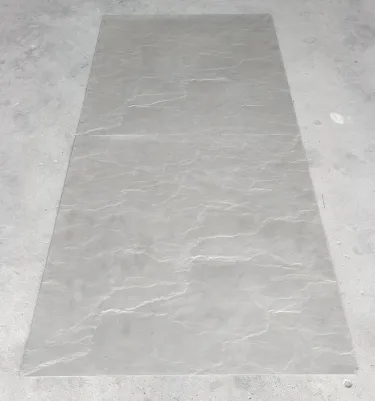
At Epoch Stone, historical reverence meets material innovation. Their philosophy? Cultural DNA is irreplaceable, but its expression must evolve. Unlike retro replicas that create architectural pastiche, Epoch initiates meaningful conversation between epochs. Their approach has three pillars:
"Stone remembers," quips Epoch's lead architect Rafael Torres. "We use materials physically connected to historical sites – reclaimed marble from Greek temples, terracotta from Roman aqueducts – but reconfigure them in laser-cut geometric patterns. This creates subconscious continuity."
Neoclassicism's golden ratio meets parametric design. Digital modeling allows recalculating Palladian proportions for contemporary functions – turning temple dimensions into boutique hotel layouts, transforming rotundas into open-plan living spaces.
Intricate wall decorative profiles get re-engineered using 3D-printed sandstone or composite alloys. Corinthian capitals become abstract impressions rather than literal copies. It’s tradition through a contemporary lens.
This methodology shines in Epoch's Berlin project: The Apollon Complex. They retained the skeleton of a war-damaged neoclassical bank, inserting crystalline glass extensions where bomb damage occurred. The original friezes depicting Greek myths were scanned and reinterpreted in bronze latticework screens. History wasn't erased but enhanced.
| Classical Element | Modern Interpretation | Cultural Significance |
|---|---|---|
| Fluted Columns | Structural steel pillars with engraved patterns recalling doric fluting | Maintains visual rhythm while serving modern load-bearing needs |
| Pediments | Angled solar panel arrays mimicking triangular silhouettes | Transforms decorative element into energy-generating feature |
| Friezes & Cornices | Modular ceramic tiles with algorithm-generated classical motifs | Balances ornate tradition with customizable mass production |
| Coffered Ceilings | Recessed LED lighting grids mimicking depth perception | Modern spatial illusion honoring classical craftsmanship |
The Shanghai Atrium: In this mixed-use development, Epoch faced a unique challenge – integrating colonial-era facades with hyper-modern interiors. Their solution? Create "floating relics" – suspended stone arches seemingly mid-collapse, juxtaposed with glass bridges. Walking through feels like traversing time.
Tuscany Revisited: For a winery outside Florence, Epoch updated Palladian villas with thermal-regulating volcanic stone walls patterned after ancient mosaic paths. Local artisans carved contemporary interpretations of grape harvest scenes into stone partitions – keeping craft traditions alive through fresh narratives.
Desert Oasis: Perhaps most strikingly, their Dubai museum project reincarnates Islamic geometric principles using parametric design. Arabesque patterns become 3D-printed stone lattices casting ever-changing shadows. Visitors experience ancient aesthetics through futuristic fabrication.
Why this resurgence now? Societies experiencing rapid modernization cling to architectural anchors. As urban historian Dr. Lena Moreau observes: "Monuments to democracy feel increasingly relevant as societies wrestle with identity. Citizens literally see themselves reflected in these hybrid structures."
These buildings create what cultural theorists call "negotiated space" – environments that welcome rather than intimidate. Unlike pure historical replicas that can feel like museums, Epoch's designs invite tactile interaction. People touch laser-etched inscriptions on benches, gather beneath reinterpreted colonnades, and create new memories.
Surprisingly, these designs also combat digital fatigue. Neuroscientists from Stanford's Perception Lab note that hybrid buildings create cognitive comfort: familiar patterns reduce spatial anxiety while novel elements stimulate engagement. The brain delights in pattern-spotting – recognizing classical references while appreciating modern innovation.
Using nano-sealing to protect ancient marbles while enhancing tensile strength. Allows delicate tracery impossible in historical contexts.
3D scanning fragments of lost artifacts to create parametric interpretations – rebuilding Alexandria's library pillars using fractal mathematics.
Thermal-regulating plasters with integrated geofoam that mimic sculptural reliefs but regulate interior temperatures.
Yet Epoch remains remarkably grounded. As materials scientist Chen Wei explains: "We've rediscovered what Roman architects knew – volcanic pumice creates lightweight strength, porous travertine regulates humidity. Paired with contemporary sealants, ancient wisdom becomes sustainable technology." Their carbon-neutral stone quarry regenerates excavated sites with native plantings – creating living architecture in multiple senses.
The beauty of Epoch Stone's approach lies not in replicating history but continuing its conversation. As we move toward increasingly homogeneous global architecture, their work represents cultural resilience. By treating neoclassicism not as static artifact but evolving language, they build heritage that future generations might reinterpret anew.
Torres reflects: "Ultimately, great design should feel simultaneously inevitable and surprising. When visitors run their hands along our reinterpreted wall decorative profiles and smile saying, 'This feels ancient and brand new' – that's when we know we've bridged time."
In this architectural renaissance, stone doesn't just stand the test of time – it dances through it.
Recommend Products












