


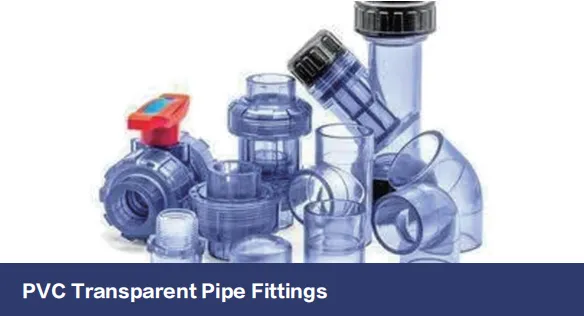
When you turn on your faucet or glance at the plumbing in your basement, you’re probably not thinking about the chemical makeup of those pipes. But trust me—governments and scientists are. PVC (polyvinyl chloride) has become the backbone of modern plumbing, construction, and packaging, yet it's now under intense scrutiny. New regulations are sweeping across Europe and other regions, forcing manufacturers to rethink how they create products like transparent pipe fittings . But what does this mean for everyday pipes in homes, hospitals, and industries? Let’s break it down.
The Science That’s Changing Everything
A recent report by the European Chemicals Agency (ECHA) confirmed something many environmental groups have argued for years: PVC is more than just plastic—it’s a cocktail of additives with alarming health and ecological risks. We’re talking microplastic pollution that sneaks into oceans, hormone disruptors that impact reproduction, and chemicals that linger in soil for decades. Scientists at ECHA aren’t mincing words—they say regulatory action is “ needed now ” to phase out PVC by 2030.
But here’s the kicker: PVC isn’t the lone villain. Its additives—plasticizers, stabilizers, flame retardants—are often the real troublemakers. Think of it like a cake: if the ingredients are toxic, it doesn’t matter how pretty it looks. Research published in Scientific Reports highlights that plastic pollution shares eerie similarities with past environmental threats like ozone-depleting chemicals. The lesson? When substitutes exist, industries adapt—but we need policies that make it happen faster.
Why PVC Pipe Makers Are Sweating
For manufacturers of PVC pipe fittings , the regulatory wave feels like a tsunami. Transparent pipes—used in labs, medical facilities, and breweries—rely on PVC’s clarity and affordability. But greener alternatives like recycled polyethylene or bio-based polymers are gaining traction. The rub? Switching isn’t cheap or easy.
“I’ve seen factories panic,” shares an industry insider who requested anonymity. “Retooling machinery for new materials can cost millions, and there’s no guarantee customers will pay more for eco-friendly versions. But the clock’s ticking—you either innovate or become obsolete.”
The real pain point? Supply chains. Many pipe fittings sold globally come from regions with lax environmental oversight. Tighter rules mean importers must vet every supplier, trace every chemical, and document compliance—paperwork nightmares that slow down production. Meanwhile, smaller players risk being squeezed out entirely.
The Substitutes That Could Save Us
So, what replaces PVC? The Scientific Reports study reveals a golden rule: bans succeed when alternatives exist . Enter contenders like:
- Bio-PVC : Made from plant-based ethylene instead of petroleum. It’s pricier but decomposes cleaner.
- Recycled HDPE : Already used in milk jugs and shampoo bottles. It’s sturdy, reusable, and doesn’t leach toxins.
- Polylactic Acid (PLA) : Derived from corn starch, perfect for disposable items but needs tweaking for long-term pipes.
The catch? Performance gaps. PVC stays flexible in cold weather and resists corrosion—traits substitutes struggle to match. As one engineer put it: “You can’t just swap materials like changing socks. We’re talking years of R&D and testing.”
What This Means for You and Your Pipes
Imagine this: You’re renovating your home and need new plumbing. Will "eco-pipes" cost double? Maybe—at first. But here’s the twist: stricter regulations could save money long-term. Think fewer water-contamination lawsuits, lower healthcare costs from reduced chemical exposure, and less environmental cleanup. One study calculates that for every dollar spent replacing PVC, society saves $10 in future damages.
Your takeaway? Ask what’s in your pipes . Labels like "phthalate-free" or "bio-based" are becoming badges of honor. Support them—they’re not marketing fluff, they’re lifelines.
The World Is Watching—and Acting
Europe’s push isn’t happening in a vacuum. The High Ambition Coalition—a group of 58 countries—has pledged to end plastic pollution by 2040. Meanwhile, treaties like the Montreal Protocol (which phased out ozone-killing CFCs) offer a playbook: use financial incentives to help poorer nations adopt safer materials.
Critics argue regulations kill jobs. But data tells another story. When Germany restricted hazardous chemicals in the 90s, it sparked a green-tech boom. Jobs shifted—they didn’t vanish. Companies that adapt early often dominate new markets. Simply put: sustainability sells.
A Clear Path Forward
Yes, PVC’s days might be numbered. But this isn’t a funeral—it’s a rebirth. Stricter regulations are nudging us toward pipes that don’t poison our water or clutter our landfills. Will it be messy? Absolutely. But as ECHA’s findings warn, the cost of inaction dwarfs the price of change.
The bottom line? Transparent pipe fittings symbolize more than convenience—they’re a test of our resolve to build a safer world. And when we choose innovation over inertia, everybody wins.










