
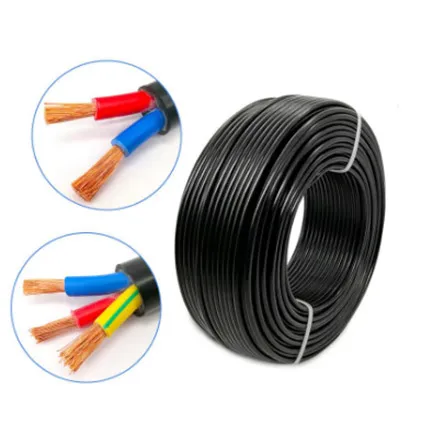
Cables might not be the first thing you notice when walking into a home or a factory, but they're the unsung heroes keeping everything from your morning coffee maker to massive industrial machines running smoothly. But here's the thing: the cables that power a family's living room aren't the same as those keeping a manufacturing plant operational. Let's dive into how residential and industrial cables differ, why those differences matter, and how to pick the right ones for your project.
Think about it: every building—whether it's a cozy apartment, a bustling office, or a sprawling factory—relies on cables to transmit electricity, data, and control signals. A tiny mistake in choosing the wrong cable can lead to power outages, safety hazards, or even project delays. That's why understanding the differences between residential and industrial cables isn't just technical jargon; it's about making sure your space is safe, efficient, and built to last.
And let's not forget: with the rise of smart homes, renewable energy systems, and high-tech factories, the demand for specialized cables is bigger than ever. From low-voltage wires powering your smart thermostat to heavy-duty cables handling industrial machinery, the right cable choice can make or break a project's success.
Residential cables are all about meeting the needs of daily life—keeping your lights on, your fridge cold, and your Wi-Fi working. They're designed to be safe, flexible, and easy to install in homes, apartments, and small commercial spaces like cafes or boutique shops. Let's break down the most common types you'll find in residential settings.
Walk into any home, and you'll find power cables running through the walls, floors, and ceilings, connecting the main electrical panel to every outlet, light fixture, and appliance. These are usually low-voltage cables (120V or 240V in most countries) designed to handle the average household's energy needs—think charging your phone, running a microwave, or powering a TV.
Most residential power cables use PVC (polyvinyl chloride) insulation because it's affordable, flexible, and resistant to moisture—perfect for tight spaces behind walls or under floors. You'll often see them labeled as "THHN" or "THWN-2," which are safety standards ensuring they can handle heat and wet conditions (like in basements or bathrooms).
For example, a typical home might use 14-gauge THHN wires for lighting circuits (since lights don't draw much power) and 12-gauge for outlets in kitchens or living rooms (where you might plug in a vacuum or a blender). These cables are thin enough to fish through wall studs but tough enough to last decades without issues.
In today's world, a home isn't just about electricity—it's about staying connected. That's where communication cables come in. These include Ethernet cables (for internet), coaxial cables (for cable TV), and even fiber optic cables (for ultra-fast broadband). Unlike power cables, these carry data instead of electricity, but they're just as crucial.
Cat6 or Cat6a Ethernet cables are the go-to for home networks. They can handle speeds up to 10 Gbps, making them perfect for streaming 4K movies, online gaming, or connecting smart home devices like security cameras and thermostats. Coaxial cables, on the other hand, are still used for cable TV and some internet connections, thanks to their ability to carry high-frequency signals without interference.
What's great about residential communication cables is their flexibility. They're often thin and lightweight, making them easy to install in walls or under carpets. Plus, with the trend toward "whole-home wiring," many new homes now come pre-wired with multiple Ethernet ports in every room—future-proofing for whatever new tech comes next.
Not all residential cables are one-size-fits-all. Some homes need specialty cables for unique setups. For example, if you have a home theater, you might use HDMI or speaker cables to connect your TV, soundbar, and subwoofer. If you've installed solar panels (a growing trend with the push for sustainable living), you'll need solar cables designed to handle direct current (DC) and resist UV rays from the sun.
Another example is low-voltage lighting cables, used for under-cabinet lights in kitchens or LED strip lights in bedrooms. These carry less than 50V, making them extra safe for DIY installations. They're also super flexible, so you can bend them around corners to create custom lighting designs.
Now, let's shift gears to industrial cables. These aren't your average home wires—they're built to withstand harsh conditions, handle massive power loads, and keep critical operations running 24/7. Think factories, power plants, oil refineries, and large commercial buildings like shopping malls or hospitals. Industrial cables need to be tough, durable, and reliable above all else.
Industrial facilities don't just need power—they need a lot of it. High-voltage cables (often 1kV and above) are used to transmit electricity from power grids to factories, or between different parts of a large facility. These cables are thick, armored, and designed to handle extreme currents without overheating.
Unlike residential power cables, which use PVC insulation, industrial high-voltage cables often use cross-linked polyethylene (XLPE) or ethylene propylene rubber (EPR). These materials can withstand higher temperatures and are more resistant to chemicals and abrasion—important in environments with oil, gases, or heavy machinery.
Take a manufacturing plant, for example. It might use 15kV cables to power large motors, conveyor belts, and industrial ovens. These cables are often buried underground or run through metal conduits to protect them from physical damage and environmental hazards.
If high-voltage cables are the "muscles" of an industrial facility, control cables are the "nerves." These low-voltage cables (usually 0.6/1kV) carry signals between control systems, sensors, and machines, letting operators monitor and adjust processes in real time. Without them, a factory couldn't run automated assembly lines or maintain precise temperature controls in chemical plants.
Control cables are often multi-core, meaning they have multiple insulated wires bundled together, each carrying a different signal. They're also shielded to prevent interference from nearby high-voltage cables—imagine trying to send a precise control signal next to a cable carrying thousands of volts; shielding keeps the signal clear and accurate.
For example, in a food processing plant, control cables might connect temperature sensors in refrigeration units to a central control panel, alerting operators if temperatures rise above safe levels. In a water treatment facility, they could control the flow of pumps and valves, ensuring clean water is distributed efficiently.
Industrial settings need more than just power and control—they need fast, reliable data too. Industrial Ethernet cables, fiber optics, and Profinet cables are used to connect PLCs (Programmable Logic Controllers), SCADA systems (Supervisory Control and Data Acquisition), and IoT devices, allowing for real-time monitoring and data analysis.
These cables are built to handle harsh industrial environments. For example, some are rated for high temperatures (up to 125°C or more) for use near furnaces, while others are flame-retardant or resistant to oil and water for use in chemical plants or marine facilities. Unlike residential Ethernet cables, which might come in a simple PVC jacket, industrial data cables often have metal armor or ruggedized jackets to protect against physical damage from heavy equipment or vibrations.
Some industrial environments are so tough, they need cables designed for specific extremes. Take oil rigs, for example—cables here need to resist saltwater corrosion, high pressure, and flammable gases. In mines, cables must be crush-resistant and able to withstand dust and moisture. Even hospitals use specialty cables, like Class A fireproof cables, to ensure critical systems (like life support machines) stay powered during emergencies.
Another example is solar cables for large-scale solar farms. These aren't the same as the ones on your home roof—industrial solar cables are thicker, UV-resistant, and designed to handle higher voltages, connecting hundreds of solar panels to inverters and the grid. They're built to last 25+ years in direct sunlight, extreme temperatures, and weather conditions.
Now that we've covered the basics, let's put residential and industrial cables head-to-head. The table below breaks down their key differences, from voltage and materials to applications and safety standards.
| Feature | Residential Cables | Industrial Cables |
|---|---|---|
| Voltage Rating | Low (120V–240V typical) | High (1kV–132kV+ common) |
| Insulation Materials | PVC, THHN/THWN-2 (affordable, flexible) | XLPE, EPR, rubber (heat/chemical resistant) |
| Physical Protection | Minimal (PVC jacket, sometimes in conduit) | Heavy-duty (armored, metal shielding, rugged jackets) |
| Application Focus | Everyday use: lighting, appliances, home networks | Critical operations: machinery, power grids, industrial control systems |
| Safety Standards | Focus on fire safety, low risk of electric shock | Focus on durability, reliability, and resistance to extreme conditions |
| Installation Environment | Indoor/outdoor, but protected (walls, attics, basements) | Harsh environments: underground, near chemicals, high temperatures, heavy machinery |
| Cost | More affordable (lower material and manufacturing costs) | Higher (specialized materials, thicker conductors, protective layers) |
So, how do you pick between residential and industrial cables for your project? It all comes down to three key factors: the environment, the load, and the safety requirements. Let's break it down.
Start by thinking about the space. Is it a small home, a high-rise apartment, or a factory? Indoor or outdoor? Are there extreme temperatures, moisture, chemicals, or physical hazards like heavy machinery? Residential cables work well in protected, low-risk environments, while industrial cables are a must for harsh or high-risk areas.
For example, if you're wiring a backyard shed, standard residential power cables in conduit should work. But if you're wiring a wastewater treatment plant, you'll need industrial cables resistant to water, chemicals, and corrosion.
Next, calculate the load. How many devices or machines will the cables power? What's the maximum voltage and current? Residential cables are designed for low to moderate loads—think a few hundred watts per circuit. Industrial cables, on the other hand, handle thousands of watts, making them essential for large equipment or facilities with high energy demands.
Don't forget data load, too. A home might need a single Ethernet cable for internet, but a warehouse with dozens of IoT sensors and automated robots needs industrial-grade data cables to handle constant, high-speed communication without lag or interference.
Finally, always check local building codes and safety standards. Residential projects must comply with regulations like the National Electrical Code (NEC) in the US or IEC standards internationally, ensuring cables are fire-resistant and installed safely. Industrial projects have even stricter standards, often requiring cables to meet certifications for flame resistance, chemical tolerance, and durability in extreme conditions.
For example, hospitals and schools often require Class A fireproof cables to ensure power stays on during a fire, protecting patients and students. Oil refineries need cables rated for explosive atmospheres (ATEX or IECEx certifications) to prevent sparks that could ignite gases.
Whether you're working on a residential renovation or an industrial construction project, sourcing cables can be a hassle—especially if you need multiple types. That's where a one-stop supplier comes in. Instead of juggling orders from different vendors, you can get all your cables, electrical fixtures, and even related building materials from a single provider. This saves time, reduces costs, and ensures consistency in quality and compliance.
For example, imagine building a new apartment complex. You'd need power cables for each unit, communication cables for internet and TV, low-voltage cables for lighting, and maybe even specialty cables for solar panels or smart home systems. A one-stop supplier can provide all these, along with pipes, fittings, and other electrical fixtures, streamlining the process from start to finish.
And it's not just about convenience. A supplier with experience in both residential and industrial projects can offer expert advice, helping you choose the right cables for your specific needs. They'll know the latest safety standards, the most durable materials, and how to optimize your cable setup for efficiency and longevity—whether you're wiring a small home or a large factory in a demanding market like the Middle East.
At the end of the day, residential and industrial cables might look similar at first glance, but they're built for entirely different worlds. Residential cables keep our daily lives running smoothly, while industrial cables power the critical infrastructure that drives economies. Understanding their differences is key to building safe, efficient, and reliable spaces—whether you're a homeowner, a contractor, or a project manager.
So next time you flip a light switch or walk through a factory, take a moment to appreciate the cables working behind the scenes. And when it comes to choosing the right ones for your project, remember: it's not just about picking a cable—it's about picking a solution that fits your environment, your load, and your safety needs. With the right knowledge and a trusted supplier, you can ensure your cables do their job—today, tomorrow, and for years to come.
Recommend Products












