
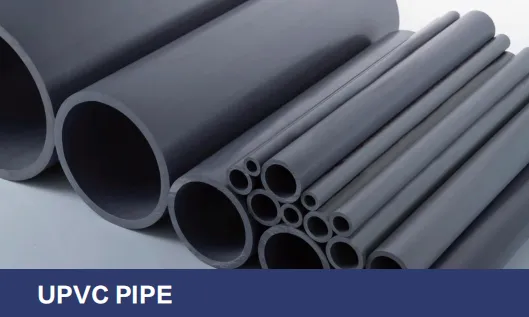
When you walk into a cozy home or a bustling office building, your eyes might linger on the sleek countertops, the warm lighting, or the modern decor. But what if I told you that some of the most critical elements holding these spaces together are hidden behind walls and under floors? I'm talking about pipes—specifically, UPVC pipes. These unassuming tubes are the silent workhorses of any building, carrying water, waste, and essential fluids where they need to go. But here's the thing: the UPVC pipes that keep a family of four comfortable in their suburban home are not the same as those powering a 50-story commercial complex. And that difference? It all starts with understanding what residential and commercial projects truly need from their upvc pipe supplier.
Whether you're a homeowner planning a renovation, a contractor managing a hospital build, or a project manager overseeing a new office park, the choice of UPVC pipe solutions can make or break your project. It's not just about picking a tube and hoping for the best; it's about partnering with a supplier who gets the unique demands of your space. So let's pull back the curtain and explore why residential and commercial projects require such different approaches—and how the right upvc pipe supplier tailors their solutions to fit.
Before we dive into the differences, let's get on the same page about what UPVC pipes are. UPVC, or Unplasticized Polyvinyl Chloride, is a rigid, durable plastic material used in pipes for everything from plumbing to drainage. Unlike regular PVC, which might contain plasticizers to make it flexible, UPVC skips those additives, making it stiffer, more chemical-resistant, and better suited for high-pressure applications. Think of it as the tough, no-nonsense cousin of plastic pipes—reliable, long-lasting, and surprisingly versatile.
Now, UPVC pipes aren't a one-size-fits-all product. They come in different diameters, thicknesses, and configurations, each designed for specific jobs. And that's where the split between residential and commercial needs really starts to show. A residential building materials supplier might focus on smaller, more standardized options, while a commercial building materials supplier has to juggle larger orders, stricter regulations, and demands that go way beyond "just getting the water from A to B."
Let's start with the spaces we know best: homes. Whether it's a single-family house, a townhouse, or a small apartment complex, residential projects have one thing in common: they're built for daily life. That means the UPVC pipes here need to handle the basics—delivering clean water to kitchens and bathrooms, carrying away wastewater, and maybe even managing rainwater drainage. But the scale is smaller, the stakes (while still important) are more personal, and the priorities lean toward affordability, ease of installation, and reliability over decades of use.
A typical home might have a few dozen meters of UPVC pipe in total. Compare that to a commercial project, and it's like comparing a backyard garden hose to a fire truck's main line. Residential projects don't require massive quantities, so residential building materials suppliers often focus on selling in smaller batches—think 10-foot lengths, standard diameters (like 1.5 inches for sink drains or 2 inches for main waste lines), and pre-cut options that contractors can install without a lot of on-site modification.
For example, when my neighbor renovated her kitchen last year, her contractor picked up a few lengths of UPVC pipe from the local hardware store—no custom orders, no special delivery. It was quick, convenient, and fit the scope of her project perfectly. That's the beauty of residential supply: it's designed for accessibility.
In a home, UPVC pipes are mostly handling low to moderate water pressure. The average household water pressure is around 40-80 psi (pounds per square inch)—enough to power a shower or fill a bathtub, but nowhere near the pressure needed for a commercial building. Wastewater flow is also relatively low; even in a busy family home, you're unlikely to have multiple toilets flushing, showers running, and dishwashers cycling all at once (though anyone with teenagers might disagree!).
That means residential UPVC pipe solutions prioritize consistency over extreme performance. Pipes need to resist corrosion from household chemicals (like detergents or cleaning products) and stand up to temperature fluctuations (hot water from the heater, cold water from the tap), but they don't need to handle the constant, high-volume flow of a commercial setting.
Residential plumbing is governed by local building codes, which vary by region but generally focus on safety and basic functionality. For example, pipes must be leak-proof to prevent water damage, sized correctly to avoid clogs, and made from materials that won't contaminate drinking water. A reputable upvc pipe supplier for residential projects will ensure their products meet these local standards, but the requirements are rarely as stringent as those for commercial buildings.
Take lead content, for instance. Residential pipes must be lead-free to protect drinking water, but commercial projects might have additional layers of testing for things like bacterial growth or fire resistance—something we'll get into later.
Homeowners and residential contractors don't usually need a lot of customization. They want pipes that fit standard fixtures (think: a 1.25-inch pipe for a bathroom sink, a 3-inch pipe for a toilet drain) and are easy to connect with standard fittings. Sure, there might be the occasional odd angle or tight space that requires a special elbow joint, but for the most part, residential UPVC pipe solutions are about off-the-shelf convenience.
This simplicity keeps costs down, which is a big plus for residential projects. Most homeowners are working within a budget, and a upvc pipe supplier that offers affordable, standardized options can make a renovation or new build feel manageable rather than overwhelming.
Now, let's step into the world of commercial construction: hospitals, schools, office towers, shopping malls, factories. These are spaces built for hundreds—sometimes thousands—of people, with complex systems that need to run 24/7. When you're talking about a hospital that can't risk a water main break during surgery, or a school with 50 classrooms all flushing toilets at once, the demands on UPVC pipes skyrocket. Commercial building materials suppliers don't just sell pipes; they sell reliability under pressure—literally and figuratively.
Commercial projects are all about scale. A mid-sized office building might require kilometers of UPVC pipe, not meters. And it's not just quantity—it's variety. You might have separate systems for potable water, gray water (from sinks and showers), black water (sewage), and even specialized lines for HVAC or fire suppression. Each of these systems needs pipes with different diameters, thicknesses, and material specifications.
For example, a shopping mall I worked on last year had a separate UPVC system for its food court drains—thicker, more chemical-resistant pipes to handle grease and food particles—plus another system for the restrooms and a third for rainwater runoff. The upvc pipe supplier had to coordinate deliveries of multiple pipe types, each labeled and scheduled to arrive when the construction phase needed them. That's logistical gymnastics that residential suppliers rarely have to perform.
In commercial settings, water pressure can be significantly higher than in homes. Think about a hotel with 20 floors: water has to be pumped up to the top floor, which requires pipes that can handle pressures of 100 psi or more. Add in the fact that in a busy office building, hundreds of people might use the restrooms, kitchens, and drinking fountains simultaneously, and you've got a flow rate that would overwhelm standard residential pipes.
That's why commercial UPVC pipe solutions often include thicker walls (measured by "schedule" ratings, like Schedule 40 or Schedule 80, where higher numbers mean thicker walls) and larger diameters (6 inches or more for main lines). These pipes are built to withstand constant use without cracking, warping, or leaking—because in a commercial space, a single leak can cost thousands in water damage, downtime, or even legal liability.
If residential codes are like a driver's license test, commercial regulations are like a pilot's certification—they're rigorous, specialized, and leave no room for error. Depending on the type of building, commercial projects might need to comply with fire safety standards (like Class A fire ratings), hygiene requirements (hospitals and schools need pipes that resist bacteria growth), or environmental regulations (gray water recycling systems, for example).
Take hospitals, for instance. The UPVC pipes used there must be non-porous to prevent mold and mildew, chemical-resistant to handle cleaning agents, and even impact-resistant to stand up to heavy equipment moving around. A reputable upvc pipe supplier for commercial projects will have certifications from organizations like the International Plumbing Code (IPC) or ASTM International to prove their pipes meet these strict standards. Skip this step, and a project could fail inspections, face delays, or worse—put people at risk.
Commercial projects rarely fit into "standard" boxes. Maybe a hospital needs extra-long pipe lengths to minimize joints (fewer joints mean fewer leak points), or a factory requires pipes with special threading to connect to unique machinery. Commercial building materials suppliers thrive on this kind of customization—they'll work with engineers and contractors to design pipes that fit the project's exact specs, whether that means larger diameters, custom colors (for system identification), or reinforced walls for high-pressure zones.
I once spoke with a contractor who was building a research lab, and they needed UPVC pipes that could withstand exposure to mild acids used in experiments. The upvc pipe supplier didn't just hand over a standard product—they tested different formulations, provided samples, and even collaborated with the lab's safety team to ensure the pipes met their unique needs. That's the level of service commercial projects demand.
To really see how residential and commercial needs diverge, let's put them head-to-head. The table below breaks down the core differences between what a residential vs. commercial project expects from their upvc pipe supplier:
| Category | Residential Projects | Commercial Projects |
|---|---|---|
| Project Scale | Small quantities (dozens of meters); standard lengths. | Large quantities (kilometers); multiple pipe types. |
| Pressure & Flow | Low to moderate pressure (40-80 psi); intermittent flow. | High pressure (100+ psi); constant, high-volume flow. |
| Regulations | Local plumbing codes; basic safety standards. | Strict national/international codes (fire, hygiene, environmental); third-party certifications. |
| Customization | Minimal; off-the-shelf sizes and fittings. | Extensive; custom lengths, thicknesses, materials, and features. |
| Supplier Focus | Affordability, accessibility, ease of installation. | Reliability, technical support, logistical coordination. |
So, what happens when a residential project uses commercial-grade pipes, or vice versa? Let's just say it's not pretty. A homeowner who overspends on thick-walled commercial pipes is throwing money away—those pipes are built for demands their home will never have. On the flip side, a contractor who uses residential pipes in a commercial building is setting the stage for leaks, failures, and potential disasters down the line.
That's why partnering with a supplier who understands the nuances of your project is so critical. A good upvc pipe supplier doesn't just sell products—they offer upvc pipe solutions tailored to your specific needs. For residential clients, that might mean helping you choose the most cost-effective pipes for your renovation and explaining how to install them. For commercial clients, it could involve on-site consultations, material testing, and coordinating deliveries to keep a large-scale project on schedule.
Take residential building materials suppliers: their expertise lies in knowing the ins and outs of home plumbing. They can recommend the right diameter for a new bathroom addition or explain why a certain type of UPVC pipe is better for cold water vs. hot. Commercial building materials suppliers, on the other hand, bring technical knowledge to the table—they can complex blueprints, advise on code compliance, and even troubleshoot unexpected challenges like space constraints or unique flow requirements.
At the end of the day, whether you're building a home or a skyscraper, the goal is the same: to create a space that works—safely, efficiently, and reliably. UPVC pipes might not be the most glamorous part of that process, but they're the backbone that makes everything else possible. And the difference between residential and commercial needs? It's a reminder that no two projects are alike, and the best upvc pipe supplier is the one that takes the time to understand yours.
So the next time you're in the market for UPVC pipes, ask yourself: What's the scale of my project? What demands will these pipes face daily? What regulations do I need to follow? The answers will guide you to the right supplier—whether that's a residential building materials supplier focused on simplicity and affordability or a commercial building materials supplier equipped to handle the big, complex jobs.
After all, in the world of construction, the best solutions are the ones that fit the space. And when it comes to UPVC pipes, that fit starts with understanding the difference between a home and a commercial hub. Because when your pipes work, everything else follows.
Recommend Products












