
Picture this: You've spent months daydreaming about your home renovation. Maybe it started with a leaky faucet that refused to stop dripping, or a basement flood that ruined your stored holiday decorations. Or perhaps it was simpler—a desire to turn your 1980s fixer-upper into a space that feels fresh, functional, and ready for the next decade of family memories. Whatever the spark, home renovations are equal parts excitement and overwhelm. We focus on paint colors, countertop materials, and lighting fixtures, but there's one silent workhorse that often gets overlooked: your home's plumbing system.
Old pipes, corroded fittings, and outdated materials can turn your dream renovation into a nightmare. A single burst pipe can undo weeks of work, and low water pressure can make even the fanciest new shower feel like a trickle. That's where upgrading to a reliable, durable piping system comes in. Today, we're diving into why PVC-U SCH40 pressure piping systems have become the go-to choice for homeowners who want to invest in their home's future—and how this upgrade might just be the most important decision you make during your renovation.
Let's start with the obvious: Pipes are out of sight, out of mind. When was the last time you thought about the network of tubes snaking behind your walls, under your floors, and through your ceilings? For most of us, it's not until something goes wrong. But here's the thing: Old pipes don't just "wear out" gradually—they fail suddenly, and the costs add up fast.
Take galvanized steel pipes, common in homes built before the 1970s. Over time, they corrode from the inside out, leaving behind rust flakes that clog fixtures and discolor water. A 2023 study by the Plumbing-Heating-Cooling Contractors Association found that the average homeowner spends $2,000–$15,000 on emergency pipe repairs after a failure, not including the cost of fixing water damage to walls, floors, or furniture. Then there are copper pipes, which, while durable, are prone to pinhole leaks from acidic water and can be expensive to replace.
Even newer homes aren't immune. If your house was built in the 1990s or early 2000s, you might have PPR (polypropylene random copolymer) pipes, which are popular for their flexibility. But PPR has limits: It struggles with high pressure over time, and extreme temperature fluctuations can weaken joints. For a busy household with multiple bathrooms, a sprinkler system, and a dishwasher running nonstop, PPR might not keep up.
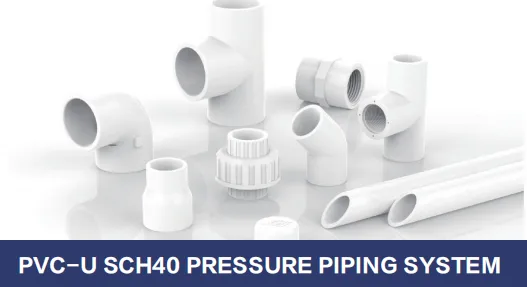
Enter PVC-U SCH40 pressure piping systems. If you're not familiar with the term, let's break it down. "PVC-U" stands for unplasticized polyvinyl chloride—a rigid, strong version of PVC that's free of the plasticizers that make some PVC pipes flexible (and less durable). "SCH40" refers to the pipe's schedule, a standard that indicates wall thickness and pressure rating. SCH40 pipes are designed to handle higher pressures than thinner-walled options like SCH20, making them ideal for residential water supply lines, irrigation systems, and even some industrial applications.
But why should you care about any of this? Because for homeowners, PVC-U SCH40 checks all the boxes: it's durable, affordable, easy to install, and built to last. Let's start with durability. Unlike metal pipes, PVC-U SCH40 is resistant to corrosion, rust, and chemical damage from minerals in water. That means no more orange-tinted water from rust, no more pinhole leaks from acidic soil, and no more replacing sections of pipe every 10–15 years. Most manufacturers back their PVC-U SCH40 pipes with a 50-year warranty, but many plumbers report these systems lasting 70+ years with proper care.
Then there's pressure handling. SCH40 pipes are rated to withstand up to 450 psi (pounds per square inch) at room temperature, which is far more than the typical residential water pressure of 40–80 psi. This extra strength matters if you live in an area with fluctuating water pressure or if you plan to add features like a rainwater harvesting system, a jacuzzi, or multiple showerheads that demand more from your plumbing.
You might be thinking, "But what about PPR or PEX pipes? I've heard those are good too." It's true—there are plenty of piping options on the market. To help you decide, let's compare PVC-U SCH40 with two popular alternatives: PPR (polypropylene random copolymer) and PEX (cross-linked polyethylene).
| Feature | PVC-U SCH40 | PPR Pipes | PEX Pipes |
|---|---|---|---|
| Pressure Rating (at 20°C) | Up to 450 psi | Up to 160 psi (for standard SDR 7.4) | Up to 160 psi (for 1/2" pipe at 73°F) |
| Temperature Resistance | Up to 60°C (140°F) | Up to 95°C (203°F) | Up to 93°C (200°F) for PEX-A |
| Corrosion Resistance | Excellent (resistant to rust, chemicals, minerals) | Good (resistant to corrosion, but sensitive to UV light) | Good (resistant to corrosion, but can leach chemicals if not certified) |
| Lifespan | 50+ years (often 70+ with maintenance) | 25–50 years (varies by brand and usage) | 40–50 years (depending on quality) |
| Installation Cost | Low (lightweight, no welding; DIY-friendly with basic tools) | Moderate (requires heat fusion tools) | Moderate (requires crimping or clamping tools) |
| Best For | Residential water supply, irrigation, drainage, cold water lines | Hot and cold water lines, underfloor heating | Hot and cold water lines, flexible installations (around corners) |
As the table shows, PVC-U SCH40 shines when it comes to pressure handling, corrosion resistance, and lifespan—key factors for homeowners who want to avoid future repairs. While PPR and PEX have their strengths (like higher temperature resistance), PVC-U SCH40 is the workhorse that delivers reliability without breaking the bank.
Upgrading to PVC-U SCH40 is a smart move, but it's only as good as the materials you buy. That's why choosing a reputable residential building materials supplier is just as important as choosing the pipe itself. A reliable supplier doesn't just sell pipes—they offer expertise, quality assurance, and peace of mind.
So what should you look for? Start with certifications. Reputable suppliers will carry PVC-U SCH40 pipes that meet industry standards, like ASTM D1785 (the standard for PVC pipe for pressure applications). This ensures the pipe has been tested for strength, durability, and safety. You'll also want to check if the supplier offers a range of pipes fittings—elbows, tees, couplings, valves—to ensure everything works together seamlessly. Mismatched fittings are a common cause of leaks, so buying from a supplier that provides a complete system reduces risk.
Many homeowners also prefer working with a one-stop architectural solution provider. These suppliers don't just sell piping—they offer everything from flooring solutions to wall panels, making it easier to coordinate materials and stay within budget. Imagine being able to order your PVC-U SCH40 pipes, PPR pipe and fitting backups for specific areas, and even bathroom accessories from the same company. It simplifies communication, reduces delivery delays, and often comes with bundled pricing discounts.
Pro Tip: Ask for Customer Reviews
Before choosing a supplier, spend 10 minutes reading customer reviews. Look for comments about product quality, delivery times, and customer service. A supplier with a 4.5-star rating and reviews like, "Their PVC-U pipes arrived on time, and the tech team helped me choose the right fittings!" is a good sign. Avoid suppliers with consistent complaints about cracked pipes or unresponsive support—those are red flags.
One of the biggest perks of PVC-U SCH40 is how easy it is to install. Unlike metal pipes, which require welding or heavy tools, PVC-U SCH40 pipes are lightweight and can be cut with a simple handsaw or pipe cutter. The fittings are joined using solvent cement, a glue-like adhesive that creates a permanent, leak-proof bond. This means even DIY-savvy homeowners can tackle small projects, and professional plumbers can install a whole-house system in a fraction of the time it would take with metal pipes.
That said, it's important to get the details right. The pipe ends need to be clean and dry before applying solvent cement, and you'll need to hold the fitting in place for 30 seconds to let the cement set. If you're installing pipes in a cold climate, make sure the cement is rated for low temperatures—some formulas thicken in the cold, which can weaken the bond. And always follow local building codes—most areas require permits for plumbing work, and inspections ensure your system is safe and up to standard.
Upgrading to PVC-U SCH40 isn't just about avoiding leaks (though that's a big one). It's about investing in your home's value, efficiency, and comfort. Let's break down the long-term benefits:
Not sure if your current pipes are due for an upgrade? Here are a few telltale signs:
If you notice any of these, it's worth having a plumber inspect your system. They can use cameras to check for hidden damage and help you decide if a full upgrade or targeted repairs are needed.
Home renovations are about more than aesthetics—they're about building a space that works for you, today and tomorrow. While it's easy to get caught up in choosing between granite or quartz countertops, the truth is that your home's infrastructure matters most. A leaky pipe can ruin those countertops, and low water pressure can make your new bathroom feel like a downgrade.
PVC-U SCH40 pressure piping systems offer a simple, affordable way to future-proof your home. They're durable, easy to install, and designed to handle the demands of modern family life. And when paired with a reliable residential building materials supplier—one that offers quality products, expert support, and maybe even a few extra perks like one-stop shopping—you're not just upgrading your pipes; you're investing in peace of mind.
So as you plan your renovation, take a moment to think about what's behind your walls. Your future self (and your wallet) will thank you.
Recommend Products












