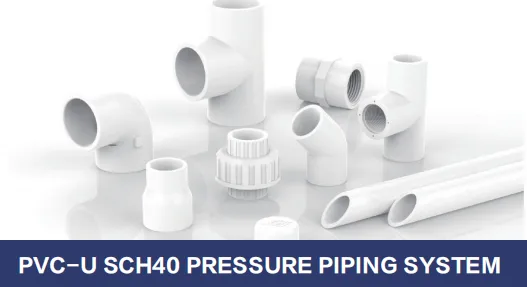
Now, let's get to the heart of the matter: why should you consider PVC-U SCH40 for your home? We've broken down the key advantages, from durability to cost savings, that make this material a standout choice for homeowners.
1. Unmatched Durability: A Pipe That Outlives the House (Almost)
When it comes to plumbing, durability isn't just a nice-to-have—it's a necessity. The last thing you want is to replace pipes every 10-15 years, especially since they're hidden behind walls and under concrete. PVC-U SCH40 pipes excel here, with a lifespan that often exceeds 50 years when properly installed and maintained. Compare that to galvanized steel pipes, which typically corrode and need replacement after 20-50 years, or copper pipes, which can develop pinhole leaks due to corrosion after 25-50 years.
What makes PVC-U SCH40 so long-lasting? For starters, it's
corrosion-resistant
. Unlike metal pipes, it won't rust when exposed to water, and it's impervious to the chemicals found in most residential water supplies—chlorine, fluoride, and even minor acidity. This resistance also makes it ideal for areas with hard water, where mineral buildup can eat away at metal pipes over time.
PVC-U is also
impact-resistant
, even in cold temperatures. Anyone who's ever dropped a metal pipe knows how easily they can dent or crack, but PVC-U SCH40 pipes can withstand accidental bumps during installation or minor shifts in your home's foundation without splitting. And because they don't expand or contract much with temperature changes, they're less likely to develop leaks at joints—a common issue with materials like copper, which expands significantly when heated.
2. Budget-Friendly: Save Now and Save Later
Let's talk numbers—because for most homeowners, cost is a top concern. At first glance, you might think copper pipes are the "premium" choice, but that premium comes with a steep price tag. Copper can cost 2-3 times more per foot than PVC-U SCH40, and that's before you factor in installation costs. PVC-U's lightweight design and simple installation process cut down on labor time, which translates to lower bills from your plumber.
But the savings don't stop at installation. PVC-U SCH40 pipes are
low-maintenance
. Unlike metal pipes, they don't need to be painted, coated, or treated to prevent corrosion. There's no risk of rust buildup, so you won't need to hire a professional to snake out clogged pipes as often. And because they last so long, you'll avoid the massive expense of repiping your home—a project that can cost $5,000-$15,000 for an average-sized house.
Consider this: A homeowner installing 100 feet of 1-inch piping for a new bathroom. Copper pipes might cost $15-$20 per foot (total $1,500-$2,000), plus $200-$300 in fittings and $800-$1,200 in labor. PVC-U SCH40 pipes, by contrast, cost $3-$5 per foot (total $300-$500), $100-$150 in fittings, and $400-$600 in labor. That's a savings of $1,500-$2,250 upfront—money that can go toward other home improvements. And over 50 years, the lack of maintenance costs and replacement needs makes PVC-U the clear budget winner.
3. Easy Installation: A DIY-Friendly Option (With Professional Results)
Plumbing installation can be a nightmare if you're working with heavy, cumbersome materials. Copper pipes require soldering, which demands skill, special tools, and a steady hand to avoid leaks. Galvanized steel pipes need threading, which is time-consuming and messy. PVC-U SCH40 pipes? They're a breath of fresh air for both professionals and handy homeowners.
First, they're
lightweight
. A 10-foot length of 1-inch PVC-U SCH40 pipe weighs just 1.5 pounds, compared to 10 pounds for a similar copper pipe. That means you can carry multiple pipes at once, and you won't need a helper to maneuver them into tight spaces like crawlspaces or wall cavities.
Second, they're
easy to cut and join
. All you need is a hacksaw or PVC cutter to trim pipes to length, and a can of PVC solvent cement (often called "glue") to join them to fittings. The cement works by softening the plastic, allowing the pipe and fitting to fuse together into a single, watertight unit. No open flames, no electricity—just a simple, mess-free process that takes minutes per joint.
Even novice DIYers can tackle small PVC-U projects, like replacing a section of drain pipe under the sink, with a little guidance. For larger jobs, professional plumbers appreciate how quickly they can install PVC-U systems, reducing the time they spend in your home and minimizing disruption to your daily life.
4. Safety First: Protecting Your Family and Your Home
When it comes to plumbing, safety isn't just about preventing leaks—it's about ensuring the water flowing through your pipes is safe to drink, and the pipes themselves don't pose a fire risk. PVC-U SCH40 pipes check both boxes.
First, they're
lead-free and non-toxic
. Unlike older brass fittings or some metal pipes, modern PVC-U SCH40 pipes are made without lead or other harmful chemicals, making them safe for potable water systems. Most reputable
PVC-U SCH40 pressure piping system suppliers
will provide certification that their products meet NSF/ANSI Standard 61, which ensures they're safe for drinking water contact.
Second, they're
fire-resistant
. While PVC-U is a plastic, it's self-extinguishing—meaning it will stop burning once the flame source is removed. It also doesn't release toxic fumes in small fires, unlike some other plastics. This makes it a safer choice for residential use, especially in areas near electrical fixtures or where fire safety is a concern.
Finally, their
smooth interior
helps maintain water quality. Metal pipes can develop rough patches due to corrosion, which trap sediment and bacteria. PVC-U pipes have a slick, uniform surface that resists buildup, ensuring clean water flows from your tap and reducing the risk of clogs that can lead to backups and overflows.
5. Versatility: One Pipe for Every Job
Your home's plumbing system isn't one-size-fits-all—it has different needs for different areas. The pipe that carries cold water to your toilet is different from the one draining your shower, and the pipe supplying your outdoor hose bib needs to handle freezing temperatures. PVC-U SCH40 pipes are versatile enough to handle almost all these tasks.
They're commonly used for:
-
Cold water supply lines (up to 140°F; check with your supplier for hot water compatibility)
-
Drain, waste, and vent (DWV) systems
-
Outdoor irrigation systems
-
Pool and spa plumbing
-
Rainwater harvesting systems
And because they come in a wide range of sizes and fittings—elbows, tees, couplings, valves—they can be customized to fit any residential layout. Need to navigate around a beam in your basement? Use an elbow fitting. Want to split a water line to feed both a sink and a dishwasher? Add a tee fitting. Reputable
pipes fittings suppliers
offer a full range of (fittings) to ensure your system is tailored to your home's unique needs.
PVC-U SCH40 pipes also work well with other materials. If you're renovating and need to connect new PVC-U pipes to existing copper lines, you can use transition fittings to bridge the gap. This flexibility makes them a great choice for both new construction and remodels, where you might be working with a mix of old and new plumbing.