
It's 6:30 a.m. on a Thursday, and Ahmed, the site foreman for a luxury villa project in Jeddah, is pacing the construction site with a cup of lukewarm coffee in hand. The plumbing team is set to start installing the hot water lines today—work that's been on the schedule for weeks. But when he checks the delivery truck's ETA, his heart sinks: "Delayed. Estimated arrival: 48 hours." Two days. Two days that will derail the entire timeline, anger the client, and add unplanned overtime costs. "Why does this always happen?" he mutters, scrolling through his phone to call the supplier—again. If you've ever been in Ahmed's shoes, you know the feeling: construction deadlines aren't just numbers on a Gantt chart. They're promises to clients, budgets that can't stretch further, and the pressure to keep a team of workers productive and paid. And when it comes to materials as critical as PPR pipes and fittings—the backbone of any plumbing system—choosing a supplier who "gets it" isn't just a preference. It's a make-or-break decision.
In the chaos of construction, it's easy to focus on the big-ticket issues: concrete pours, structural steel, and design changes. But anyone who's managed a project knows that the smallest delays—like a missing shipment of PPR pipes—can create a domino effect. Let's break it down: A residential high-rise with 200 units needs PPR pipes for kitchen sinks, bathroom showers, and water heaters. If the pipes arrive a week late, the plumbing subcontractor can't start work. Then the electricians, who need to run wires around the plumbing, get held up. The drywall team can't finish the walls. Suddenly, what started as a "minor" delay becomes a two-week setback, costing the developer $15,000 a day in labor and lost opportunities. And that's before considering the client's frustration—missed move-in dates, damaged reputations, and even legal disputes. For commercial projects like hospitals or schools, the stakes are even higher. A hospital can't afford delays in plumbing systems; patient care depends on reliable hot and cold water. A school needs to open on time for the academic year. In these cases, a supplier who drops the ball isn't just a nuisance—they're a liability.
Here's the truth: Most construction delays aren't caused by bad weather or unforeseen site issues. According to a 2024 survey by the Construction Management Association, 68% of project delays stem from material supply chain disruptions. And among those, plumbing materials—including PPR pipes and fittings—rank in the top three most commonly delayed items. Why? Because too many suppliers treat these products as commodities, not critical components of a project's success. They cut corners on inventory, rely on inconsistent third-party logistics, and treat customer service as an afterthought. But what if there was a different way? What if your PPR pipe and fitting supplier didn't just sell you products—they partnered with you to keep your project on track?
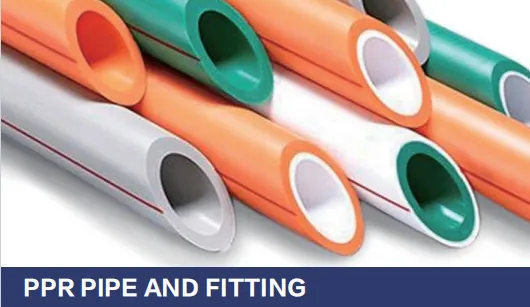
Before we dive into what makes a reliable supplier, let's talk about why PPR pipes are worth caring about. If you're not a plumbing expert, you might think, "A pipe is a pipe, right?" Wrong. PPR (polypropylene random copolymer) pipes have revolutionized plumbing in both residential and commercial buildings—and for good reason. Unlike older materials like copper or galvanized steel, PPR pipes are lightweight, corrosion-resistant, and incredibly durable. They can handle hot water temperatures up to 95°C (203°F) and have a lifespan of 50+ years when installed correctly. That's decades of leak-free performance, which means fewer callbacks, lower maintenance costs, and happier clients. For residential building materials suppliers, PPR pipes are a favorite because they're easy to install—no need for soldering or heavy tools—speeding up rough-in work. For commercial building materials suppliers, their chemical resistance and ability to withstand high pressure make them ideal for large-scale projects like office complexes or shopping malls. And because they're 100% recyclable, they align with the growing demand for sustainable construction practices. But here's the catch: Not all PPR pipes are created equal. Inferior products—made with cheap raw materials or shoddy manufacturing—can crack under pressure, leach chemicals into water, or fail prematurely. That's why choosing a supplier who prioritizes quality is just as important as choosing one who delivers on time.
So, what separates a run-of-the-mill PPR pipe and fitting supplier from one that becomes an extension of your team? Let's break it down into four key pillars—pillars that define the best residential and commercial building materials suppliers in the industry today.
1. Inventory Management: No More "We'll Have It Next Week" The first rule of on-time delivery? Having the products you need, when you need them. Too many suppliers operate on a "just-in-time" model, assuming they can source PPR pipes from third-party manufacturers at the last minute. But when global shipping delays hit or a manufacturer runs out of raw materials, that model collapses. A reliable supplier, on the other hand, invests in local warehousing. Take, for example, a one-stop architectural solution provider with warehouses strategically located across Saudi Arabia—in Riyadh, Jeddah, and Dammam. By keeping a large, diversified inventory of PPR pipes (in all sizes, from 20mm to 110mm) and fittings (elbows, tees, couplings, valves), they eliminate the "out of stock" excuse. Need 500 meters of 32mm PPR pipe for a residential project in Riyadh? It's in the warehouse, ready to ship the same day. Need specialized fittings for a commercial HVAC system in Dammam? They've got those too. No waiting, no begging, no crossed fingers.
2. Quality Control: Testing Beyond the Basics Delivering on time means nothing if the products fail. That's why the best PPR pipe and fitting suppliers treat quality as a non-negotiable. They don't just rely on the manufacturer's word—they test every batch themselves. What does that look like? For starters, pressure testing: Each pipe is subjected to 1.6MPa (232 psi) of pressure for 60 minutes to ensure it can handle the stress of real-world use. They also check for dimensional consistency—because a pipe that's even 1mm too narrow can cause leaks when connected to standard fittings. Raw material verification is another step: They source polypropylene resin from reputable suppliers and test for purity, ensuring no harmful additives or recycled plastic is mixed in. For commercial projects like hospitals or schools, they go even further, providing certifications for lead-free materials and compliance with international standards like ISO 15874. When you receive a shipment of PPR pipes from a supplier like this, you're not just getting a product—you're getting peace of mind.
3. Logistics: The Art of Getting It There on Time Even the best inventory and quality control mean nothing if the truck breaks down or gets stuck in customs. That's why top suppliers invest in their own logistics networks. Instead of outsourcing delivery to random couriers, they have a fleet of GPS-tracked vehicles and a team of dedicated drivers who know the ins and outs of local traffic patterns. Need a delivery to a remote construction site outside Riyadh? They plan the route the night before, accounting for road closures or peak-hour jams. Need a rush order for a commercial project that's ahead of schedule? They offer same-day or next-day delivery within major cities. And here's the best part: They keep you in the loop. You'll get a tracking link as soon as your order ships, with real-time updates. If there's a delay—say, a flat tire—you'll get a call within 30 minutes, along with a new ETA and a plan to make it right. No more calling the supplier 10 times to ask, "Where's my order?"
4. Customer Service: Your Project, Their Priority Imagine this: It's Friday afternoon, and you realize you ordered the wrong size PPR fittings for your residential project. Most suppliers would tell you to wait until Monday to fix it. But a partner? They answer the phone on weekends. They have a customer service team available 24/7, not just during business hours. They'll help you adjust your order, arrange a swap, and get the correct fittings to your site by Saturday morning—so your team can start work on time Monday. That's the difference between a supplier who sees you as a transaction and one who sees you as a long-term partner. They take the time to understand your project's unique needs. Are you building a high-rise with tight elevator access? They'll suggest smaller pipe bundles that are easier to transport. Are you working on a historic renovation where aesthetics matter? They'll recommend color-matched fittings that blend in with the design. They don't just sell you PPR pipes—they help you solve problems.
Still not convinced that a reliable PPR pipe and fitting supplier can transform your project? Let's put it side by side. The table below compares a typical "commodity" supplier with a one-stop architectural solution provider that specializes in residential and commercial building materials—including PPR pipes and fittings.
| Aspect | Traditional Commodity Supplier | Trusted PPR Pipe and Fitting Partner |
|---|---|---|
| Inventory Availability | "We might have it in 2-3 weeks." Relies on backorders from manufacturers. | "It's in our warehouse. Shipped today." 98% in-stock rate for standard sizes. |
| Quality Testing | "The manufacturer tests it, so it's fine." No in-house verification. | 5-step testing process: pressure, dimension, raw material, temperature resistance, and lead-free certification. |
| Delivery Time | "7-10 business days… maybe." No control over third-party logistics. | "Same-day (major cities) or next-day (regional)." Own fleet and GPS tracking. |
| Customer Support | "Call back Monday. Our lines are busy." Limited hours, automated systems. | 24/7 live support. Dedicated account manager assigned to your project. |
| Problem Resolution | "That's not our fault. Talk to the manufacturer." Blame-shifting. | "We'll fix this immediately." Replacement shipments, rush delivery, and compensation for delays caused by their error. |
| Project Alignment | "What's your order number?" No interest in your project's timeline or challenges. | "Tell me about your project. How can we help you stay on schedule?" Proactive planning and tailored solutions. |
"We were 10 days behind schedule, and the client was threatening to cancel the contract," says Kareem, a project manager at a leading Saudi construction firm. His team was building a 300-unit apartment complex, and the original PPR pipe supplier had delayed delivery three times in a row. "We were desperate. I found this supplier through a colleague, called them on a Sunday, and explained the situation. They didn't just say 'we can help'—they asked for our construction schedule, mapped out exactly when each floor needed pipes, and split the order into three shipments. The first shipment arrived Monday morning, the second Wednesday, and the third Friday. We caught up within two weeks, and the client was thrilled. Now, they're our go-to for all residential projects."
"Hospitals don't have 'delay buffers'—we needed those PPR pipes for the new wing to open by the end of the year," explains Dr. Amina, facilities director at a Jeddah hospital. "Our previous supplier quoted 14 days, but we needed them in 7. This supplier didn't hesitate. They pulled from their warehouse in Dammam, arranged a direct truck, and even sent a technician to inspect the delivery on-site to make sure everything was intact. The wing opened on time, and we've since switched all our plumbing material orders to them. Reliability isn't a luxury in healthcare—it's a requirement."
While PPR pipes and fittings are the star here, the best suppliers don't stop there. As a one-stop architectural solution provider, they offer a full range of building materials—from flooring and wall panels to pipes and fixtures. Why does this matter? Because it simplifies your supply chain. Instead of juggling 10 different suppliers for 10 different materials, you have one point of contact. Need PPR pipes for plumbing, bamboo charcoal board wall panels for the lobby, and terrazzo tiles for the floors? One order, one delivery schedule, one invoice. This not only saves you time but also reduces the risk of delays. If one material is delayed, your supplier can adjust the delivery of others to keep your project on track. They also understand how different materials work together—for example, which wall panels pair best with PPR pipes in terms of installation ease. It's like having a construction materials expert on your team, free of charge.
At the end of the day, construction is about more than bricks and mortar. It's about building homes where families will make memories, hospitals where lives will be saved, and schools where futures will be shaped. These projects deserve to be supported by suppliers who care as much about their success as you do. A reliable PPR pipe and fitting supplier isn't just someone who delivers products on time—they're someone who understands the stress of deadlines, the importance of quality, and the value of trust. They're the difference between a project that's a headache and one that's a source of pride. So the next time you're sourcing PPR pipes for your residential or commercial project, ask yourself: Is this supplier just selling me pipes? Or are they partnering with me to build something extraordinary? The answer could be the key to your project's success.
Because when it comes to construction deadlines, there's no room for "maybe" or "soon." You need a supplier who says, "We've got this—and we've got you."
Recommend Products












