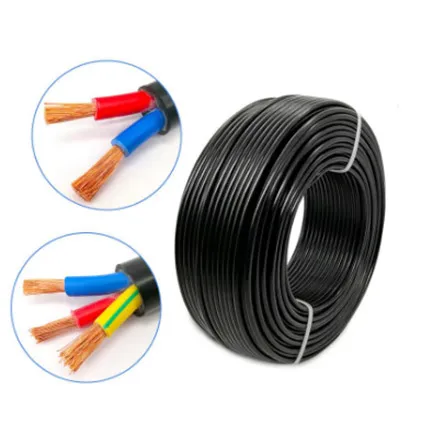
Industrial infrastructure demands cables that can withstand extreme temperatures, chemical exposure, mechanical stress, and heavy electrical loads—all while maintaining consistent performance. At Coloria, we categorize our electrical cables into four core types, each designed to address specific needs across commercial and industrial projects. Let's break down their unique roles, applications, and why they matter in real-world scenarios.
1. Power Cables: The Heavy Lifters of Electrical Distribution
Power cables are the workhorses of any electrical system, responsible for transmitting high-voltage electricity from generators or substations to machinery, lighting, and other heavy-duty equipment. In industrial settings, where power demands can reach thousands of volts, these cables are engineered with thick insulation and robust conductors (often copper or aluminum) to minimize energy loss and prevent overheating.
For example, in a large-scale manufacturing facility in Dammam, Saudi Arabia, Coloria supplied low-voltage (LV) power cables for conveyor systems and high-voltage (HV) cables for main distribution panels. The LV cables, with their flexible design, allowed easy routing around machinery, while the HV cables' cross-linked polyethylene (XLPE) insulation ensured resistance to oil and abrasion—critical in a factory environment with frequent mechanical movement.
2. Control Cables: Precision in Automation and Safety
While power cables handle brute force, control cables are the "nervous system" of industrial infrastructure, carrying low-voltage signals that regulate machinery, sensors, and safety systems. Think of them as the link between a factory's control room and its assembly lines: a single control cable failure could shut down an entire production line, costing thousands in downtime.
Coloria's control cables are designed with multiple twisted pairs (for noise reduction) and flame-retardant jackets, making them ideal for environments like oil refineries or chemical plants where safety is paramount. In a recent project for a petrochemical complex in Jubail, our halogen-free control cables prevented toxic gas release during a minor fire incident, aligning with Saudi Aramco's strict safety protocols.
3. Communication Cables: Enabling Smart Infrastructure
In an era of Industry 4.0, communication cables are no longer optional—they're the foundation of smart infrastructure. These cables (including fiber optic, Ethernet, and coaxial variants) transmit data between IoT devices, security cameras, building management systems (BMS), and cloud platforms, enabling real-time monitoring and remote control.
For a smart commercial mall in Riyadh, Coloria provided fiber optic cables with high bandwidth capacity to support 4K security cameras, Wi-Fi 6 networks, and energy management systems. The fiber's immunity to electromagnetic interference (EMI) ensured uninterrupted data flow even in areas with heavy electrical equipment, a common issue in busy retail environments.
4. Specialized Cables: Tailored for Extreme Conditions
Some projects demand cables that go beyond standard specifications. This is where specialized cables—such as fire-resistant, marine-grade, or high-temperature cables—come into play. These are critical in sectors like oil & gas, mining, and renewable energy, where environmental conditions are far from ordinary.
Consider a solar power plant in Al Khobar, Saudi Arabia, part of the kingdom's push for renewable energy under Vision 2030. Coloria supplied heat-resistant PV (photovoltaic) cables that can withstand temperatures up to 120°C, ensuring reliable performance even during Saudi summers, where daytime temperatures often exceed 45°C. The cables' UV-resistant sheathing also prevented degradation from constant sun exposure, extending their lifespan by 15+ years.