
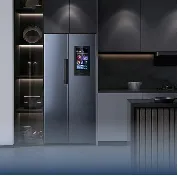
Picture this: You're stepping into a modern American kitchen. Your eyes immediately land on that gleaming, silver giant humming quietly in the corner – the double-door refrigerator. Then you glance over to the integrated dishwasher hidden beneath the counter. Now, hop across the Atlantic to a cozy Milanese apartment kitchen. Notice anything different missing? That same dishwasher might be conspicuously absent, replaced instead by a modest refrigerator that would make an American family feel claustrophobic.
This transatlantic divide in household appliance preferences isn't accidental or random. Our love affairs with kitchen gadgets reveal fascinating insights into cultural values, environmental awareness, domestic routines, and even how we define convenience itself. In exploring this European-American appliance paradox, we'll uncover what refrigerators and dishwashers really say about us – and why that stainless steel status symbol in an American kitchen might gather dust in a European home.
Walk into homes across Spain, Italy, or France and you'll quickly notice something missing: the low hum of a dishwasher working overtime. What Americans consider as essential as running water remains an optional luxury or occasional guest in many European kitchens. This isn't about technological access or cost – it's fundamentally about how Europeans and Americans live differently.
American meal patterns are scattered. Families eat at staggered times, snacks come from the pantry throughout the day, and dishes accumulate in random piles. It creates a perfect ecosystem for dishwashers. Europeans maintain tighter meal structures – lunch is typically the substantial meal, dinner is lighter and later. Cleanup happens immediately after each meal. This rhythmic pattern eliminates the need for accumulating dirty dishes.
European kitchens typically win no awards for square footage. That space under the counter could store pantry goods or cookware – much higher priorities than an infrequently used appliance. Where dishwashers exist, they're often compact "half-size" models that would frustrate Americans used to industrial-capacity machines.
In Mediterranean regions where droughts are increasingly common, water conservation isn't theoretical – it's practice. Europeans generally perceive dishwashers as water-guzzlers despite modern efficiencies. Handwashing with minimal water trickles is common. Energy costs also bite deeper in Europe. Running a dishwasher daily might noticeably affect household budgets, especially during peak hours.
If dishwashers reveal philosophical divides, refrigerators scream physical ones. American fridges typically dwarf their European counterparts – sometimes offering double the capacity. While American models boast through-the-door ice dispensers and touchscreen interfaces, Europeans prioritize compactness and efficiency. This isn't just about kitchen dimensions; it speaks to fundamentally different food cultures.
| Feature | Typical American Refrigerator | Typical European Refrigerator |
|---|---|---|
| Capacity | 25-30 cubic feet | 10-15 cubic feet |
| Shopping Frequency | Weekly bulk shopping | Daily market visits |
| Special Features | Ice/water dispensers, smart screens | Energy efficiency class A+++ |
| Cultural Role | Central storage hub | Short-term preservation only |
This divergence stems from lifestyle patterns. Americans' refrigerator size accommodates weekly Costco hauls – those giant packs of paper towels and ten-pound bags of frozen vegetables. European refrigeration supports daily shopping habits and preferences for fresh ingredients rather than frozen meals. In Bologna or Sevilla, you'll pass multiple markets or specialty shops walking home from work. In suburban Houston, you might drive 15 miles to a Walmart supercenter.
While size, efficiency, and space constraints tell much of the story, deeper influences shape these appliance preferences:
European households often repair rather than replace appliances. A broken dishwasher might sit unused for months as families revert to handwashing without distress. Americans typically replace malfunctioning appliances immediately – encouraged by aggressive retailer replacement plans and financing options.
Hosting dinners reveals stark differences. Americans embrace dishwashers to handle the aftermath of parties, while post-dinner cleanup in Europe often involves guests clearing plates and sharing washing duties. Cleanup becomes an extension of the gathering rather than a chore delegated to machines.
Older European buildings present installation challenges – narrow doorways prevent massive American-style refrigerator delivery, and plumbing configurations might discourage dishwasher installation. American homes are typically built with appliance-first kitchen designs.
Some Americans view machine-washed dishes as inherently "more sanitary." Europeans trust that properly washed-by-hand dishes are equally clean. There's reassurance in the tactile process – seeing food residue disappear, feeling surfaces become slick, and rinsing visibly clean dishes.
The numbers confirm these behavioral patterns. Dishwasher penetration in American households exceeds 70%, while in Italy – the largest European market – it's below 40%. Refrigerator sales data shows American preference consistently skewing toward models over 25 cubic feet, while Europeans overwhelmingly choose models under 15 cubic feet.
Environmental regulations also play a role. European energy rating systems make appliance efficiency a competitive feature, while U.S. marketing emphasizes capacity and convenience tech. This shapes what manufacturers prioritize for each market.
Changing attitudes may narrow the gap. Younger Americans show increased interest in sustainability, with apartment-dwellers specifically seeking European-sized appliances. Simultaneously, rising European energy costs make dishwasher efficiency more appealing. Market convergence may develop as manufacturers create hybrids – compact dishwashers for small spaces and energy-efficient large refrigerators.
How do these appliance preferences translate to daily life experience?
Americans gain minutes by loading dishwashers, but Europeans build small moments of connection during shared washing. One system optimizes efficiency; the other prioritizes presence. Neither is inherently superior, just different.
Small European refrigerators require frequent shopping but facilitate fresher ingredients. Americans accept slightly less fresh vegetables for bulk convenience. Different priorities produce different systems.
Americans measure kitchen functionality by labor-saving technology – the sophistication of appliances defines a "complete" kitchen. Europeans measure functionality by how well space supports cooking and gathering. Appliances serve cooking rather than replacing it.
Several emerging trends could reshape these appliance preferences:
The trend toward green-friendly homes and smaller smart appliances provides fertile ground for compromise. Europeans might embrace dishwashers that prove water conservation capabilities, while Americans may rethink mega-refrigerators as farm-to-table movements reduce bulk storage needs.
Despite potential convergence, cultural differences will likely maintain distinct appliance preferences for decades. Europeans value their kitchen rituals too much to entirely surrender washing-up time to machines. Americans won't abandon their beverage-stocked refrigerators for daily market trips anytime soon. The dishwasher-refrigerator paradox persists because it’s rooted not in technology access, but in fundamentally different ways of living.
Recommend Products












