
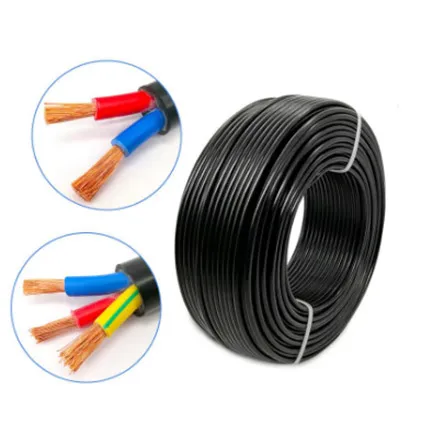
Powering the Skies: How Coloria's Cables Keep Airports Running Smoothly, Even in the Hottest Deserts
Imagine stepping into a bustling international airport—flights taking off every few minutes, passengers rushing to gates, luggage carousels spinning, and neon signs guiding travelers to their next destination. Behind all this chaos is a silent hero: the network of cables that keeps everything powered, connected, and safe. For airports, where a single power glitch could delay flights or compromise security, choosing the right cables isn't just a purchase—it's an investment in millions of travelers' trust. That's where Coloria comes in.
As a one-stop architectural solution provider with deep roots in the Middle East, Coloria isn't just another building materials supplier. We're a partner who understands the unique demands of large-scale projects like airports—where reliability, durability, and compliance aren't optional. Today, let's dive into how our red, yellow, and white cables are designed to be the "invisible backbone" of airport projects, especially in challenging environments like Saudi Arabia.
Airports are more than just buildings—they're complex ecosystems with thousands of moving parts. From the moment a passenger enters the terminal to the second their plane takes off, every system relies on a steady flow of electricity and data. And that's where red, yellow, and white cables play a starring role:
But here's the thing: airports face unique challenges that regular cables can't handle. In Saudi Arabia, for example, temperatures soar above 50°C in summer, sandstorms blast the infrastructure, and humidity levels fluctuate wildly. Add to that the constant vibration from jet engines and the need for 24/7 operation, and you've got a recipe for cable failure—unless you choose the right supplier.
At Coloria, we don't just sell cables—we engineer solutions that anticipate the worst-case scenarios. Our red, yellow, and white cables for airport projects are designed with three core principles in mind: safety first, durability always, and adaptability everywhere .
| Feature | Coloria Cables | Standard Industry Cables |
|---|---|---|
| Fire Resistance | Class A fireproof (ASTM E84 certified), stops flame spread for 2+ hours | Often Class B or C, limited fire resistance |
| Heat Tolerance | Operates safely in -40°C to +70°C (perfect for Saudi summers) | Typically max +50°C, prone to cracking in extreme heat |
| Durability | UV-resistant, sandproof, and waterproof (IP68 rated) | Basic UV protection, may degrade in sandstorms |
| Customization | Tailored lengths, insulation thickness, and color coding per project specs | Limited sizes; "one-size-fits-all" approach |
| Sustainability | Made with 30% recycled materials, fully recyclable at end-of-life | Often non-recyclable PVC insulation |
Take our fire resistance, for example. In airports, where crowds gather and escape routes are critical, a cable that resists fire for hours can mean the difference between a small incident and a disaster. Our Class A fireproof cables are tested to withstand extreme heat without releasing toxic fumes—keeping passengers and staff safe even in emergencies.
Then there's the heat. In Riyadh or Dammam, where summer temperatures regularly hit 50°C, standard cables can melt or lose conductivity. Our cables use a special cross-linked polyethylene (XLPE) insulation that stays stable in high heat, ensuring consistent power flow to runway lights, security systems, and air traffic control towers.
Sure, our cables are tough—but what really sets us apart is how we support your project from start to finish. As a saudi arabia building materials supplier with decades of experience, we know the local market like the back of our hand. Here's why airport contractors across the Middle East choose us:
Real Story: Riyadh New Airport Expansion (2024)
When the Riyadh New Airport needed to double its capacity, their biggest challenge was sourcing reliable cables that could handle the project's tight timeline and extreme desert conditions. They initially worked with three separate suppliers for power, control, and data cables—but coordination issues delayed delivery by 6 weeks.
That's when they turned to Coloria. As a one-stop architectural solution provider , we consolidated all their cable needs under one roof. Our team in Jeddah worked directly with the contractors to customize cable lengths, color-code them for easy installation, and even provided on-site technical support. The result? The project was back on track, and the cables have now been running flawlessly for over a year—no failures, no maintenance headaches.
While airports are one of our specialties, Coloria's cables are built to excel in all commercial building materials supplier projects—from skyscrapers and shopping malls to hospitals and stadiums. What makes us a favorite among contractors? Our ability to deliver consistency at scale. Whether you need 100 meters of cable for a small office or 10,000 meters for a mega-project, we ensure every meter meets the same high standards.
In the Middle East, where construction projects are booming (think NEOM, the world's first "smart city"), reliability isn't just about avoiding delays—it's about building a legacy. When you choose Coloria, you're not just buying cables. You're partnering with a team that's invested in Saudi's future, one project at a time.
Airports are the gateways to a nation's progress, and their cables are the lifelines that keep them open. At Coloria, we're proud to be the backbone of some of the Middle East's most ambitious airport projects—providing cables that don't just meet standards, but set them.
Whether you're building a new airport, expanding a terminal, or upgrading existing infrastructure, we're here to help. With our global network, local expertise, and commitment to quality, we'll make sure your project has the reliable, durable cables it deserves—so you can focus on what matters most: keeping the world connected.
Coloria: Where Innovation Meets Reliability—Building the Future, One Cable at a Time.
Recommend Products












