
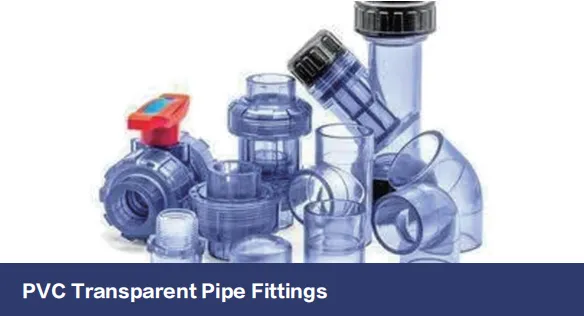
Let's talk about something you probably encounter daily without realizing it - PVC pipe fittings. Those clear connectors in plumbing systems, industrial setups, and even your garden irrigation? They're everywhere. But here's the kicker: While PVC's durability makes it perfect for pipes and fittings, that same toughness becomes a recycling nightmare when these products reach end-of-life.
"The chlorine content in PVC isn't just a chemical property - it's an environmental liability. When improperly disposed, it releases toxins that linger for generations. Recycling isn't optional; it's survival."
Imagine tossing a PVC pipe fitting into a landfill. Over years, plasticizers like phthalates seep into groundwater. If incinerated, it releases hydrochloric acid and dioxins. Neither scenario paints a pretty picture, does it? That's why closed-loop systems aren't some corporate buzzword - they're essential for stopping this cycle of waste. The transparent varieties add complexity because they often contain stabilizers and additives that must be carefully removed.
When your old PVC pipes get collected, mechanical recycling is usually the first stop. It's straightforward - shred the material, wash it, melt it down, and extrude new products. Sounds perfect until you realize each recycle cycle degrades the polymer chains. After 2-3 cycles, the material becomes too brittle for high-stress applications like pressure pipes.
Transparent pipe fittings are particularly finicky. Contaminants that might hide in colored PVC show up as cloudy imperfections. I've seen recycling facilities implement hyper-spectral imaging scanners that detect impurities as small as 0.2mm. It's like giving the plastic an MRI - catching every speck of metal or incompatible plastic that would ruin a batch.
Mechanical methods win for energy efficiency - they use about 90% less energy than producing virgin PVC. But let's be real: They're a temporary fix, not the ultimate solution. When pipes get downcycled into parking cones and speed bumps, we're delaying disposal but not preventing it.
This is where things get revolutionary. Chemical recycling doesn't just melt PVC - it breaks it down to molecular components. Imagine taking a Lego tower apart brick by brick instead of smashing it. Processes like pyrolysis heat pipes to 300-500°C in oxygen-free chambers, separating chlorine from hydrocarbons.
Take SCH40 pressure pipes used in construction - they're rigid, chlorine-rich, and designed to last decades. Through solvolysis, we can depolymerize them into reusable monomers. The chlorine gets captured as hydrochloric acid (which industry repurposes) while the hydrocarbons become feedstocks for new PVC or fuels. Projects like Vinyloop® have proven this for consumer-grade PVC, but transparent industrial pipes remain challenging due to specialized additives.
A 2023 study showed dehydrochlorination reactors achieve 99.7% chlorine removal from rigid PVC when using calcium hydroxide catalysts. That's chlorine capture efficiency we couldn't dream of a decade ago.
Microwave-assisted pyrolysis is my favorite emerging tech. Instead of slow conventional heating, microwaves target polar molecules for rapid breakdown. It slashes energy use by 60% while boosting output purity - perfect for clear pipe fittings where clarity matters.
Don't think Industry 4.0 skipped recycling plants. AI-powered sorting arms now identify PVC types faster than human workers. Digital twins simulate entire recycling processes before installation - spotting bottlenecks before they happen.
Blockchain enters the picture too. Major manufacturers now tag pipe fittings with QR codes that log recycling history. Installers scan pipes before installation, recyclers scan them after removal. This creates an auditable lifecycle record - exactly what we need for true closed-loop systems.
In the Netherlands, construction firms return used PVC pipes to collection points where they're transformed into new pipe fittings. The incentive? Tax rebates that increase with each reuse cycle. Their transparency challenge was solved using multi-stage filtration that removes opacity-causing impurities.
Seven manufacturers partnered to build plants exclusively processing PVC pipe waste. Their microwave-assisted pyrolysis outputs monomers pure enough for medical-grade tubing - a huge quality jump from recycled plastics. They actually recover costs by selling byproducts like hydrochloric acid to chemical companies.
While the EU's REACH regulations limit hazardous additives, enforcement varies wildly. What actually moves the needle? Extended Producer Responsibility (EPR) laws that make manufacturers financially responsible for recycling. This flips incentives - suddenly, designing for recyclability matters.
France's EPR program for construction plastics increased PVC pipe recycling by 150% in four years. Key to success? Making EPR fees lower for easily recyclable products, creating direct economic incentives.
Future policies could mandate recycled content percentages for public projects - already happening with PET bottles. Imagine cities requiring 30% recycled PVC in municipal water systems. That'd turbocharge recycling overnight.
Peek into labs working on PVC's next frontiers. Enzymatic bioreactors using tailored microbes promise room-temperature depolymerization. Early tests break down PVC-U pipes in weeks instead of centuries.
Ionic liquids - salts that are liquid at room temperature - dissolve PVC without harsh chemicals. They're infinitely reusable and leave no residue - perfect for maintaining transparency in recycled fittings. Still pricey at pilot scale, but costs are dropping fast.
Technology alone won't solve this - it's about systems thinking. PVC pipe recycling thrives when pipe manufacturers work with recyclers from day one. Like Toyota's partnership with recycling startups to co-design fittings optimized for later chemical breakdown.
Transparency helps too - literally and figuratively. Brands like GF Piping publish recycling success metrics annually. When companies compete publicly on sustainability metrics, recycling rates climb.
Closing PVC's loop demands more than smarter chemistry - it requires reimagining waste infrastructure, business models, and consumer expectations. Transparent pipe fittings might seem like a niche product, but their recycling challenges and solutions reflect broader plastic economy principles.
The factories scaling chemical recycling today will become the hubs supporting tomorrow's circular polymer economy. With regulation, innovation, and infrastructure aligning, we're edging closer to PVC's sustainable future - where "end of life" becomes "beginning of lifecycle."
Recommend Products












