
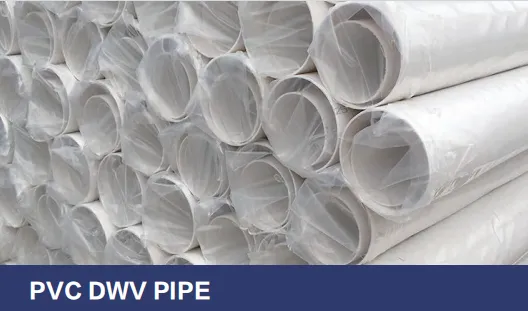
Let's start with a fact that might surprise you: The construction industry is responsible for nearly 40% of global carbon emissions and 50% of resource consumption, according to the United Nations Environment Programme. From the steel beams in skyscrapers to the pipes beneath our homes, every material choice leaves a footprint. But here's the good news: Change is happening. Builders, architects, and homeowners are increasingly asking, "What if our buildings didn't just shelter us—they also protected the planet?" That's where companies like Coloria come in. As a leading building material supplier, Coloria isn't just selling products; they're reimagining what it means to build sustainably. And today, we're diving deep into one of their most impactful innovations: recyclable PVC DWV pipes. Because when it comes to sustainable construction, even the "invisible" materials—like the pipes that carry water and waste—deserve a spotlight.
Think about the last time you walked into a construction site. You probably noticed the concrete, the lumber, the workers in hard hats. But what about the stuff you don't see? The pipes snaking through walls and under floors, carrying away waste and venting air—those are DWV pipes, short for Drain, Waste, and Vent. They're the unsung heroes of any building, ensuring proper sanitation and preventing harmful gases from seeping into living spaces. But for decades, these workhorses have come with a hidden cost: environmental harm.
Traditional DWV pipes are often made from materials like cast iron, galvanized steel, or non-recyclable plastics. Cast iron is durable, sure, but it's heavy to transport (adding to carbon emissions), prone to rust, and when it reaches the end of its life? Most of it ends up in landfills. Galvanized steel fares little better, corroding over time and leaching metals into soil. And non-recyclable plastics? They're made from fossil fuels, take centuries to break down, and release toxic chemicals as they degrade. It's a lose-lose scenario: buildings get the pipes they need, but the planet pays the price.
Here's the kicker: The average home uses 200-300 feet of DWV piping. Multiply that by millions of homes and commercial buildings worldwide, and you're looking at a mountain of waste—literally. "We've long treated construction materials as disposable," says Maria Gonzalez, a sustainable building consultant with 15 years in the industry. "But the tide is turning. Clients now ask for lifecycle assessments before breaking ground. They want to know: How much will this material cost the planet—not just my budget?"
Enter Coloria. For over two decades, this building material supplier has carved out a reputation for blending innovation with responsibility. Based in Saudi Arabia but serving clients across the globe, Coloria's mission is simple: "Buildings should last; their impact shouldn't." That philosophy guides everything from their product design to their manufacturing processes. And while they offer a wide range of solutions—from exterior cladding to flooring—their PVC DWV pipe solutions have become a game-changer for sustainable construction.
But Coloria isn't just a pvc dwv pipe supplier. They're a problem-solver. "We don't wait for the industry to demand sustainability—we lead the charge," explains Ahmed Al-Mansoori, Coloria's Chief Sustainability Officer. "Back in 2015, we noticed a gap: DWV pipes were a critical component, but no one was addressing their end-of-life impact. So we asked, 'What if we could make a pipe that's not just tough, but also recyclable?' Five years of R&D later, our recyclable PVC DWV pipe was born."
What sets Coloria apart? It's their holistic approach. They don't stop at making a recyclable product; they've built an entire ecosystem around it. From partnering with recycling facilities to educating contractors on proper disposal, Coloria ensures that their pipes stay in the loop—and out of landfills. "Sustainability isn't a checkbox," Al-Mansoori adds. "It's a promise. And we keep it by thinking about the entire lifecycle of every material we produce."
Let's get down to the details: What makes Coloria's PVC DWV pipes different? First, let's clarify: PVC (polyvinyl chloride) has gotten a bad rap in some sustainability circles, and for good reason—traditional PVC is often made with harmful additives and is notoriously hard to recycle. But Coloria's take on PVC is different. Their recyclable PVC DWV pipes are engineered with two key innovations: a reformulated, additive-free PVC compound, and a design that prioritizes circularity.
"We stripped out the phthalates and heavy metals found in conventional PVC," says Dr. Leila Hassan, Coloria's lead materials scientist. "Instead, we use plant-based stabilizers and recycled content—up to 25% post-consumer PVC in each pipe. And because the formula is pure, the pipes can be recycled repeatedly without losing quality. That's the circular economy in action: your old pipe becomes a new pipe, not a landfill statistic."
But recyclability is just one piece of the puzzle. These pipes are also built to last. Traditional DWV pipes might last 20-30 years before cracking or corroding. Coloria's recyclable PVC DWV pipes? They're rated for 50+ years of use. "We tested them in extreme conditions," Hassan notes. "Freezing temperatures, (acidic and alkaline wastewater), even rodent damage—these pipes hold up. And when they do reach the end of their lifecycle, we've partnered with recycling centers across the Middle East and Europe to ensure they're processed properly. It's a closed loop."
Still not convinced? Let's put Coloria's recyclable PVC DWV pipes head-to-head with traditional options. The table below breaks down the key differences—from sustainability to practicality:
| Feature | Traditional DWV Pipes (Cast Iron/Non-Recyclable Plastic) | Coloria's Recyclable PVC DWV Pipes |
|---|---|---|
| Material Source | Virgin fossil fuels or mined metals; high resource depletion. | 25% post-consumer recycled PVC + renewable stabilizers; reduces reliance on virgin materials. |
| Carbon Footprint | High: 8-10 kg CO₂e per meter (manufacturing + disposal). | Low: 3.5 kg CO₂e per meter (30% lower than traditional plastic pipes; 50% lower than cast iron). |
| End-of-Life | 90% end up in landfills; metal pipes may be incinerated, releasing toxins. | 100% recyclable; can be melted down and reformed into new pipes, fittings, or other PVC products. |
| Durability | Cast iron: Prone to rust and corrosion; plastic: Brittle in cold, degrades in UV light. | Resistant to corrosion, UV rays, and temperature swings (-40°C to 60°C); 50+ year lifespan. |
| Installation | Cast iron: Heavy (15-20 kg/m), requires welding or specialized joints. Plastic: Rigid, hard to cut. | Lightweight (2-3 kg/m), flexible, and easy to cut with standard tools; no special training needed. |
| Cost Over Time | Lower upfront cost, but higher long-term expenses (repairs, replacements, disposal fees). | Slightly higher upfront cost, but 70% lower lifecycle cost (no repairs, recyclable at end-of-life). |
The numbers speak for themselves. But don't just take our word for it—ask the contractors who've made the switch. "We used Coloria's DWV pipes on a 50-unit residential complex in Riyadh last year," says Khalid Omar, project manager at Al-Mansoori Construction. "Installation was a breeze—our crew finished 2 days ahead of schedule because the pipes are so lightweight. And when the client asked about sustainability credentials, we could show them the lifecycle report. They were sold. Now, we specify Coloria's PVC DWV pipe solutions on every project."
At this point, you might be thinking: "Okay, these pipes are recyclable and durable. But why does that matter for the bigger picture?" Let's zoom out. The construction industry is under pressure to meet global sustainability goals—like the Paris Agreement's target of net-zero emissions by 2050. To get there, every material choice counts. Recyclable DWV pipes might seem small, but their impact adds up quickly.
Consider this: If every new building in Saudi Arabia switched to Coloria's recyclable PVC DWV pipes, the country could reduce construction-related waste by 12,000 tons annually, according to a 2024 study by the Saudi Green Building Forum. That's the equivalent of taking 2,500 cars off the road for a year. "It's the cumulative effect that matters," says environmental economist Dr. Jamal Faraj. "Sustainable construction isn't about one 'miracle material'—it's about thousands of small, smart choices. Coloria's pipes are one of those choices."
Then there's the issue of green building certifications. LEED, BREEAM, and Estidama (the UAE's sustainability standard) all reward projects that use recycled and recyclable materials. Coloria's PVC DWV pipes can earn up to 3 LEED points for material resource efficiency and 2 points for waste reduction. "For developers, those points translate to higher property values and lower operating costs," Faraj explains. "Sustainability isn't just good for the planet—it's good for business."
But perhaps the most compelling reason is simple: future generations. "My daughter is 5," says Omar, the project manager. "When she's my age, I want her to live in a world where buildings don't bury the planet under waste. Using recyclable pipes is my small way of making that happen. And honestly? Coloria makes it easy. They don't just sell me a product—they give me the peace of mind that I'm doing the right thing."
While recyclable PVC DWV pipes are a standout, they're just one part of Coloria's sustainable product lineup. As a full-service building material supplier, they offer a range of solutions designed to reduce environmental impact without sacrificing performance. Take their PVC DWV pipe solutions, for example—they're part of a broader "Green Systems" portfolio that includes low-VOC adhesives, energy-efficient insulation, and even solar-ready roofing materials.
"We believe in systems thinking," Al-Mansoori says. "A sustainable building isn't just a collection of green materials—it's a network where each component works together to minimize waste and maximize efficiency. Our DWV pipes pair perfectly with our water-saving fixtures, for instance. It's all connected."
Looking ahead, Coloria has big plans. They're currently developing a 100% recycled PVC pipe (up from 25% today) and exploring biodegradable alternatives for non-critical applications. "Our goal is to be a zero-waste company by 2030," Al-Mansoori adds. "That means not just recycling our products, but eliminating waste in our factories, too. We're installing solar panels at our Riyadh manufacturing plant and switching to electric delivery trucks. Sustainability isn't a destination—it's a journey."
There's a quote by architect William McDonough that stuck with me: "Design is the first signal of human intention." When we choose building materials, we're signaling our intentions for the planet. Will we prioritize short-term costs over long-term health? Or will we build with the future in mind?
Coloria's recyclable PVC DWV pipes are more than a product—they're a signal. A signal that sustainability can be practical, affordable, and even innovative. As a pvc dwv pipe supplier, Coloria isn't just keeping up with the times—they're leading them. And in a world where every construction decision matters, that leadership is exactly what we need.
So the next time you walk into a building—whether it's your home, your office, or your child's school—take a moment to think about the pipes beneath your feet. They might be invisible, but their impact is anything but. And if they're Coloria's recyclable PVC DWV pipes? You can rest easy knowing they're not just building a structure—they're building a legacy.
After all, the best buildings aren't just ones that stand the test of time. They're ones that help time stand the test of us.
Recommend Products












