
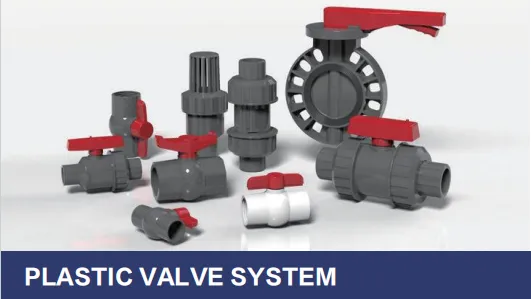
In a world where every choice we make leaves a footprint, the construction industry stands at a crossroads. We build homes to shelter our families, offices to nurture careers, hospitals to heal, and schools to educate—but at what cost? The materials that shape these spaces, from the walls that enclose us to the pipes that carry water, have long been overlooked as silent contributors to environmental strain. Today, though, the tide is turning. Sustainability isn't just a buzzword; it's a promise we owe to future generations. And when it comes to building smarter, even the smallest components matter—including the unassuming plastic valves that keep our water flowing, our drains clear, and our buildings functional.
As a building material supplier operating in a landscape where "green" is no longer optional, the pressure to deliver eco-friendly solutions has never been higher. But here's the truth: sustainability isn't about sacrificing performance for the planet. It's about reimagining how we design, produce, and reuse materials so that they serve both. This is especially true for plastic valve systems—a cornerstone of modern plumbing and infrastructure. Lightweight, durable, and cost-effective, plastic valves have revolutionized construction. Yet their environmental impact, particularly around recyclability, has sparked critical questions: Can these essential components be part of a circular economy? What challenges stand in the way? And how are forward-thinking suppliers rising to the occasion with plastic valve system solutions that prioritize both function and the planet?
Before diving into recyclability, let's take a moment to appreciate why plastic valves are everywhere. Walk into any home, office, or industrial facility, and you'll find them quietly at work: controlling water flow in your kitchen faucet, regulating pressure in heating systems, directing wastewater in drainage lines, and even managing chemicals in industrial plants. Unlike their metal counterparts, plastic valves are resistant to corrosion, easy to install, and often more affordable—traits that have made them a go-to for residential building materials supplier and commercial building materials supplier alike.
But not all plastic valves are created equal. The materials used to make them vary, each with its own set of properties and applications. For instance, upvc pipe supplier products are prized for their rigidity and chemical resistance, making them ideal for drinking water systems. Ppr pipe and fitting supplier options, on the other hand, are flexible and heat-resistant, often used in hot water lines. And pvc dwv pipe supplier materials? They're the workhorses of drainage, waste, and vent systems, thanks to their smooth interiors that prevent clogs. All these materials—PVC, UPVC, PPR—fall under the plastic valve umbrella, and their recyclability hinges on how they're designed, produced, and eventually discarded.
The problem? For decades, the focus was on performance first, sustainability second. Valves were built to last, but rarely with an end-of-life plan. This has led to a troubling reality: every year, countless plastic valves end up in landfills, where they can take centuries to decompose, or worse, leak harmful chemicals into soil and water. But change is brewing. As consumers, builders, and regulators demand more from the products they use, plastic valve system supplier teams are rethinking their approach—turning recyclability from an afterthought into a core design principle.
At first glance, plastic might seem like a recyclable material—and in theory, it is. But when it comes to valves, the reality is more complicated. Let's break down the key hurdles that have made recycling plastic valves a uphill battle:
Many plastic valves aren't made from a single type of plastic. To enhance durability, flexibility, or heat resistance, manufacturers often blend materials: a PVC body with a rubber seal, a PPR valve with a metal handle, or colorants and stabilizers mixed into the base plastic. While these combinations improve performance, they're a nightmare for recyclers. Sorting mixed-material products requires manual labor or advanced (and expensive) technology, making them less likely to be recycled. A valve with a metal component, for example, might be rejected by recycling facilities altogether, even if most of it is plastic.
Plastic valves often contain additives—substances like plasticizers (to make them flexible), flame retardants (for safety), or UV stabilizers (to prevent sun damage). While these additives are necessary for functionality, they can contaminate recycled plastic. For instance, a valve treated with a flame retardant might, when recycled, produce a material that's unsuitable for new valves or pipes. This means even if the base plastic is recyclable, the additives can render the entire product non-recyclable.
Unlike plastic bottles or containers, which have well-established recycling streams, plastic valves are niche products. Most municipal recycling programs focus on common items, leaving specialized construction materials like valves out in the cold. Without dedicated collection systems or partnerships between plastic valve system supplier and recycling facilities, used valves often end up in general waste. Even when they do reach a recycler, there's no universal standard for how to process them, leading to inconsistency in quality and usability of recycled material.
Let's face it: once a valve is installed in a wall or under a sink, it's easy to forget about it. Homeowners and even builders rarely think about what happens to these components when a building is renovated or demolished. Unlike appliances or furniture, which are visible and often recycled, valves are hidden, making them more likely to be tossed with the rest of the construction debris. This lack of awareness means fewer valves are collected for recycling in the first place.
The challenges are real, but they're not insurmountable. Across the industry, innovative plastic valve system supplier teams are rolling up their sleeves, developing plastic valve system solutions that put recyclability front and center. Here's how they're doing it:
The most impactful change is happening at the drawing board: designing valves with recycling in mind. Forward-thinking suppliers are embracing "mono-material" construction—using a single type of plastic (like UPVC or PPR) for the entire valve, including seals and handles. By eliminating mixed materials, they make sorting and recycling infinitely easier. For example, a valve made entirely of UPVC can be ground down and reused to make new UPVC pipes or valves, with no need to separate components. Some suppliers are even ditching unnecessary additives, using natural colorants or minimal stabilizers that don't interfere with recycling.
Recognizing that collection is half the battle, many plastic valve system supplier teams are launching take-back programs. Here's how it works: when a building is renovated or demolished, contractors can return used valves to the supplier, who then sends them to specialized recycling facilities. Some suppliers even offer incentives—like discounts on new products—to encourage participation. This not only ensures valves are recycled properly but also gives suppliers valuable data on how their products perform over time, feeding back into better design.
The next frontier? Developing new plastics that are both high-performance and highly recyclable. Some suppliers are experimenting with bio-based plastics, made from renewable resources like cornstarch or sugarcane, which break down more easily than petroleum-based plastics. Others are exploring "recycled content" valves—using post-consumer plastic waste as a raw material. For example, a ppr pipe and fitting supplier might create PPR valves using 30% recycled plastic, without compromising strength or heat resistance. These innovations not only reduce reliance on virgin plastic but also give waste plastic a second life.
Even the best recycling programs fail if no one uses them. That's why suppliers are investing in education, teaching builders, contractors, and homeowners about the importance of recycling valves. Workshops, online guides, and clear labeling (like "recycle me" tags on valve packaging) are helping spread the word. Imagine a homeowner, when replacing a leaky valve, knowing to set it aside for recycling instead of throwing it in the trash—that's the power of awareness.
Not all plastic valves are equally recyclable. The material they're made from plays a big role in their end-of-life options. Let's compare three common plastic valve materials—PVC, UPVC, and PPR—to see how they stack up:
| Plastic Material | Common Uses | Recyclability Rating | Challenges | Eco-Friendly Solutions |
|---|---|---|---|---|
| PVC (Polyvinyl Chloride) | Drainage, waste, and vent systems (DWV); low-pressure applications | Moderate | Often contains plasticizers and mixed additives; recycling requires specialized facilities | Mono-material design; take-back programs from pvc dwv pipe supplier |
| UPVC (Unplasticized PVC) | Drinking water systems, industrial piping, high-pressure applications | High | Fewer additives than PVC; rigid structure makes grinding easier for recycling | Widely recycled; used in upvc pipe supplier products with recycled content |
| PPR (Polypropylene Random Copolymer) | Hot and cold water systems; residential and commercial plumbing | High | Heat-resistant and chemical-resistant; can be recycled into new PPR products | Innovations by ppr pipe and fitting supplier in bio-based PPR blends |
As the table shows, UPVC and PPR are generally more recyclable than traditional PVC, thanks to their simpler compositions and fewer additives. This is why many plastic valve system supplier teams are shifting toward these materials for eco-conscious projects. For example, a school or hospital looking to meet green building standards might opt for UPVC valves, knowing they're easier to recycle at the end of their lifespan.
Actions speak louder than words, so let's look at a real-world example of how recyclable plastic valves are making a difference. In 2024, a mid-rise residential complex in Riyadh, Saudi Arabia, set out to be the city's first "zero-waste" construction site. The developer partnered with a local residential building materials supplier that specialized in eco-friendly solutions, including recyclable plastic valves and pipes.
The project used UPVC valves for the drinking water system and PPR valves for hot water lines—both mono-material designs with no mixed components. The supplier also offered a take-back guarantee: any valves that were damaged during installation or replaced during maintenance would be collected and recycled. To track progress, the team weighed all waste generated and found that plumbing-related waste dropped by 40% compared to similar projects using traditional valves. Even better, the recycled plastic from the damaged valves was later used to make new UPVC pipes for a nearby community center—closing the loop entirely.
The project manager noted, "We didn't have to sacrifice quality for sustainability. The UPVC valves performed just as well as the mixed-material ones we'd used before, and the take-back program made recycling effortless. It's proof that small choices—like which valve supplier you work with—can add up to big change."
The future of plastic valve recyclability is bright, but there's still work to do. Here are three trends that will shape the industry in the coming years:
More suppliers will adopt circular economy principles, where products are designed to be reused, repaired, or recycled—eliminating the "take-make-waste" cycle. This could mean modular valves that can be disassembled for easy recycling, or warranties that include free recycling at the end of a valve's life.
Governments are starting to crack down on plastic waste, with new laws requiring manufacturers to take responsibility for their products' end-of-life. The European union's Circular Economy Action Plan, for example, mandates that by 2030, 50% of plastic packaging must be recycled. While valves aren't packaging, similar regulations for construction materials are likely on the horizon. Suppliers that prioritize recyclability now will be ahead of the curve.
Advances in sorting technology—like AI-powered sensors that can identify different plastic types or robots that separate mixed materials—will make recycling plastic valves more efficient and affordable. This, combined with innovations in material science (like self-healing plastics or fully biodegradable options), will open new doors for sustainability.
Recyclability in plastic valve systems isn't just a technical challenge—it's a choice. A choice that starts with the plastic valve system supplier you partner with. When builders, developers, and homeowners demand eco-friendly solutions, suppliers listen. They innovate. They design with the planet in mind.
So the next time you're planning a project—whether it's a home renovation, a commercial building, or a hospital—ask your supplier: What's your recyclability plan? Do your valves use mono-materials? Do you offer take-back programs? These questions might seem small, but they're how we build a future where our buildings don't just serve us—they serve the planet, too.
After all, sustainability isn't about perfection. It's about progress. And with every recyclable valve, every take-back program, and every forward-thinking supplier, we're one step closer to a world where construction and conservation go hand in hand.
Recommend Products












