
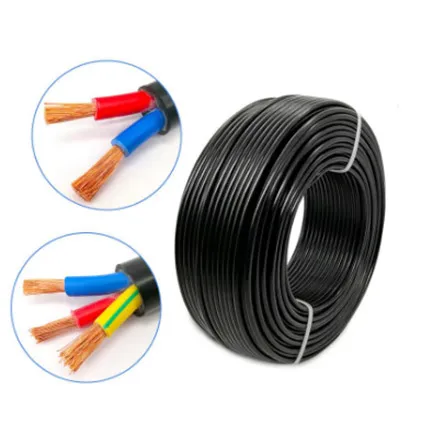
Picture this: You're settled into your train seat watching scenery streak by. Meanwhile, hundreds of specialized cables work tirelessly beneath your feet and overhead. These unsung heroes transmit power from overhead lines, process signals that prevent collisions, control braking systems, and even tell those platform displays when the next train arrives. Without them, the entire modern rail system would come to a grinding halt.
Railway cables aren't just wires in tubes—they're precision-engineered lifelines that brave extreme conditions. While commuters appreciate smooth rides and punctual schedules, few realize that cables endure temperature swings from freezing winters to desert heat, resist chemicals and fuels, absorb vibrations from roaring engines, and shrug off years of abrasion—all while maintaining critical electrical integrity.
"The difference between average and excellent rail cabling? It's like comparing basic headphones to a symphony orchestra—both transmit sound, but only one performs flawlessly under pressure." – Senior Rail Systems Engineer
Imagine the complexity: High-voltage power cables feeding locomotives must be shielded against electromagnetic interference that could scramble control signals running parallel to them. Fire-resistant materials prevent toxic fumes in tunnels. Shielded communication cables resist signal disruptions from nearby cell towers or power lines. It’s a delicate technical ballet performed beneath metal skins.
| Application Sector | Key Cable Types | Real-World Impact |
|---|---|---|
| Locomotive Power | Medium Voltage Feeder Cables | Reduced power loss = lower emissions & cost savings |
| Rolling Stock Control | EBXL-Coated Control Cables | Prevents signal errors that cause delays |
| Platform Operations | Halogen-Free Signalling Cables | Safer emergency evacuations |
| Infrastructure | Fibre Optic Communication Lines | Supports IoT sensors for predictive maintenance |
Consider the coach wiring: Specialized fire wall board and insulation materials provide extra protection in passenger compartments. During an emergency, these fireproof materials prevent cable fires from spreading while maintaining power to evacuation systems. This is critical safety design you hope never gets tested, but saves lives when needed.
Rail networks are global patchworks connecting different countries, equipment generations, and vendors. Cable standards like EN 50264 and IRS S 63 create a common language:
These aren't bureaucratic hurdles—they form a quality backbone. A cable meeting these specs delivers up to 40% longer infrastructure life compared to generic alternatives. When a train crosses borders, cable consistency ensures control signals don’t "get lost in translation".
Cable technology is evolving alongside trains themselves:
"We've developed a 'smart jacket' diagnostic layer woven into cables. It detects micro-damage before failures occur, turning reactive fixes into planned maintenance." – Materials R&D Lead
Imagine integrated strain sensors warning of compromised structural integrity after ground shifts. Self-healing insulation that seals minor abrasions automatically. These advances transform cable lifespans from "replace when broken" to predictable asset management.
For urban transit, new lightweight materials reduce metro vehicle weights by up to 300kg per car—that’s thousands in annual electricity savings. And for commuters? Quieter trains using noise-cancelling cable designs that eliminate high-frequency electromagnetic hum.
Selecting rail cables demands considering:
Today’s top suppliers focus on "invisible innovation"—improving durability without changing dimensions so cables drop into existing conduits. Installation-friendly designs feature visual wear indicators, UV-reactive jacketing to spot damage, and color-coded layers that prevent wiring errors.
As rail enjoys a global resurgence—from California’s high-speed projects to European night train revivals—cable tech will enable unprecedented capabilities:
Quality cables form the silent backbone of this revolution. Whether it’s signaling cables ensuring bullet trains maintain safe distances or power distribution cables sending electricity to remote stations, this unassuming technology keeps journeys smooth and schedules intact.
So next time your train glides to a precise stop at the platform, remember: That punctuality was made possible by kilometers of meticulously engineered copper and fiber. In railways, reliability literally runs on wires.
Recommend Products












