


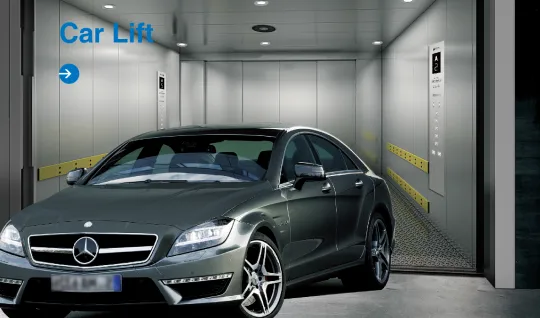
Picture this: the low growl of finely-tuned engines, the gleam of carbon fiber under professional lighting, and mechanics moving with choreographed precision around exotic machines worth more than most houses. This is Velocity Motorsports Club, where million-dollar Ferraris, Lamborghinis, and custom track monsters aren't just vehicles – they're mechanical works of art requiring museum-quality preservation and F1-level maintenance. For years, their biggest headache was simple physics: how do you efficiently store, access, and maintain 30+ low-slung supercars in a limited footprint? That was before their custom-built, large-tonnage car lift system transformed everything.
The Racing Garage Dilemma
Velocity Motorsports sits on prime real estate just minutes from the Circuit Grand Prix track. Founded by ex-racing champion Marcus Donovan, it's evolved into an exclusive sanctuary for high-net-worth collectors. "Most clubs treat cars like library books - park them neatly and occasionally take one out," Donovan explains. "We're more like surgeons – these machines need constant monitoring, adjustments, and preventative care."
Their challenges were compounded by spatial constraints and operational needs:
Space Crunch
Their 15,000 sq ft facility needed to house over 30 vehicles plus maintenance bays, tool storage, and guest lounges. Ground parking wasted precious square footage better used for specialized service stations.
Access Nightmares
Moving cars buried deep in packed garages caused frustrating delays before track days. A simple tire rotation could become an hour-long extraction mission.
Maintenance Complications
Working on low-clearance vehicles required mechanics to contort themselves or use makeshift lifts that risked damage. Fluid checks became backbreaking exercises.
The tipping point came when a rare Porsche 917K sustained door damage during extraction. "That $3.2 million repair bill was our wake-up call," Donovan grimaces. "We needed a smarter solution than jigsaw-puzzling cars into tight spaces."
Engineering the Vertical Solution
Working with Italian engineers and Canadian hydraulics specialists, Velocity designed a custom 4-tier vertical storage system with revolutionary features:
Heavy-Duty Hydraulic Actuation
Dual synchronized 15-ton hydraulic cylinders with precision flow control valves ensure whisper-quiet operation and millimeter-perfect alignment.
Smart Load Management
Distributed weight sensors monitor each corner, automatically adjusting pressure to compensate for uneven weight distribution during ascent/descent.
Triple-Safety Protocols
Mechanical locking arms engage at each level, backed by electromagnetic brakes and redundant hydraulic valves - impossible for catastrophic failure.
Mechanics control the system through ruggedized touchscreens displaying real-time diagnostics: weight distribution graphs, hydraulic temperature, alignment metrics, and cycle counters. A single operator can retrieve any vehicle in under 90 seconds using an intuitive color-coded interface mapped to their parking database.
"What changed everything was designing maintenance into the storage concept," says lead engineer Giulia Rossi. "Each bay has flip-down work platforms, retractable lighting rigs, and quick-connect ports for power, compressed air, and diagnostic computers. Mechanics perform routine checks while cars are stored - no more moving vehicles for oil checks or system scans."
Quantifiable Game-Changers
The transformational impact materialized immediately across multiple metrics:
| Metric | Before Lift System | After Lift System | Improvement |
|---|---|---|---|
| Vehicle Retrieval Time | 18-45 minutes | Avg. 86 seconds | 96% faster |
| Preventative Maintenance Completion | 72% of schedule | 98% of schedule | 36% increase |
| Storage Density | 1.1 cars/100 sq ft | 2.9 cars/100 sq ft | 164% increase |
Beyond numbers, qualitative benefits emerged. Insurance premiums dropped 22% with decreased vehicle handling risks. Client satisfaction scores hit record highs as members appreciated the curated display of their collections - now visible in gleaming tiers instead of buried in shadows.
Maintenance Infrastructure Synergy
True innovation appeared when Velocity integrated the lift system with their wider maintenance ecosystem. Custom workstations slide along rails adjacent to each tier, while overhead service bridges provide top-down access. This allows for:
- Seamless Fluid Management : Centralized fluid reservoirs feed directly to each bay with metered dispensing, eliminating messy transfers
- Mobile Diagnostics : Rolling tool carts with mounted tablet interfaces automatically sync with vehicle ECUs upon connection
- Ambient Monitoring Built-in hygrometers and temperature sensors maintain optimal storage conditions per manufacturer specs
The crowning achievement? Their zero-impact tire changing system. A robotic arm performs unmounted wheel swaps and pressure adjustments without moving vehicles, synchronizing with the lift's position sensors. What took 45 minutes now requires just 8, using programmable torque patterns matching each exotic's specifications.
Future Horizons
Phase two development is already underway with even bolder ambitions:
AI Predictive Maintenance
Machine learning algorithms analyzing historical sensor data will forecast component failures before they occur
Augmented Reality Interfaces
Mechanics wearing AR headsets will see real-time overlay instructions and torque specs during complex procedures
Autonomous Logistics
Self-driving carts retrieving parts from inventory matched to repair orders generated by the lift system
As the automotive world shifts toward electric hypercars with new maintenance demands, Velocity's infrastructure will evolve. Their system already incorporates specialized HV battery handling protocols and electromagnetic interference shielding for sensitive electronics.
"This isn't just about parking cars efficiently," Donovan concludes. "It's about building an ecosystem where technology enhances human craftsmanship. Our mechanics now spend 70% more time doing specialized tuning instead of logistical shuffling. That passion translates directly into vehicle performance – last season, our members shaved 3.7 seconds off average lap times. That's the ultimate metric."
Epilogue: The Ripple Effect
Velocity's system has become the unspoken standard for premium racing clubs worldwide. Six European facilities have implemented variants of their design, while three U.S.-based clubs are mid-installation. The unexpected beneficiary? Ultra-high-density urban parking garages adopting scaled-down versions, proving that racing innovations often migrate to mainstream applications.
The hidden champion in this transformation? The unsung industrial-grade components powering the system. At its core, this custom lift solution leverages specialized pipe fittings that withstand tremendous hydraulic pressures and thermal cycles. These high-performance connectors ensure every graceful, silent ascent happens with unwavering reliability.
So next time you see a garage, look beyond the shiny exteriors. The real magic happens in the unseen engineering – where bleeding-edge technology meets heavy industry, all in service of automotive passion.










