
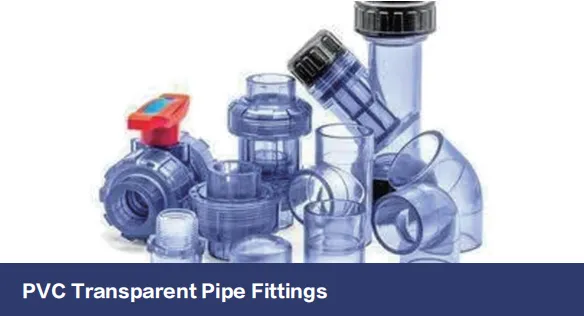
Let's talk about what really matters when you're sourcing PVC transparent pipe fittings – quality isn't just a checkbox, it's your reputation walking out the door with every shipment. If you've ever dealt with leaky fittings, cloudy materials, or pipes that cracked under pressure, you know the nightmare this becomes. It’s not just about the product; it's about the relationship with your supplier and knowing exactly who’s accountable when things go south.
Think back to that last frustrating conversation with an angry customer because a fitting failed prematurely. Or the production delay when an entire batch got rejected. That’s the cost of unclear quality expectations. What if you could build ironclad agreements where suppliers become true partners in quality?
That’s where Quality Agreements transform your supply chain from risky to resilient. More than legal documents, they become your playbook for excellence – defining precisely how quality is measured, maintained, and monitored with your PVC pipe fittings suppliers. And when done right, they prevent problems rather than just assigning blame.
In this comprehensive guide, we’ll walk through exactly how to build a rock-solid Quality Agreement specifically for PVC transparent pipe fittings. You’ll discover how to define crystal-clear requirements for material integrity and optical clarity, set up foolproof testing protocols, and establish responsibilities that keep your suppliers invested in your success.
Mistakes happen when communication breaks down. Without a Quality Agreement:
A well-structured Quality Agreement flips this script. It aligns everyone around measurable standards and prevents costly misunderstandings.
Imagine a handshake agreement made unbreakable. At its heart, a Quality Agreement is a formal commitment between you and your PVC pipe fittings supplier that answers one critical question: "What does ‘good’ look like for our partnership?"
It’s not just a purchase order with quality clauses sprinkled in. This is a dedicated document that drills down into specifics:
Unlike opaque pipes, transparent fittings have unique vulnerabilities:
Optical clarity degrades with impurities or improper cooling
Internal flaws become visible and unacceptable to end-users
UV resistance requirements prevent yellowing over time
Your Quality Agreement must address these specialized needs explicitly.
Some view Quality Agreements as red tape. Smart companies see them as competitive armor. Here’s what you actually gain:
When chemical resistance testing standards are documented upfront, you don’t discover too late that fittings dissolve in industrial cleaners. Specifications become promises.
When quality expectations are mutual rather than dictated, suppliers stop cutting corners. I’ve seen vendors become proactive quality advocates – suggesting better polymer blends or improved mold designs.
For fittings in food/pharma applications, traceability matters. Your agreement mandates batch records showing compliance with FDA or EU standards.
Clear rejection criteria prevent endless debates. Is that haze acceptable? Check section 4.2. Decision made, action taken. Production lines keep moving.
Real Impact: One plumbing manufacturer reduced return rates by 73% within 6 months of implementing detailed Quality Agreements. Their secret? Mandatory microscopic inspection for stress fractures on every 10th fitting.
Generic templates fail. Your agreement must reflect the unique demands of transparent PVC fittings. Here’s what to include:
Specify exactly what enters the production line:
Define quantitative standards for:
Mandate specifics:
Temperature bands during injection molding
Cooling tunnel duration to prevent internal stresses
Handling protocols to avoid surface scratches
Packaging materials that prevent static-induced dust adhesion
Detail the "how" of quality confirmation:
Suppliers must notify you BEFORE changing:
Material sources
Mold designs
Production site locations
Require qualification trials for any change impacting performance.
Ambiguity breeds failure. Spell out roles like this:
Even with great intentions, agreements can stumble:
Using a generic template misses PVC-specific needs. Customize or suffer the gaps.
That beautiful protocol is useless if factory workers aren't trained on why surface scratches matter. Build training requirements into your agreement.
New chemical regulations? Updated ASTM standards? Schedule mandatory annual reviews to keep your agreement current.
Is your supplier still faxing Certificates of Analysis? Demand digital data transfer for traceability. API integrations aren’t sci-fi anymore.
An agreement that gathers dust is worthless. Execute with:
Bring both teams together to walk through every clause. No assumptions.
Post critical specs at workstations – clarity targets, pressure test parameters.
Meet quarterly, not just when disasters strike. Review data and adapt.
Celebrate when batches exceed standards. People support what they help build.
The best Quality Agreements spark deeper change:
One manufacturer invited their fittings supplier to visit end-customers. Seeing surgical units using their transparent pipes transformed "compliance" into genuine mission alignment.
Another added a bonus clause: Payments increased when defect rates dropped below targets. Suddenly, the supplier invested in automated optical inspection systems voluntarily.
That’s the power shift – from policing to partnership.
Every defective fitting shipped represents thousands in hidden costs – replacement logistics, production downtime, reputation damage. But the solution isn’t complicated. It’s about clarity.
A robust Quality Agreement tailored for PVC transparent pipe fittings turns subjective expectations into shared standards. It transforms your suppliers from cost centers into value partners. And most importantly, it lets you deliver products that perform exactly as promised, every single time.
The next batch you receive should carry the weight of mutual commitment. Start crafting that document today. Your customers – and your bottom line – will thank you.
Recommend Products












