Access to clean, reliable groundwater is a cornerstone of residential, agricultural, and industrial development. At the heart of every productive water well lies a critical component: the casing and screen system. For decades, steel was the default choice — but that is changing rapidly. Today,
PVC well casing and screen pipes solutions have emerged as the preferred option for borewell projects worldwide, offering a combination of corrosion resistance, lightweight handling, and long-term durability that traditional materials simply cannot match.
Whether you are drilling a shallow domestic well or a deep industrial borehole, the material you choose for casing and screening directly affects water quality, well lifespan, and maintenance costs. This guide walks through everything you need to know about PVC well casing and screen pipes — from how they work to what to look for in a
pipes fittings supplier.
What Are PVC Well Casing and Screen Pipes?
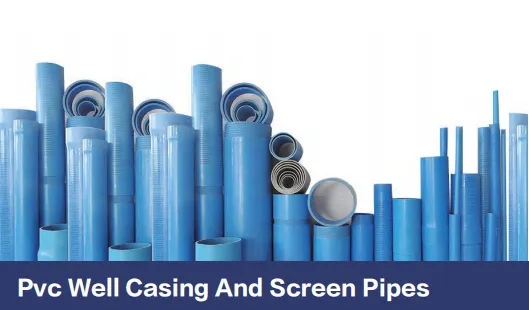
PVC well casing pipes are rigid, cylindrical tubes installed inside a drilled borehole to prevent the well wall from collapsing and to seal out surface contaminants. Screen pipes — also called slotted or perforated pipes — are sections of casing with precisely engineered openings that allow groundwater to enter the well while filtering out sand, gravel, and other sediments.
Together, the casing and screen form a complete well completion system. The casing maintains the structural integrity of the borehole from the surface down to the aquifer, while the screen section — positioned at the water-bearing zone — controls the inflow of water. Modern PVC formulations used in these pipes are engineered for high impact strength and resistance to the chemical and biological conditions found in groundwater environments.
PVC vs. Steel: Why the Industry Is Shifting
For many years, steel casing was the standard in water well construction. However, a growing body of field experience has revealed significant drawbacks that make PVC an increasingly attractive alternative. Here is how the two materials compare in key performance areas:
| Performance Factor |
PVC Casing & Screen |
Steel Casing |
| Corrosion Resistance |
Naturally immune to rust and galvanic corrosion; unaffected by most soil chemistries |
Prone to rust and corrosion over time, especially in acidic or saline groundwater |
| Weight |
Lightweight — significantly easier to transport, handle, and install |
Heavy — requires more equipment and labor for handling |
| Water Quality Impact |
Non-toxic; does not impart taste, odor, or color to water |
Rust particles can discolor water and affect taste |
| Service Life |
50+ years with minimal degradation |
15-30 years before significant corrosion sets in |
| Installation Cost |
Lower — lighter weight reduces equipment and labor costs |
Higher — heavy machinery and skilled labor required |
| Bacterial Resistance |
Resists bacterial growth; safe for potable water |
Surface roughness can harbor bacteria |
The advantages are clear. PVC casing and screen pipes deliver better long-term value for the vast majority of water well applications, from household borewells to large-scale irrigation and municipal supply projects.
Key Applications of PVC Well Casing and Screen Pipes
PVC well casing and screen pipes are versatile enough to serve a wide range of groundwater extraction scenarios. Their non-corrosive nature and ease of installation make them suitable for diverse environments:
Domestic Water Wells
For households relying on groundwater, PVC casing provides a safe, durable, and cost-effective solution. The material's non-toxic properties ensure that drinking water remains free from contamination, while its smooth interior surface minimizes friction loss for submersible pumps.
Agricultural Irrigation Wells
Farms and agricultural operations require reliable, high-volume water supply. PVC screen pipes can be manufactured with custom slot sizes to match specific aquifer conditions, ensuring optimal water inflow while preventing sand ingress that could damage irrigation equipment.
Industrial and Mining Wells
Industrial operations often encounter aggressive groundwater chemistry. PVC's inherent chemical resistance makes it the material of choice for wells in mining areas, industrial zones, and sites with saline or mineral-rich groundwater — environments where steel would deteriorate rapidly.
Rainwater Harvesting and Recharge Wells
Slotted PVC screen pipes are widely used in rainwater harvesting systems and groundwater recharge projects. Their durability and resistance to biological fouling make them ideal for long-term installation in recharge boreholes.
Monitoring and Observation Wells
Environmental monitoring programs rely on PVC-cased wells for groundwater sampling and water table observation. The material's chemical inertness ensures that sample integrity is maintained, providing accurate data for environmental assessments.
How to Choose the Right PVC Well Casing and Screen Pipes
Not all PVC pipes are created equal. When selecting casing and screen pipes for a water well project, pay attention to the following factors:
1. Wall Thickness and Pressure Rating
Casing pipes must withstand the external pressure of the surrounding soil and rock, as well as the internal stresses during installation. Pipes are typically classified by Schedule (SCH) ratings — SCH 40 and SCH 80 are common for water well applications. Deeper wells demand higher wall thickness to handle increased collapse pressure. For wells deeper than 80 meters, heavy-duty casing with enhanced wall thickness should be specified.
2. Screen Slot Design
The size, shape, and spacing of screen slots directly affect well efficiency. Slot openings should be sized according to the grain size distribution of the aquifer formation. Too wide, and sand will enter the well; too narrow, and water inflow will be restricted. Reputable suppliers offer customized slot configurations based on geological survey data.
3. Joint Type
PVC casing pipes are available with plain ends (for solvent cement joining) or threaded ends. Threaded joints are preferred for deeper installations because they provide a stronger mechanical connection and eliminate the need for chemical adhesives at the well site. The joint must be watertight to prevent surface contamination from entering the well.
4. Compliance with Standards
Always verify that the pipes meet recognized standards such as ASTM D1785, IS 12818, or equivalent international specifications. Standards compliance ensures that the material has been tested for dimensional accuracy, impact resistance, and long-term performance under operational conditions.
5. Supplier Expertise
The quality of technical support matters as much as the product itself. A knowledgeable
building material supplier should be able to guide you through product selection, provide installation advice, and offer after-sales support. This is especially important for international projects where on-site expertise may be limited.
The Advantage of Working with a One-Stop Building Materials Supplier
Water well construction rarely stops at casing and screen pipes. A typical borewell project also requires
UPVC pipe solutions for water distribution, submersible pump systems, electrical cables, and sometimes even storage tanks or treatment equipment. Sourcing all these components from separate suppliers creates logistical headaches, delays, and inconsistent quality.
This is where a comprehensive
building material supplier like COLORIA GROUP makes a tangible difference. As a one-stop solution provider for building and construction materials, COLORIA GROUP offers a complete range of
PVC well casing and screen pipes solutions alongside complementary products including PPR pipes, CPVC piping systems, electrical fixtures, and water pumps. This integrated approach streamlines procurement, reduces shipping costs, and ensures that every component in your water system is sourced from a single, accountable partner.
Did you know? COLORIA GROUP's PVC well casing and screen pipes are manufactured to international standards and are available in multiple diameters and wall thickness configurations. The company also supplies PVC-U SCH 40 pressure piping systems, CPVC SCH 80 high-pressure piping, and PPR hot/cold water systems — covering the full spectrum of plumbing and piping needs for residential, commercial, and industrial projects.
Installation Best Practices for PVC Well Casing
Even the highest-quality PVC casing pipes will underperform if installed incorrectly. Following proven installation practices is essential to maximizing well performance and lifespan:
Site Preparation and Borehole Conditioning
Before lowering the casing, ensure the borehole is clean, straight, and free of debris. The annular space between the casing and borehole wall should be sufficient for proper gravel packing. A well-prepared borehole minimizes the risk of casing damage during installation and ensures uniform gravel distribution around the screen section.
Proper Handling and Lowering
PVC pipes are lighter than steel but require careful handling to prevent surface scratches or impact damage. Use pipe clamps or elevators designed for plastic casing — never use steel cable slings directly on the pipe surface. Lower the casing string gradually, maintaining vertical alignment to prevent binding or misalignment.
Gravel Packing and Grouting
The annular space around the screen section should be filled with clean, uniformly graded gravel pack material. The gravel pack acts as a natural filter, preventing fine sediment from reaching the screen slots. Above the gravel pack, a bentonite or cement grout seal should be installed to prevent surface water from migrating down the annulus and contaminating the aquifer.
Well Development
After installation, the well must be developed to remove drilling fluids, fine sediments, and to optimize the gravel pack around the screen. Methods include surging, airlifting, and high-pressure jetting. Proper development maximizes well yield and extends the service life of both the casing and the pump.
Build Your Water Well with Confidence
PVC well casing and screen pipes represent the modern standard for water well construction — combining corrosion resistance, lightweight handling, and half-century durability at a competitive cost. Whether you are planning a single domestic borewell or managing a large-scale water infrastructure project, choosing the right materials and the right supplier is essential to long-term success.
At
COLORIA GROUP, we bring decades of industry experience to every project. As a
pipes fittings supplier with a comprehensive product portfolio spanning 13 categories — from walls and flooring to
PVC well casing and screen pipes solutions — we are equipped to support your entire construction material supply chain. Our team is ready to help you select the right specifications, navigate shipping logistics, and ensure your project stays on schedule and on budget.
Contact COLORIA GROUP today to discuss your water well casing requirements and discover how our one-stop building materials solutions can simplify your next project.