
Water is one of the world's most vital resources, and securing a reliable water supply often begins with a properly constructed well. At the heart of any efficient water well system lies a component that many project managers and contractors spend considerable time evaluating: the well casing and screen pipe. Choosing the right materials here can mean the difference between a well that performs reliably for decades and one that demands constant maintenance and early replacement. For developers, drilling contractors, and procurement managers navigating this decision, understanding what makes a quality pvc well casing and screen pipes supplier stand out is the first step toward a successful project.
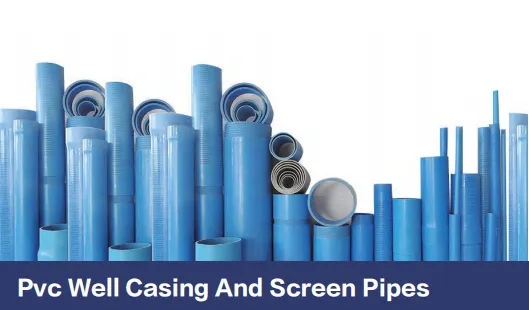
PVC well casing pipes are the structural liners installed in drilled water wells to prevent the borehole wall from collapsing and to seal out surface contaminants. Screen pipes, meanwhile, are sections of the casing with precisely engineered slots or perforations that allow groundwater to enter the well while filtering out sand, gravel, and other sediment. Together, these two components form the backbone of a water well's intake and structural integrity.
Traditionally, wells relied on steel or cast iron for casing and screens. While those materials still have their place in certain deep-well or high-pressure applications, PVC — specifically unplasticized polyvinyl chloride, or UPVC — has become the go-to choice for a growing number of residential, agricultural, and light commercial water well projects. The reasons are rooted in both performance and economics.
Key takeaway: PVC well casing provides the structural borehole support, while PVC screen pipes control sediment ingress. Both work together to deliver clean, consistent water flow.
When comparing materials for water well infrastructure, PVC consistently outperforms traditional metal alternatives in several critical areas. Contractors who have made the switch rarely look back, and here is why.
Steel and cast iron pipes are vulnerable to rust and chemical corrosion, especially in groundwater with acidic or alkaline properties. PVC, by contrast, is chemically inert and does not corrode, rust, or scale. This means the pipe maintains its structural integrity and does not introduce rust particles into the water supply — a critical consideration for potable water wells. In regions with aggressive soil chemistry or coastal environments where saltwater intrusion is a concern, the corrosion advantage of PVC becomes particularly pronounced.
A standard length of PVC well casing weighs a fraction of its steel equivalent. This lightweight nature translates into tangible on-site benefits: lower transportation costs, reduced need for heavy lifting equipment, and faster installation by smaller crews. For projects in remote or difficult-to-access locations, the logistics advantage of working with PVC cannot be overstated.
Under normal operating conditions, properly manufactured PVC well casing and screen pipes can deliver a service life of 50 years or more. This longevity is a function of the material's inherent resistance to biological growth, chemical degradation, and electrochemical reactions — all of which gradually deteriorate metal alternatives.
PVC well casing and screen pipes typically cost less to purchase than metal alternatives, but the real savings accumulate throughout the project lifecycle. Lower freight costs, quicker installation times, reduced equipment requirements, and minimal long-term maintenance combine to make PVC the most cost-effective choice for the vast majority of water well applications.
The versatility of PVC well casing and screen pipes extends across a wide range of applications, making them a staple for contractors who handle diverse project portfolios.
In each of these scenarios, the right combination of casing diameter, wall thickness, and screen slot design determines how efficiently the well performs. A knowledgeable upvc pipe supplier can guide buyers through these specifications to ensure the selected products match the intended application.
Not all PVC pipes are created equal, and the difference between a premium product and a substandard one often only becomes apparent years after installation — when replacement is both costly and disruptive. Here are the factors that separate reliable suppliers from the rest.
Quality PVC well casing should comply with recognized international standards such as ISO, ASTM, or GB/T. These standards define minimum requirements for wall thickness, impact resistance, hydrostatic pressure rating, and dimensional accuracy. A reputable supplier will provide documentation confirming that their products have been tested against these benchmarks.
Consistent wall thickness, uniform slot patterns on screen pipes, and smooth interior surfaces are indicators of a well-controlled manufacturing process. Inconsistencies in these areas can lead to weak points that compromise the well's structural integrity or create flow restrictions that reduce efficiency.
Different drilling projects call for different pipe diameters and wall thicknesses. A supplier with a broad product range — covering sizes from small-diameter monitoring wells to large-bore agricultural installations — can serve as a single source for all project needs, reducing procurement complexity.
For contractors operating on tight project timelines, a supplier's ability to deliver on schedule is as important as product quality. Established suppliers with robust inventory management and logistics capabilities can prevent costly project delays caused by material shortages.
Water well projects rarely exist in isolation. They are typically one component of a broader construction or development initiative that also requires piping systems for plumbing, drainage, electrical conduits, and more. Working with a comprehensive building material supplier that can provide PVC well casing alongside a full spectrum of complementary products — from UPVC pressure pipes and CPVC high-temperature systems to PPR hot/cold water piping — streamlines the procurement process considerably.
COLORIA GROUP, headquartered in Foshan, China, exemplifies this one-stop model. With 13 product categories covering everything from pipes and fittings to flooring, walls, sanitary fixtures, customized furniture, windows and doors, electrical systems, lighting, elevators, and solar panels, the company supports construction projects end-to-end. For well drilling contractors who also supply related infrastructure materials, consolidating purchases through a single supplier reduces administrative overhead, simplifies logistics, and often unlocks volume-based pricing advantages.
Even the highest-quality PVC well casing will underperform if not installed correctly. Following established best practices ensures the well delivers its designed flow rate and service life.
PVC well casing sections are typically joined using solvent cement welding or threaded connections, depending on the specific product design. Joints must be clean, dry, and properly aligned before assembly. Solvent-welded joints require the correct cement formulation for the pipe material and adequate curing time before the casing is lowered into the borehole.
The screen section should be positioned to align with the water-bearing formation identified during drilling. In unconsolidated formations, a properly graded gravel pack around the screen enhances filtration and increases the effective intake area. The screen slot size should be selected based on sieve analysis of the aquifer material to maximize water entry while preventing sand production.
Using centralizers at regular intervals keeps the casing centered in the borehole, ensuring an even annular space for the gravel pack or grout seal. A centered casing also reduces the risk of uneven loading that could lead to deformation over time.
The upper section of the well should be sealed with a bentonite or cement grout to prevent surface water from migrating down along the outside of the casing and contaminating the aquifer. This sanitary seal is a critical public health measure, particularly for potable water wells.
Learning from the mistakes others have made is far less expensive than making them yourself. Here are the pitfalls most commonly encountered with PVC well casing and screen pipe installations:
For project planners weighing their options, a side-by-side comparison helps clarify the trade-offs.
PVC vs. Steel casing: Steel offers higher strength for very deep wells and can withstand higher collapse pressures, but it is heavy, expensive, and susceptible to corrosion. PVC provides sufficient strength for wells up to several hundred meters in most formations, costs significantly less, and is immune to corrosion.
PVC vs. Stainless steel screen: Stainless steel screens are durable and offer excellent open area ratios, but they come at a premium price and are typically reserved for deep municipal or industrial wells. For residential, agricultural, and light commercial applications, PVC screen pipes deliver comparable filtration performance at a fraction of the cost.
PVC vs. Fiberglass: Fiberglass offers excellent chemical resistance and moderate weight advantages, but is generally more expensive than PVC and less widely available. PVC remains the practical choice for most standard well applications.
For international buyers — whether procurement managers at construction firms in the Middle East, drilling contractors in Africa, or developers in Southeast Asia — the decision of where to source PVC well casing and screen pipes has long-term implications. A supplier that understands international logistics, provides consistent product quality, and offers responsive after-sales support becomes a genuine partner rather than just a vendor.
COLORIA GROUP brings to the table not only PVC pipes and fittings but an entire ecosystem of building and construction materials spanning 13 categories and over 560 products. The company's overseas agent network — including a presence in Saudi Arabia — ensures that clients in key markets receive localized support. Whether a project requires PVC well casing, UPVC pressure piping, CPVC high-temperature systems, or complementary materials like electrical fixtures, lighting, and sanitary ware, the one-stop model significantly simplifies procurement.
With headquarters in Foshan, Guangdong — one of China's major manufacturing and logistics hubs — the company is well-positioned to serve international markets with efficient shipping and reliable delivery timelines. For contractors and developers managing complex projects with diverse material requirements, consolidating purchases with a single qualified supplier reduces the coordination burden and helps keep projects on schedule.
Whether you are drilling a single domestic water well or procuring materials for a large-scale agricultural or municipal project, having the right supplier makes all the difference. COLORIA GROUP offers a complete range of PVC pipes and fittings alongside 12 other building material categories — delivering the efficiency of one-stop procurement with the assurance of consistent quality. Contact the team today to discuss your project requirements and request a quotation.
Recommend Products












