
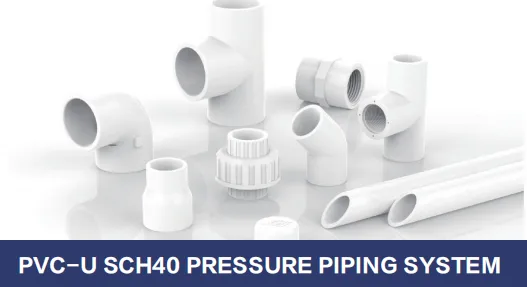
Everything You Need to Know About This Essential Plumbing Solution
Picture this: a piping system that doesn't rust, handles pressure like a champ, and costs less than traditional materials. That's PVC-U SCH40 in a nutshell. It’s the unsung hero of modern plumbing – quietly moving water through homes, factories, and farms without demanding much attention.
Why’s it such a rockstar? For starters, PVC-U (unplasticized polyvinyl chloride) brings serious muscle to the table. We're talking about a material engineered to handle pressures up to 280 PSI while laughing in the face of rust and corrosion. Unlike grumpy old metal pipes that corrode over time, PVC-U stays smooth inside for consistent water flow year after year.
One thing most suppliers won't tell you? That PVC-U SCH40 plays incredibly well with water supply and drainage systems – making it a two-in-one solution that handles both incoming and outgoing fluids like a pro. This dual capability cuts installation complexity and saves serious cash.
Let’s get real – not every pipe fits every job. Here's where PVC-U SCH40 truly excels:
Home Sweet Home: From your kitchen sink to the sprinkler system, this material handles residential pressures without breaking a sweat. Ever wake up to a burst pipe disaster? SCH40 dramatically reduces those nightmares with its pressure-resistant design.
Factory Workhorse: Manufacturing plants love it for chemical transfer lines. Unlike stainless steel that costs a fortune, PVC-U handles moderate corrosives at a fraction of the price.
Farm Hero: Agricultural irrigation systems benefit from PVC-U’s UV resistance and smooth bore that prevents mineral buildup. Those rolling crop fields? Perfect application.
Municipal MVP: Many cities now use SCH40 for non-potable water mains and drainage thanks to its cost efficiency and 50+ year lifespan.
Picking PVC-U pipes isn’t rocket science, but these tips save headaches:
Size Matters Most: Get this wrong and nothing else matters. Measure your flow requirements first – undersized pipes choke pressure, oversized ones waste money. Common home sizes: ½” for fixtures, ¾” for branches, 1-2” for mains.
Pressure Points: Always choose a pipe rated for at least 1.5x your system’s max pressure. That safety buffer prevents surprises during pressure spikes.
Chemical Compatibility: While PVC-U handles most household chemicals, verify compatibility charts for industrial solvents or unusual fluids.
Joint Decisions: Solvent welding provides the most reliable connections but requires skill. Threaded joints work for temporary installations but can leak over time.
Getting PVC-U SCH40 installation right is half science, half art. Follow this field-tested advice:
Cutting Edge Tips: Always use a PVC-specific cutter – the ratcheting kind gives cleaner cuts than saws. Never settle for jagged edges; they create turbulence points that cause premature failure.
Primer Power: That purple stuff isn't just for show. Primer chemically prepares surfaces for bonding. Skip it only if you enjoy leaks. Brush it on pipes AND fittings ends – coverage matters!
Glue Game: Apply cement generously but not excessively. Rotate the pipe ¼ turn as you push into the fitting for even distribution. Hold pressure for 30 seconds – don’t rush this marriage!
Temperature Tricks: Install between 40-110°F whenever possible. Cold makes cement brittle, heat makes it cure too fast. In extreme temps? Warm pipes with a heat lamp before gluing.
Support Squad: PVC may be lightweight but still needs support every 3-4 feet horizontally, every 5 feet vertically. Use plastic-coated clamps to avoid abrasion damage.
Recommend Products












