
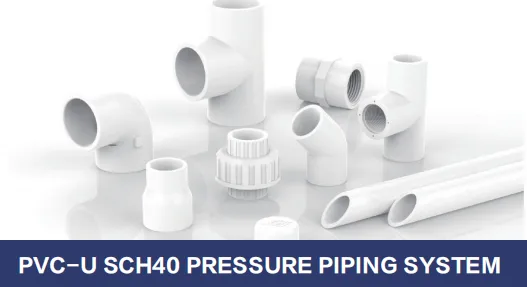
Walk into any construction site, whether it's a bustling commercial complex, a quiet residential neighborhood, or a critical infrastructure project like a water treatment plant, and you'll notice one thing tying everything together: piping. These unassuming networks of tubes are the circulatory system of modern buildings, carrying water, gas, chemicals, and more to where they're needed most. But not all piping is created equal. When it comes to pressure applications—where reliability can mean the difference between a smooth operation and a costly disaster—PVC-U SCH40 pressure piping systems stand out. And behind every successful installation of these systems is a supplier who understands the critical balance between material strength and long-term durability.
If you've ever wondered why some piping systems last decades with minimal issues while others start leaking or corroding within a few years, the answer often lies in two factors: the quality of the material and the expertise of the supplier. In this article, we'll dive deep into what makes PVC-U SCH40 such a trusted choice, explore the science behind its strength and durability, and explain why partnering with the right supplier isn't just a purchase—it's an investment in the safety and longevity of your project.
Let's start with the basics. PVC-U SCH40 might sound like industry jargon, but break it down, and it's actually quite straightforward. "PVC-U" stands for unplasticized polyvinyl chloride—a rigid, strong version of PVC that hasn't been softened with plasticizers. This lack of plasticizers is key: it gives PVC-U its signature stiffness and resistance to pressure, making it ideal for applications where flexibility isn't needed, but strength is non-negotiable.
Then there's "SCH40." This refers to the pipe's "schedule," a standardized system used in the piping industry to denote wall thickness and pressure rating. SCH40 is one of the most common schedules for PVC-U pipes, designed to handle moderate to high pressure in both residential and commercial settings. Think of it as a guarantee: a SCH40 pipe has a specific wall thickness that's been tested to withstand a certain amount of internal pressure, ensuring it can safely carry fluids without bursting or deforming over time.
But here's the thing: not all PVC-U SCH40 pipes are made the same. The quality of the raw materials, the manufacturing process, and even the additives used can drastically affect how well the pipe performs. That's where a reputable PVC-U SCH40 pressure piping system supplier comes in. A trusted supplier doesn't just sell pipes—they provide peace of mind, ensuring that every product meets strict industry standards and is built to last.
Strength in piping isn't just about being "tough"—it's about consistent performance under stress. PVC-U SCH40 pipes are engineered to excel in this area, thanks to their unique composition and manufacturing process. Let's break down the key factors that contribute to their impressive strength:
PVC-U's strength starts at the molecular level. Unlike plasticized PVC (PVC-P), which is flexible and used for products like garden hoses, PVC-U's molecules are tightly packed and cross-linked, creating a rigid structure that resists deformation. When pressure is applied inside the pipe—say, from water flowing at high velocity—the molecules don't stretch or bend easily. Instead, they distribute the force evenly across the pipe's wall, preventing weak points from forming.
Remember that SCH40 designation? It's not just a number. For example, a 2-inch SCH40 PVC-U pipe has a wall thickness of approximately 0.154 inches, while a SCH20 pipe (a thinner schedule) might only be 0.109 inches thick. This extra thickness isn't arbitrary—it's calculated to withstand specific pressure levels. Most PVC-U SCH40 pipes are rated to handle working pressures of 450 psi (pounds per square inch) at 73°F, which is more than enough for most residential, commercial, and light industrial applications. For context, typical municipal water systems operate at 40-80 psi, so SCH40 has a significant safety margin built in.
Top-tier PVC-U SCH40 pipes aren't just pure PVC-U. Reputable suppliers add carefully measured additives to enhance performance. Stabilizers protect against heat degradation during manufacturing, ensuring the molecular structure isn't damaged. Impact modifiers increase resistance to physical blows—important for pipes that might get bumped during installation or exposed to heavy machinery on construction sites. And UV inhibitors prevent the pipe from becoming brittle when installed outdoors, where sunlight can break down plastic over time.
But here's a crucial point: not all additives are created equal. A low-quality supplier might cut corners by using cheap or excessive additives, which can weaken the pipe or make it prone to cracking. That's why choosing a supplier with strict quality control processes—like third-party testing and certifications—is so important. Look for suppliers who adhere to standards like ASTM D1785, which specifies requirements for PVC-U pipes used in pressure applications.
Strength is impressive, but what good is a strong pipe if it doesn't last? Durability is where PVC-U SCH40 truly shines, making it a favorite among engineers, contractors, and facility managers. Let's explore why these pipes are built to go the distance:
One of the biggest enemies of metal pipes is corrosion. Steel pipes rust, copper pipes develop pinhole leaks from acidic water, and galvanized pipes can corrode from the inside out. PVC-U SCH40? It's completely immune to corrosion. Whether it's carrying potable water, wastewater, or even mild chemicals (like fertilizers in agricultural applications), the pipe's surface won't degrade or react with the fluid inside. This resistance alone can extend the pipe's lifespan by decades compared to metal alternatives.
Beyond corrosion, PVC-U SCH40 holds up well against a wide range of chemicals. It's resistant to acids, alkalis, and salts—making it suitable for industrial applications like chemical processing plants or water treatment facilities where the fluid might be less than "clean." Of course, it's not invincible (strong oxidizing agents like concentrated sulfuric acid can damage it), but for most common fluids, it's a reliable choice. A knowledgeable supplier can help you determine if PVC-U SCH40 is compatible with your specific fluid, ensuring you don't accidentally compromise the pipe's integrity.
Unlike metal pipes, which might require regular inspections for rust or scale buildup, PVC-U SCH40 is practically maintenance-free. Its smooth inner surface resists scaling and biofilm growth (the slimy layer of bacteria that can clog pipes over time), so water flow remains consistent. There's no need for corrosion inhibitors, coatings, or frequent replacements. In fact, most PVC-U SCH40 pipes have a projected lifespan of 50-100 years when installed correctly—meaning they'll outlast many of the buildings they're installed in.
PVC-U SCH40's combination of strength, durability, and affordability has made it a go-to choice in countless industries. Let's take a look at some of the most common applications where this piping system excels:
In homes, PVC-U SCH40 is often used for main water lines, branch lines to fixtures, and even irrigation systems. Its ability to handle standard water pressure, resistance to corrosion, and easy installation (more on that later) make it a favorite among plumbers. Homeowners love it too: unlike copper, it doesn't leach metals into drinking water, and it's quiet—no more "water hammer" noises when taps are turned off suddenly.
From office towers to shopping malls, commercial buildings demand piping systems that can handle high usage without fail. PVC-U SCH40 is frequently used for fire sprinkler systems (thanks to its fire resistance and pressure rating), HVAC condensate lines, and potable water distribution. Its lightweight nature also makes it easier to install in multi-story buildings, reducing labor costs compared to heavier metal pipes.
In factories and processing plants, PVC-U SCH40 pipes carry everything from cooling water to industrial chemicals. Their chemical resistance and pressure handling make them ideal for non-critical process lines, while their low cost compared to stainless steel or copper helps keep project budgets in check. Many upvc pipe suppliers also offer fittings (elbows, tees, valves) specifically designed for industrial use, ensuring a seamless, leak-free system.
Cities and towns rely on PVC-U SCH40 for everything from water distribution networks to stormwater drainage. Its longevity means municipalities don't have to budget for frequent replacements, and its corrosion resistance ensures clean water delivery even in areas with aggressive soil conditions. Pipes fittings suppliers often work closely with municipal engineers to provide custom solutions, like large-diameter SCH40 pipes for main water lines.
Now that you understand why PVC-U SCH40 is such a strong, durable choice, let's talk about the other half of the equation: the supplier. A great PVC-U SCH40 pressure piping system supplier does more than deliver products—they act as a partner, ensuring your project has the right materials, support, and expertise to succeed. Here's what to look for when choosing a supplier:
Any supplier worth considering should have certifications from recognized organizations. Look for ASTM D1785 compliance (the standard for PVC-U pressure pipes) and ISO 9001 certification (a mark of quality management systems). These certifications mean the supplier's manufacturing processes are audited regularly, and their products meet strict performance criteria. Avoid suppliers who can't provide proof of certification—this is a red flag for subpar quality.
A top supplier won't just sell PVC-U SCH40 pipes—they'll offer a full range of products, including fittings, valves, and accessories. This is crucial for two reasons: first, using fittings from the same manufacturer ensures compatibility, reducing the risk of leaks at joints. Second, it simplifies your supply chain—no more coordinating with multiple pipes fittings suppliers for different components. Many leading suppliers also offer related products like PPR pipe and fitting or PEX pipe and fitting, giving you flexibility if your project requires multiple piping materials.
Even the best materials can fail if installed incorrectly. That's why technical support is so important. A good supplier will have a team of engineers or product specialists who can answer questions about pressure ratings, installation techniques, or chemical compatibility. They might even offer on-site training for your installation crew, ensuring everyone knows how to handle the pipes properly. This level of support can save you time, money, and headaches down the line.
Construction schedules wait for no one. A supplier with a strong logistics network will ensure your pipes and fittings arrive on time, every time. Look for suppliers with local warehouses or partnerships with reliable carriers—this reduces shipping delays and keeps your project moving forward. Some suppliers even offer just-in-time delivery, so you don't have to store large quantities of pipe on-site, saving space and reducing the risk of damage.
To truly appreciate PVC-U SCH40's value, it helps to see how it stacks up against other common piping materials. Below is a comparison table highlighting key factors like pressure rating, durability, cost, and installation ease:
| Material | Pressure Rating (psi at 73°F) | Corrosion Resistance | Estimated Lifespan (Years) | Installation Complexity | Cost (Relative) |
|---|---|---|---|---|---|
| PVC-U SCH40 | 450 | Excellent (resists acids, alkalis, rust) | 50-100 | Low (solvent cement or threaded connections) | Low-Medium |
| Copper | 400-1000+ (varies by type/wall thickness) | Good (but susceptible to acidic water) | 50-70 | Medium-High (requires soldering) | High |
| Galvanized Steel | 300-1000+ (varies by schedule) | Poor (prone to rust and corrosion) | 20-50 | High (threading or welding required) | Medium-High |
| PPR (Polypropylene Random Copolymer) | 200-300 (varies by size) | Excellent | 50+ | Medium (heat fusion required) | Medium |
| PEX (Cross-Linked Polyethylene) | 160-200 (at 73°F) | Excellent | 40-50 | Low (crimp or push-fit connections) | Medium |
As you can see, PVC-U SCH40 holds its own against more expensive materials like copper and galvanized steel, offering comparable pressure ratings and superior corrosion resistance at a lower cost. While PEX and PPR are also strong competitors, they typically have lower pressure ratings, making PVC-U SCH40 the better choice for high-pressure applications.
Even the strongest, most durable pipe will underperform if installed incorrectly. Here are some best practices to ensure your PVC-U SCH40 system lasts as long as possible:
As technology advances, so too does the world of piping. PVC-U SCH40 is no exception. Manufacturers are constantly finding ways to improve its performance, from developing new additives that enhance UV resistance to creating thinner-walled yet stronger pipes using advanced molding techniques. There's also a growing focus on sustainability: many suppliers now offer recycled PVC-U options, reducing the environmental impact of production. As infrastructure needs grow worldwide—especially in emerging markets—PVC-U SCH40 will continue to be a key player, thanks to its winning combination of strength, durability, and affordability.
At the end of the day, a piping system is more than just a collection of pipes and fittings—it's the backbone of your project. Whether you're building a home, a hospital, or a factory, the right piping can mean the difference between a successful, long-lasting structure and one plagued by leaks, repairs, and downtime. PVC-U SCH40 offers the strength, durability, and reliability you need, but only if you partner with a supplier who shares your commitment to quality.
So when you're ready to start your next project, take the time to research suppliers. Look for those with certifications, a wide product range, and a reputation for technical support. Remember: a good supplier doesn't just sell you pipes—they help you build something that lasts. And in the world of construction, there's no better investment than that.
Recommend Products












